Editor’s note: This is a recurring post, regularly updated with new information and offers.
As of April 1, Lyft will unveil new earning rates for eligible Chase cardholders who earn bonus points when riding with Lyft.
For context, Chase maintains many partnerships with everyday brands like DoorDash, Instacart and Peloton, providing exclusive perks for cardholders. But these partnerships change over time and may even end unless Chase decides to renew the contract.
Here’s what you need to know about the Chase-Lyft partnership starting April 1.
Lyft benefits by Chase card
The earning rates vary depending on the Chase card you carry, so let’s look at the potential returns you may receive. These earning rates will apply as of April 1.
Chase Sapphire Reserve
Chase Sapphire Reserve® cardholders will now receive a $10 monthly Lyft credit, meaning potential savings of up to $120 annually. The credit does not apply to Wait & Save, bike or scooter rides.
Sapphire Reserve cardholders will also earn 5 points per dollar spent on Lyft purchases, a decrease from their previous earning rate of 10 points per dollar through March 31.
As of March 2025, TPG values Chase Ultimate Rewards points at 2.05 cents apiece, so cardholders will still get a 10.25% return on Lyft rides — a good deal if you frequently use the service to ride around the city or need airport transportation.
Sapphire Reserve cardmembers who have already signed up for the two-year complimentary Lyft Pink All Access membership will continue to have access to that benefit through the duration of their benefit term. This deal will not be available for new members, though.
All other Chase cards
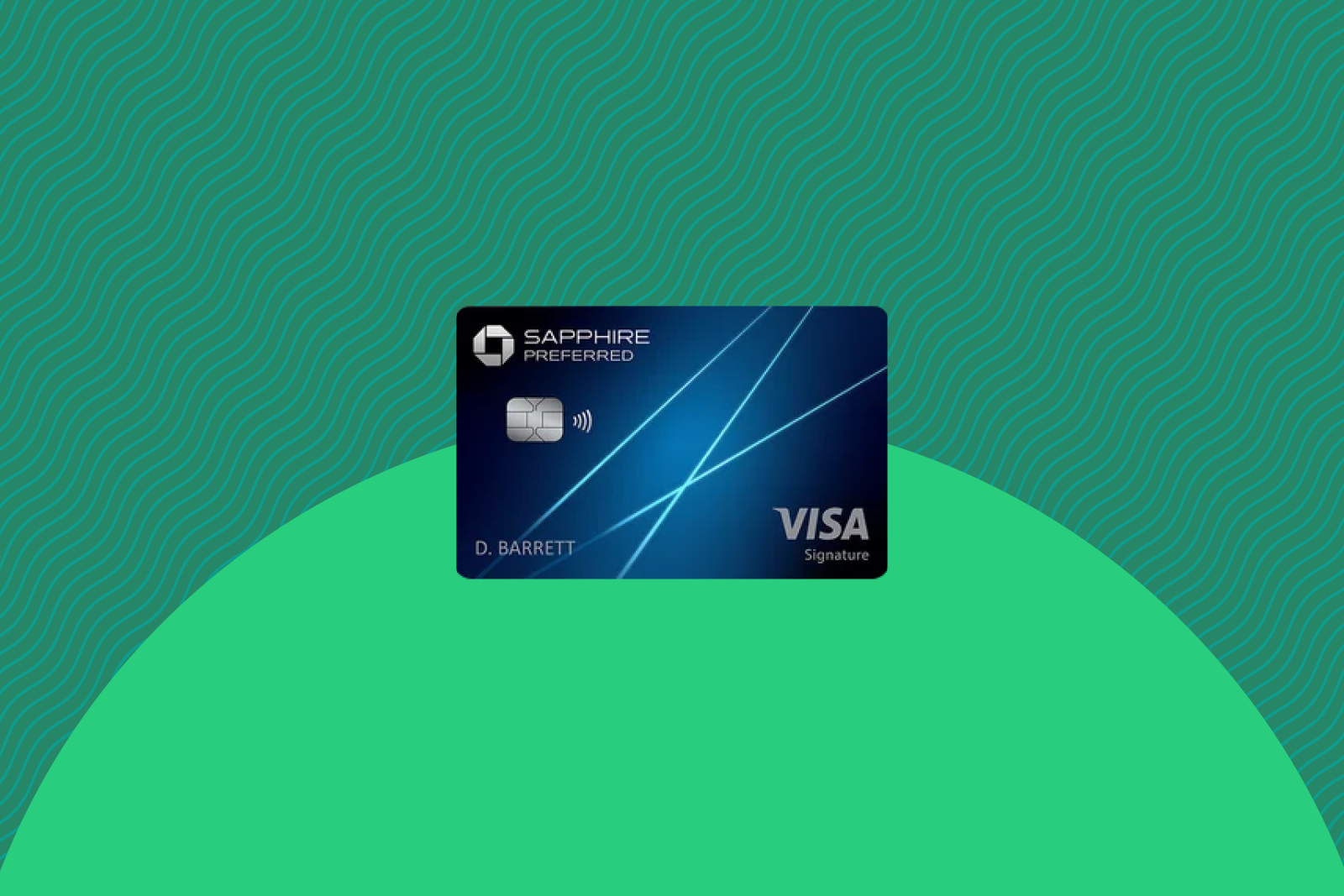
If you carry the Chase Sapphire Preferred® Card, you’ll earn 5 points per dollar spent on Lyft rides (for a 10.25% return based on TPG’s valuations).
The information for the Chase Freedom Student and the Chase Freedom Rise has been collected independently by The Points Guy. The card details on this page have not been reviewed or provided by the card issuer.
It’s worth noting that Lyft’s eight-year partnership with Delta Air Lines, as the airline is starting a partnership with Uber. Earning rates for the new partnership have not yet been announced. Through April 7, those who link their Delta SkyMiles and Lyft accounts can earn 1 mile per dollar spent on Lyft rides in the U.S.
Bottom line
As of April, most Chase cardholders who link their Lyft and Chase accounts can earn up to 5 points per dollar spent on Lyft rides. Those who carry one of Chase’s Freedom cards will earn 2% cash back.
New users can read more about linking their accounts here.
If you are on social media these days, you’ve likely seen an abundance of viral TikTok and Instagram hacks claiming to transform the way you travel. But how many of them can you really trust?
Unfortunately, as it turns out, much of what you hear is flat-out wrong. For example, there’s a rumor that if you dress nicely, you could get an upgrade to first class. And there’s a myth about playing “check-in chicken,” where you wait until the gate agents assign seats to passengers who haven’t picked (or paid for) a seat. The idea is that if you are last to board, you might score an extra-legroom seat. The problem is that, most likely, you’ll just end up in a middle seat in the back of the plane.
With all the viral videos out there, we wanted to give you some travel hacks that actually work. Here are some of our favorites.
One of the best hacks that I only learned about in the past couple of years is one that allows you to get some extra room in the coach cabin of many airlines. Most people don’t know this, but in many aisle seats, there is a lever or a button you can push that allows you to lift the aisle-side armrest. You can lift it during flight and spread out a bit more, as my brother demonstrated in the video above on an Alaska Airlines flight to Hawaii.
It’s a bit hard to find on some aircraft, but it’s usually in the hinge of the armrest.
“I still see jaws drop when I lift the aisle armrest to get out,” Mark Anthony Sproviero said in the TPG Lounge Facebook group. “Some kid saw me lift it once, but he didn’t see me press the release. He looked like he might rip his armrest off the seat trying.”
On a full flight, this can be a game changer for extra room. If you are lucky enough to have an empty middle seat, you can really stretch out.
Book window and aisle seats to keep the middle open
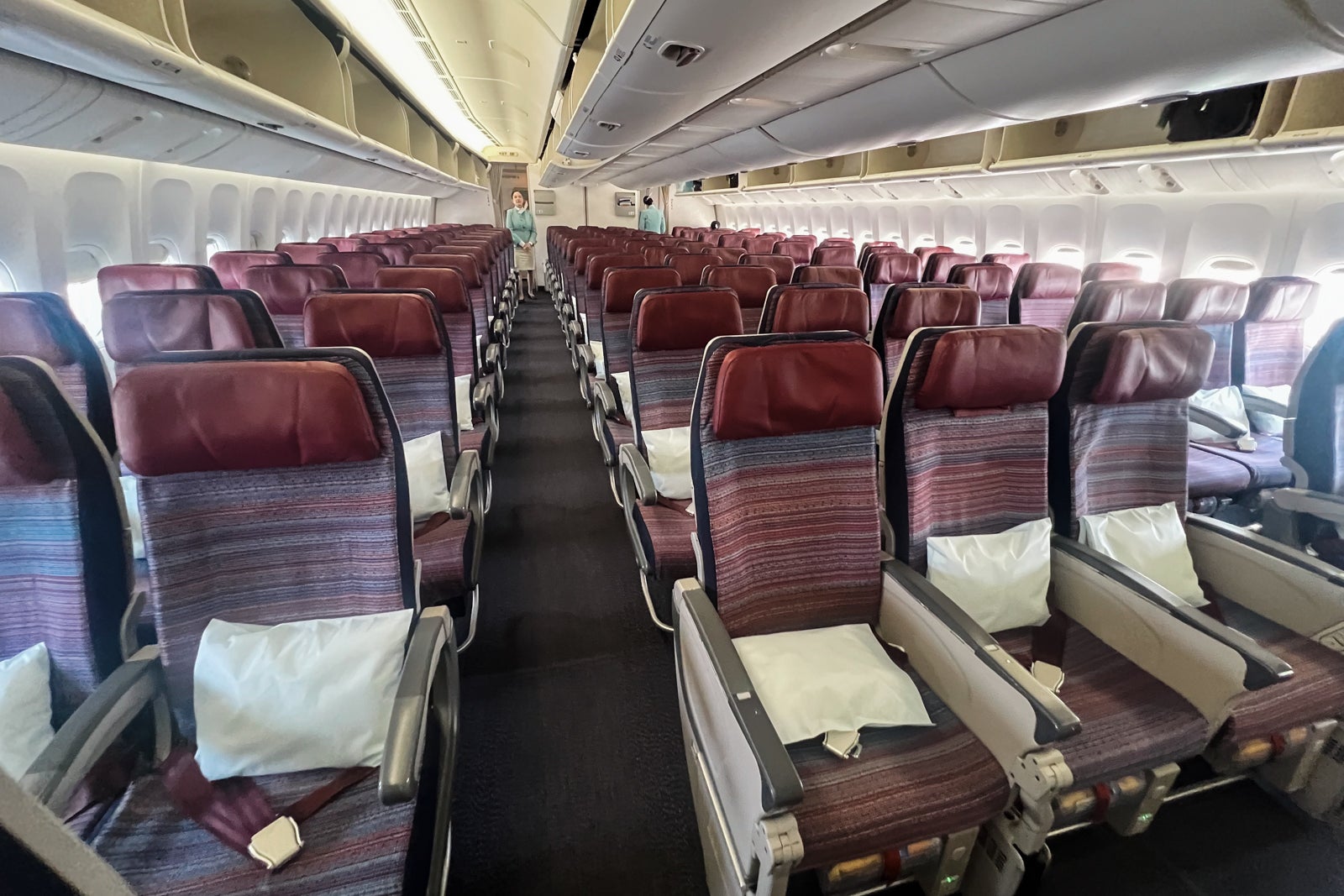
Korean Air coach cabin. CLINT HENDERSON/THE POINTS GUY
If you are traveling as a couple in coach, it can make sense to book the window and aisle seats in a single row. When passengers are selecting seats, the middle seats between two other people are usually the last go.
Even if the flight does fill up, you can tell the person seated in the middle you can switch with them for a window or aisle seat so you can still sit with your traveling companion. You may get lucky and end up with a row to yourselves.
“My husband and I always book the window and aisle seats (and still sometimes sit there with a random person in the middle), but the odds go up of having the row to ourselves sometimes, or if we do want to sit next to each other usually the middle seat person is more than happy to swap,” TPG Engineering Manager Zoe Jablow said.
Power plug hacks
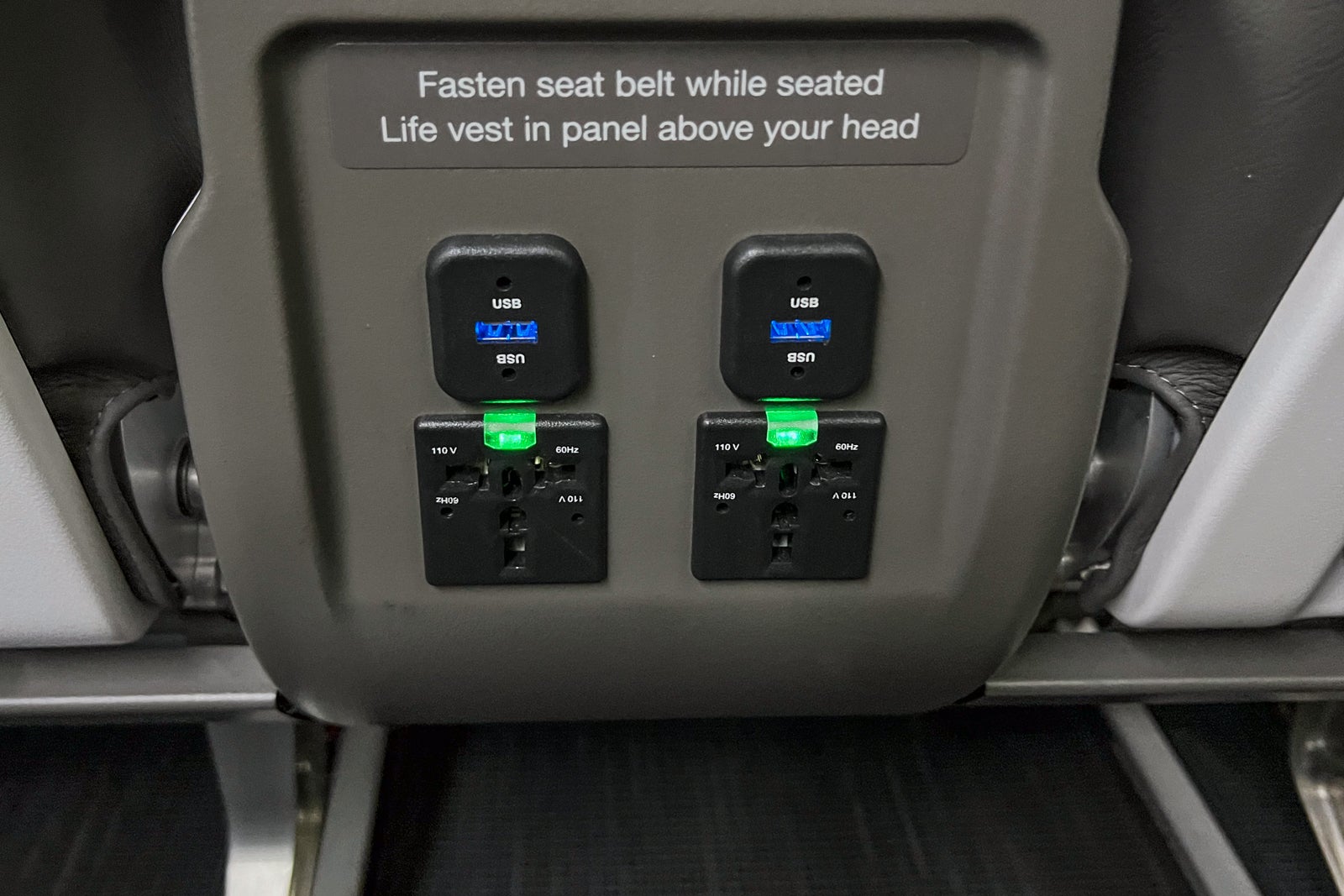
Electrical outlets on an Alaska Airlines plane. CLINT HENDERSON/THE POINTS GUY
“You can twist your power plug in most power outlets on planes so that it won’t fall out,” TPG Lead Writer Katie Genter said. “Pretty much every universal outlet I’ve encountered on a plane lets you slightly twist your plug after putting it into the outlet all the way. Doing so locks it in.” Katie mentioned the hack in her review of Qatar Airways’ Qsuite back in 2022.
That blew my mind because my laptop plug often falls out of outlets that have been loosened over time.
“I’ve also found that when my devices won’t stay plugged in, sometimes using my international adapter (set to the U.S. setting) will work better,” TPG Senior Aviation Reporter Sean Cudahy said.
Depressurize your containers
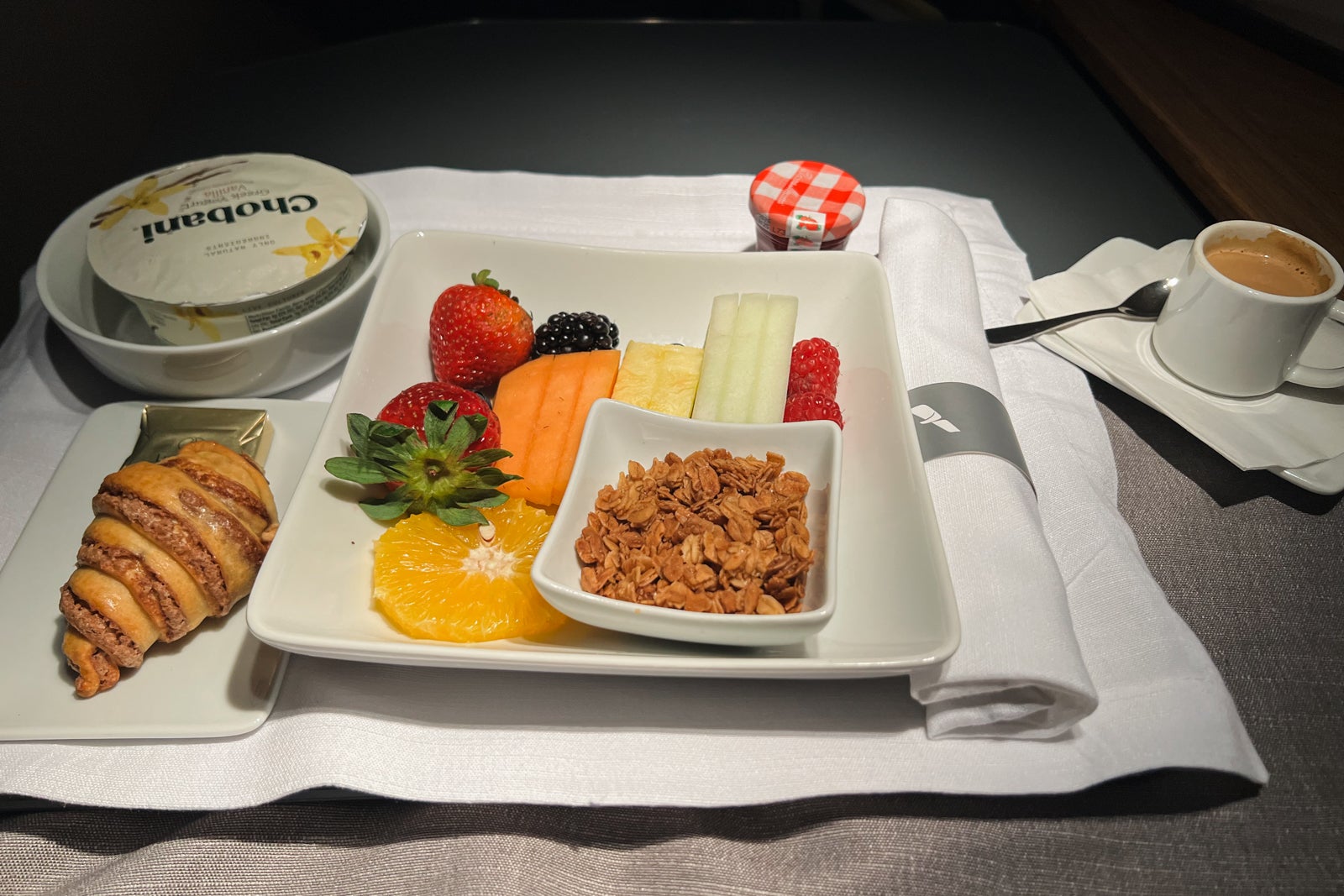
American Airlines breakfast in Flagship First on a flight from Rome in 2024. CLINT HENDERSON/THE POINTS GUY
TPG Senior Director of Content Summer Hull blew my mind when she told me one of her favorite hacks: Poke holes in your yogurt when in flight. I can’t tell you how many times I’ve opened the yogurt that came with breakfast only to have it blow out when I peeled back the lid due to the cabin pressure. If you poke some holes, it can prevent a mess.
The photo above shows the lid bowed out from the air pressure inside. That’s a recipe for an unpleasant surprise.
And it doesn’t only work on yogurt. TPG reader Jerry Lim said, “If they serve you any drinks in a pressurized can, give it a few taps with your fingers from the bottom up so it doesn’t explode like the yogurt.”
Put your carry-on bag in the bin opposite your seat
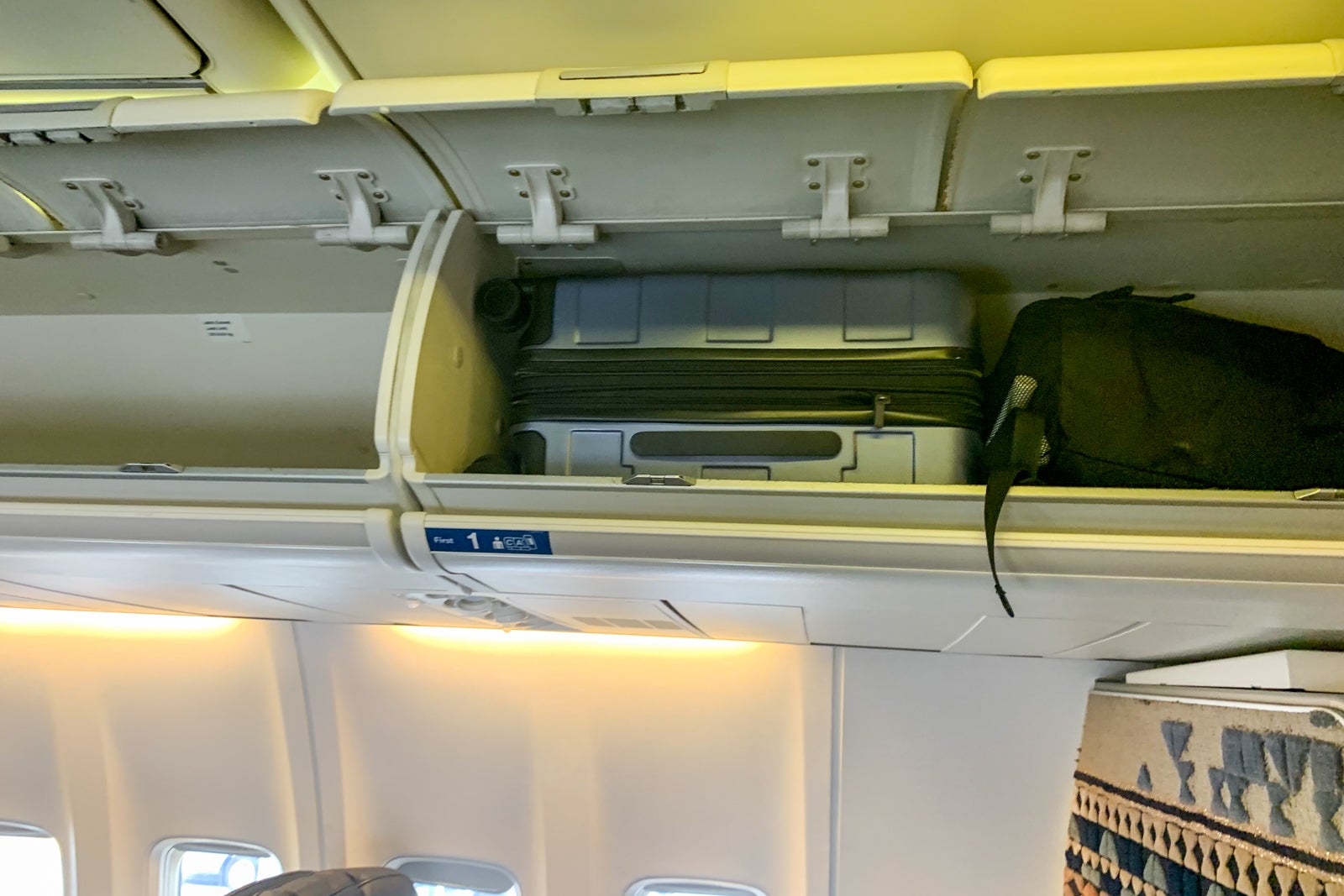
Alaska Airlines luggage bin in the opposite row. CLINT HENDERSON/THE POINTS GUY
I loved the hack from one of our TPG Lounge members, Rosie Ribeiro McWhorter: “I have found that putting your carryon in the overhead bin opposite side of the aisle is so much more efficient getting off the plane, vs. everyone doing the twisty swinging suitcase around in front of you bit.”
Another reader said it also allows you to keep an eye on your stuff at all times.
Food hacks
CAROLINE TANNER/THE POINTS GUY
Lots of folks had food hacks for me.
One of the top tips was to order a special meal in coach. When you order a special meal, like a gluten-free or kosher option, you’ll almost always be served first (and thus have more time for sleep). Those meals come out before the flight attendants serve the rest of the regular meals.
“Look whether you should preorder meals ahead of time — you may have extra choices (like on American Airlines and Singapore Airlines) or get a discount compared to on board (on some budget carriers),” Katie said.
You could always bring your own food, too.
“On morning flights, if I’m feeling cheap, I’ve also brought instant oatmeal packs and toppings (pack of raisins, a banana) and asked for a cup of hot water and made myself breakfast,” TPG Managing Cruise Editor Eric Silverstein said.
One reader suggested bringing ketchup and hot sauce packets in your carry-on bag to add flavor to sometimes bland food. Other readers suggested putting hard butter pats wrapped in foil under the hot dish to make them easier to spread on bread.
Reader Pieter Boone has a whole system: “When flying economy, bring a white napkin as a ‘table cloth’ and a small real wine glass for an upgraded feel when your meal arrives. I also bring sachets of ketchup, hot sauce, salt & pepper (sometimes even grated cheese) to upgrade the taste of the meal. And finally: remove and store away wrapping material, covers and other stuff that clutters your meal tray.”
Bring your own amenities
KATIE GENTER/THE POINTS GUY
Several readers suggested bringing your own comforts on board. “For longer flights (5+ hours), I take hotel slippers with me so I can take my shoes off and use those when I walk around the cabin,” Sheila Hozhabri said. “Just toss them after the flight.”
I love this idea.
Someone else suggested buying a seatback organizer, sometimes called a travel pocket, that can hook onto your tray table and give you extra storage. Amazon has an interesting-looking one by the brand Airplane Pockets.
“I also travel with an airplane pocket that slips over the tray table and gives me storage space so I don’t have to use the backseat pocket,” Hozhabri said.
TPG Director of Content Operations Andrea Rotondo suggested a travel fan: “I always bring a small portable fan — especially on long-haul trips. I run hot, and sometimes it is just uncomfortably warm in the cabin, and I need that little bit of extra airflow!”
Turn your jacket into a pillow
TPG writer Lori Zaino models a TPG sweatshirt and jacket. THE POINTS GUY
One of our readers had a fabulous idea. “When flying with a down jacket, I take a black satin pillowcase with me (it takes up no room at all!) and stuff the jacket in the pillowcase to make a pillow when flying in economy, which hopefully isn’t often!” TPG reader Christine Krzyszton said.
In fact, Krzyszton said that in her experience, pillows, blankets and bags with food for a meal don’t count as carry-on bags, so load up.
“When flying with only a backpack, carry a small collapse-able backpack with you to place under the seat with valuables and anything you need for the flight so you don’t sacrifice all your legroom,” reader Kevin Hawk said.
“After takeoff, I will pull my underseat bag out so I can stretch my legs over it and put my feet under the seat in front of me,” Erica said about seat storage.
Gifts for flight attendants
CLINT HENDERSON/THE POINTS GUY
Flight attendants endure a lot of abuse. Their pay is low, and their job is demanding. No wonder some get cranky. That’s why several of us at TPG recommend bringing treats for flight attendants or even gate agents. “I always bring Starbucks gift cards and ‘fancy’ protein bars (like Barebells) to give to the flight attendants. It usually leads to some nice conversations, which can make the start or end of a trip more enjoyable,” Andrea said.
Several readers said they bring small gifts of chocolate, candy and other treats for the flight attendants. This often results in friendlier service and a more comfortable flight.
Over the years, I’ve given candy and hand lotion to flight attendants on some flights just to be nice. I can’t prove it, but gifts to the gate agents before a long-haul flight to Auckland may have helped me clear into business class.
And even if you get nothing in return, it can make you feel good.
Bottom line
Maui, Hawaii, in 2024. CLINT HENDERSON/THE POINTS GUY
This is just scratching the surface of some of the many hacks that can lead to better travel. Other tips include wearing compression socks and getting up often on flights to prevent blood clots, studying seat maps on sites like SeatGuru and Aerolopa to pick the best seats, and drinking lots of water.
We could continue, but hopefully, these tips get you started toward a better travel future.
Unless you primarily commute via public transit, chances are you’ve recently stopped to gas up. Whether your total was a couple of dollars or you ended up paying triple digits to fill your tank, if you didn’t use a gas credit card, you’re missing out on earning rewards.
At TPG, we’re all about maximizing spending wherever possible, whether that means maximizing the bonus categories on a cash-back card or transferring your rewards points to leverage a killer transfer bonus.
Out of all the cards I currently hold, my Costco Anywhere Visa offers the highest reward rate in this category — 5% cash back on gas at Costco and 4% cash back on other eligible gas and electric vehicle charging purchases for the first $7,000 in combined spend per year, then 1% thereafter. Because of these rates, using it to fill up is a no-brainer.
In fact, my February 2025 Costco reward certificate (for all of my 2024 spending) came in at $226.73. A large portion of that spending fell into two main categories: Costco groceries and Costco and non-Costco gas fill-ups.
Whether you’re a road warrior, an occasional driver or fall somewhere in the middle, here’s why you need a gas credit card in your wallet — plus our top picks for the best gas cards.
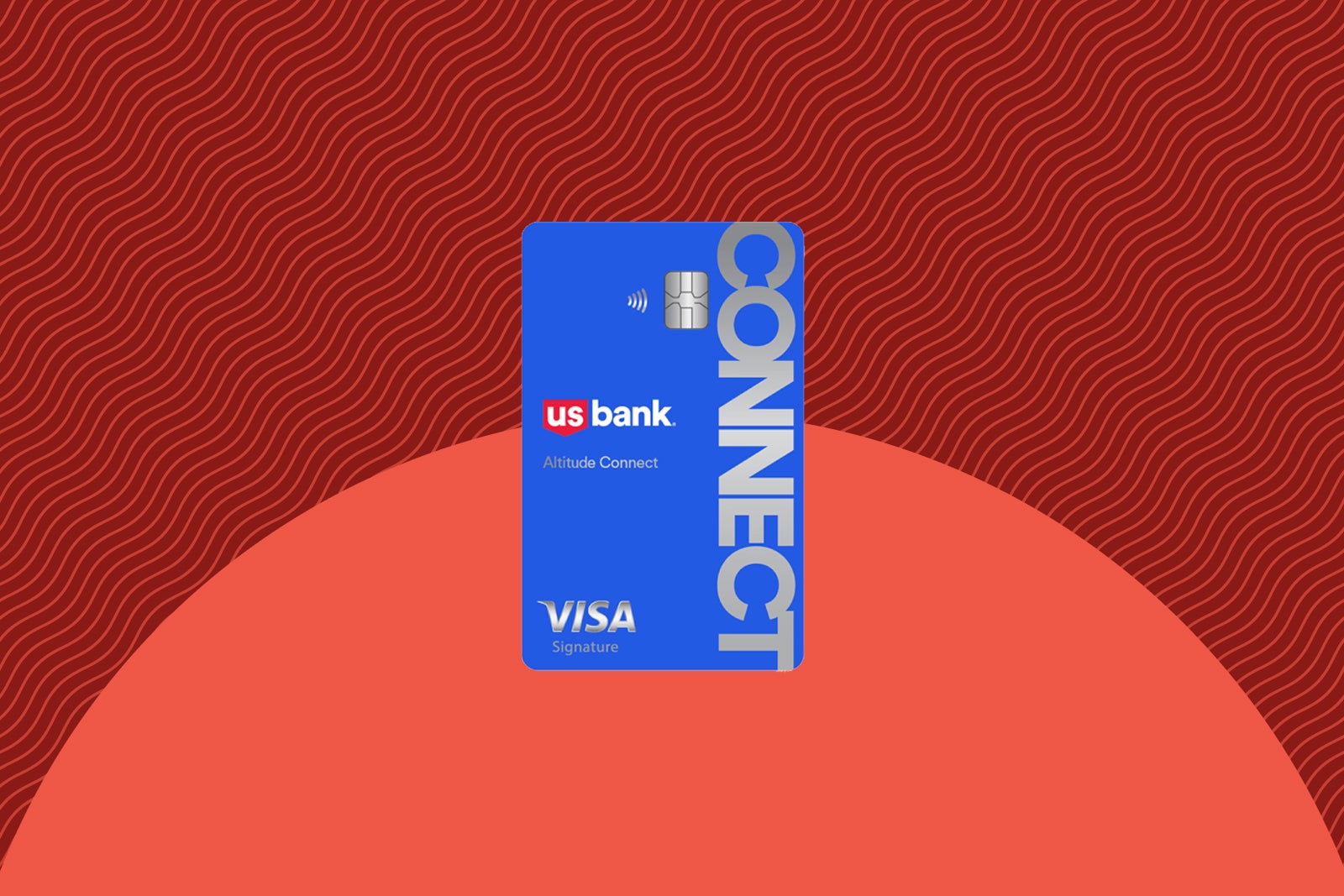
*The information for the Wyndham Rewards Earner Business Card, the Wyndham Rewards Earner Plus Card and the U.S. Bank Altitude Connect Visa Signature Card has been collected independently by The Points Guy. The card details on this page have not been reviewed or provided by the card issuer.
Comparing the best gas credit cards
Here are TPG’s top recommendations for the best gas credit cards.
Earn 5% cash back on gas at Costco, and earn 4% cash back on other eligible gas and EV charging purchases for the first $7,000 combined spend per year, and then 1% thereafter.
Earn 3% cash back on restaurants and eligible travel purchases (including Costco Travel).
Earn 2% cash back on all other purchases from Costco and costco.com.
Earn 1% cash back on all other purchases.
$0, though a Costco membership is required to get this card
Earn 60,000 points after spending $4,000 on purchases in the first three months of account opening.
Earn 5 points per dollar spent on travel booked through Chase Travel.
Earn 3 points per dollar spent on dining, select streaming services and online grocery store purchases (excluding Target®, Walmart® and wholesale clubs).
Earn 2 points per dollar spent on all other travel purchases.
Earn up to 75,000 bonus points: 50,000 points after spending $4,000 on purchases and paying the annual fee in full within 90 days of account opening and earn another 25,000 points after spending $12,000 on purchases within 365 days of account opening
Earn 8 points per dollar spent on Hotels by Wyndham.
Earn 8 points per dollar spent on gas.
Earn 5 points per dollar spent on marketing, advertising and utilities.
Earn 1 point per dollar spent on all other purchases (excluding Wyndham Timeshare resort down payments).
Earn 20,000 bonus points after spending $1,000 on net purchases in the first 90 days of account opening.
Earn 5 points per dollar spent on prepaid hotels and car rentals booked directly in the Altitude Rewards Center.
Earn 4 points per dollar spent on travel purchases made directly with airlines, hotels and car rentals.
Earn 4 points per dollar spent at gas stations and EV charging stations (on your first $1,000 each quarter; excludes discount stores, supercenters and wholesale clubs).
Earn 2 points per dollar spent on dining, streaming services and grocery stores (excluding discount stores and supercenters).
$0
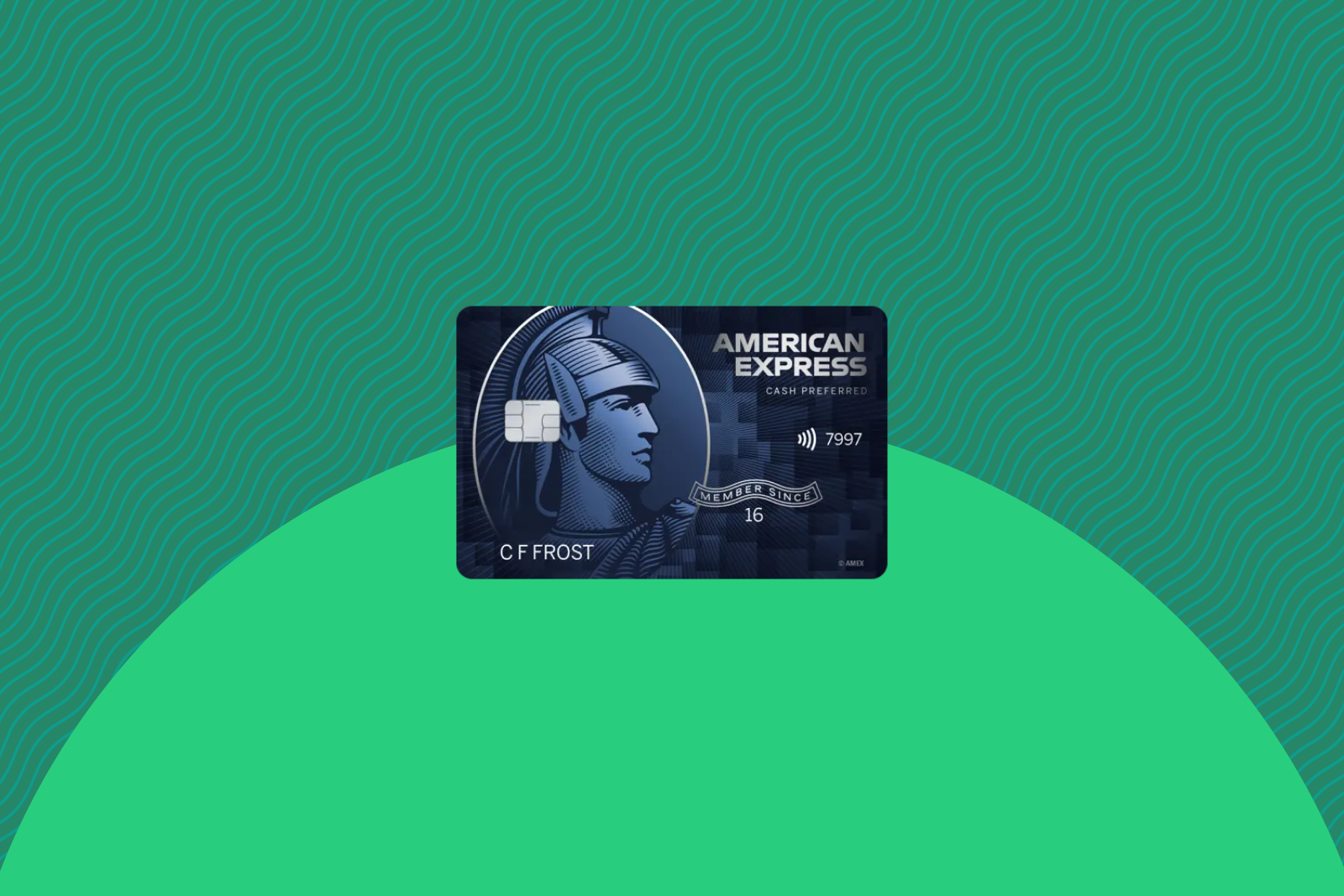
Blue Cash Preferred Card from American Express
Welcome offer: Earn $250 cash back after spending $3,000 on eligible purchases within the first six months of account opening. Cash back is received in the form of Reward Dollars that can be redeemed as a statement credit or at amazon.com checkout.
Annual fee: $0 intro annual fee for the first year, then $95 (see rates and fees).
THE POINTS GUY
Standout benefits: The Blue Cash Preferred is a fantastic starter card for those just getting into credit card rewards. It offers simple earning and redeeming options, but it’s also great for the more seasoned credit card veteran seeking to maximize their spending across multiple categories.
I’ve had this card for 11 years, and every single year I’ve held it, it has more than paid for itself thanks to the hundreds of dollars I’ve earned in cash-back rewards. I’m not a huge Amazon shopper, but when I do have a couple of items in my cart, I’ll put my Blue Cash Preferred Reward Dollars toward those online purchases.
Usually, though, I redeem my cash back for statement credits, which offset some of my spending on this card. In May 2024, I reserved a private room at a Manhattan karaoke bar for a birthday celebration for around $300; more than half that figure was covered by the cash back I had earned on my Blue Cash Preferred.
This card is ideal for those who prioritize earning cash back above other currencies, although keep in mind that redemption options are limited compared to other cash-back cards that let you pocket rewards by adding them to a bank account or opting to receive a check for your rewards balance.
Though I’ve graduated to other cards that earn valuable travel points instead of cash back, I still have the Blue Cash Preferred in my wallet for two main reasons:
The up to $7 monthly Disney Bundle statement credit (up to $84 back per calendar year, subject to auto-renewal; enrollment required, and terms apply)
The 3% cash-back rate on transit (paying for metered parking hurts a tiny bit less when I’m earning rewards on these charges)
Before I made the Costco Anywhere Visa my primary gas credit card, the Blue Cash Preferred was my go-to thanks to earning a decent rate of 3% cash back at U.S. gas stations.
This, coupled with the crown jewel reward category on this card — 6% cash back at U.S. supermarkets (on up to $6,000 per year, then 1%) — has earned the Blue Cash Preferred a well-deserved spot in my wallet year after year for over a decade.
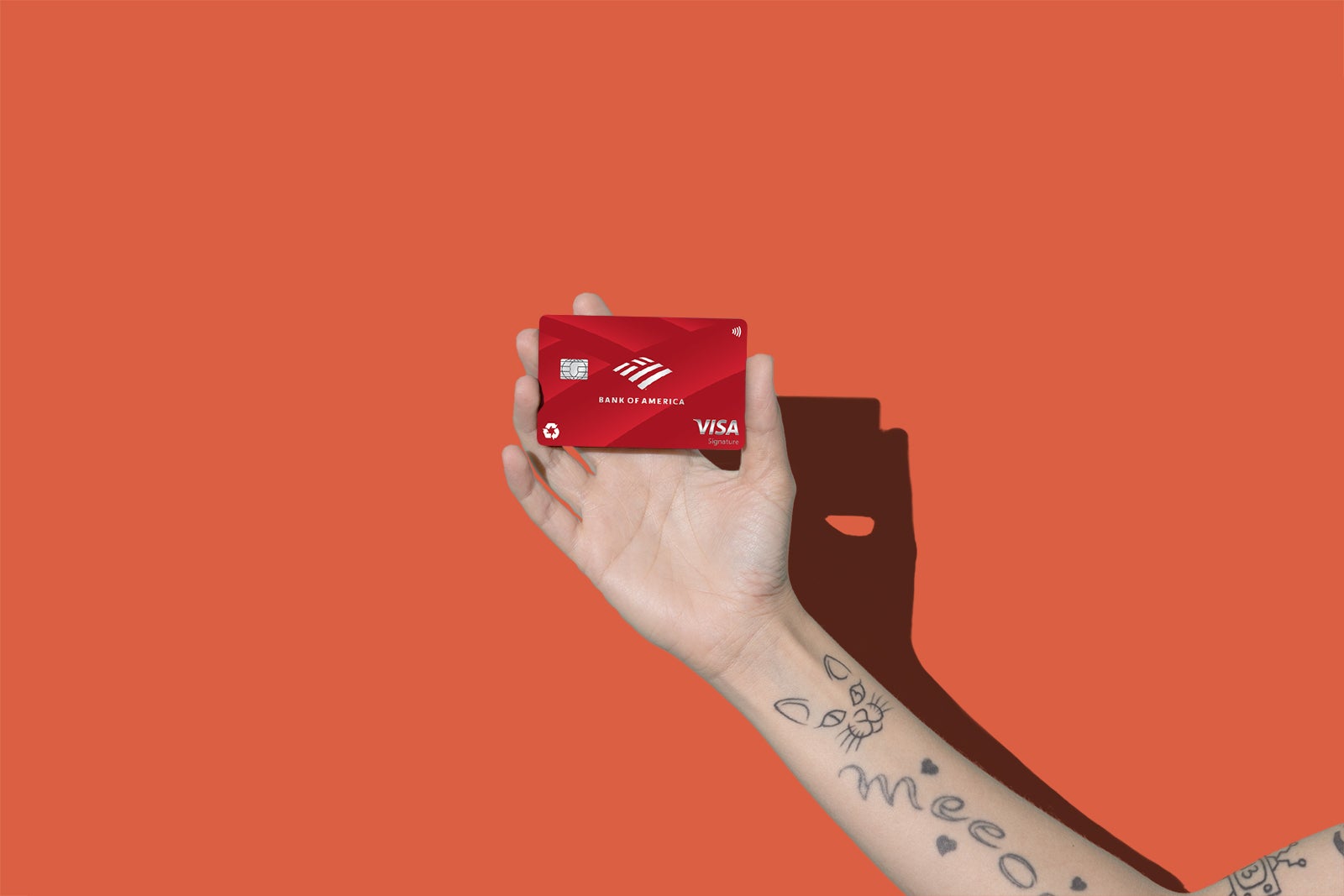
Bank of America Customized Cash Rewards credit card
Welcome offer: Earn a $200 online cash rewards bonus after spending $1,000 on purchases within the first 90 days of account opening.
Annual fee: $0.
THE POINTS GUY
Standout benefits: The Bank of America Customized Cash card doesn’t charge an annual fee, so you can keep it year after year without worrying about that additional expense. Each month you get to select which category you want to earn 3% cash back in from the following options:
Gas and EV charging stations
Online shopping (which includes cable, streaming, internet and phone service charges)
Dining
Travel
Drugstores
Home improvement/furnishings
Cardholders also earn 2% cash back on grocery store and wholesale club purchases (which is great considering you usually need to get a wholesale club cobranded card to earn rewards at these stores).
Both the 2% and 3% categories noted above are limited to a $2,500 maximum each quarter — once you hit it, you’ll earn 1% cash back on purchases.
If you’re prioritizing earning cash back and looking for flexibility — or if your spending varies between a couple of different categories month to month — the Customized Cash Rewards is a great card to add to your wallet.
Another bonus? If you already have a relationship with Bank of America, you may qualify for the Bank of America Preferred Rewards® Program, which could net you bonuses ranging between 25% and 75% depending on which tier you’re in.
For example, if you’re a Preferred Rewards Program member at the Gold tier (which nets you a 25% bonus), instead of earning 3% on gas purchases, you’ll earn 3.75% cash back on each fill-up. Platinum tier members will enjoy a 50% bonus and earn 4.5% cash back, while Platinum Honors, Diamond and Diamond Honors members will each receive a 75% bonus for a total of 5.25% cash back.
Welcome offer: Earn a $200 cash bonus after spending $500 on purchases within the first three months of account opening.
Annual fee: $0.
THE POINTS GUY
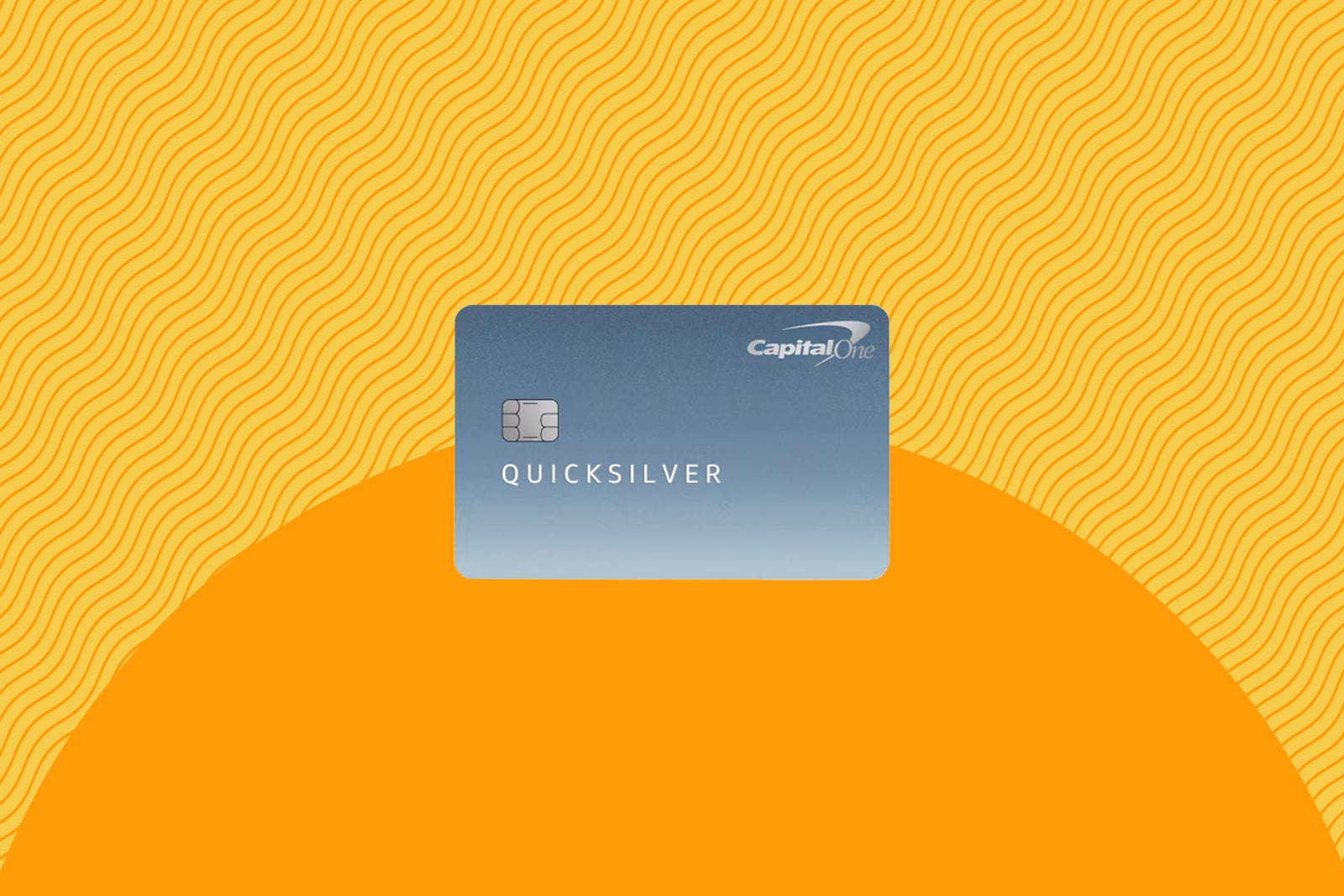
Standout benefits: The Capital One Quicksilver Cash Rewards is a solid card for the cash-back fan who occasionally travels but is still getting their footing under them when it comes to credit card rewards.
Though this card doesn’t earn an elevated reward rate in the gas category, it does earn unlimited 1.5% cash back across all purchases. If you don’t care to track specific spend categories and want a (mostly) flat-rate earner, the Quicksilver Cash Rewards may be a good fit.
This card also gives you access to Capital One Travel, where you’ll earn a standout 5% cash back on hotels and rental cars booked with the Quicksilver Cash Rewards card. Remember how I said this is also a decent travel card? Cardholders enjoy no foreign transaction fees when using their card abroad, which is nice for a product that doesn’t charge an annual fee.
Plus, there’s no minimum redemption amount, and you have options when it comes to redeeming your cash back. You can opt to receive a statement credit, check or gift card or use your reward balance on amazon.com purchases and through PayPal.
Annual fee: $0, though a Costco membership is required to get this card.
THE POINTS GUY
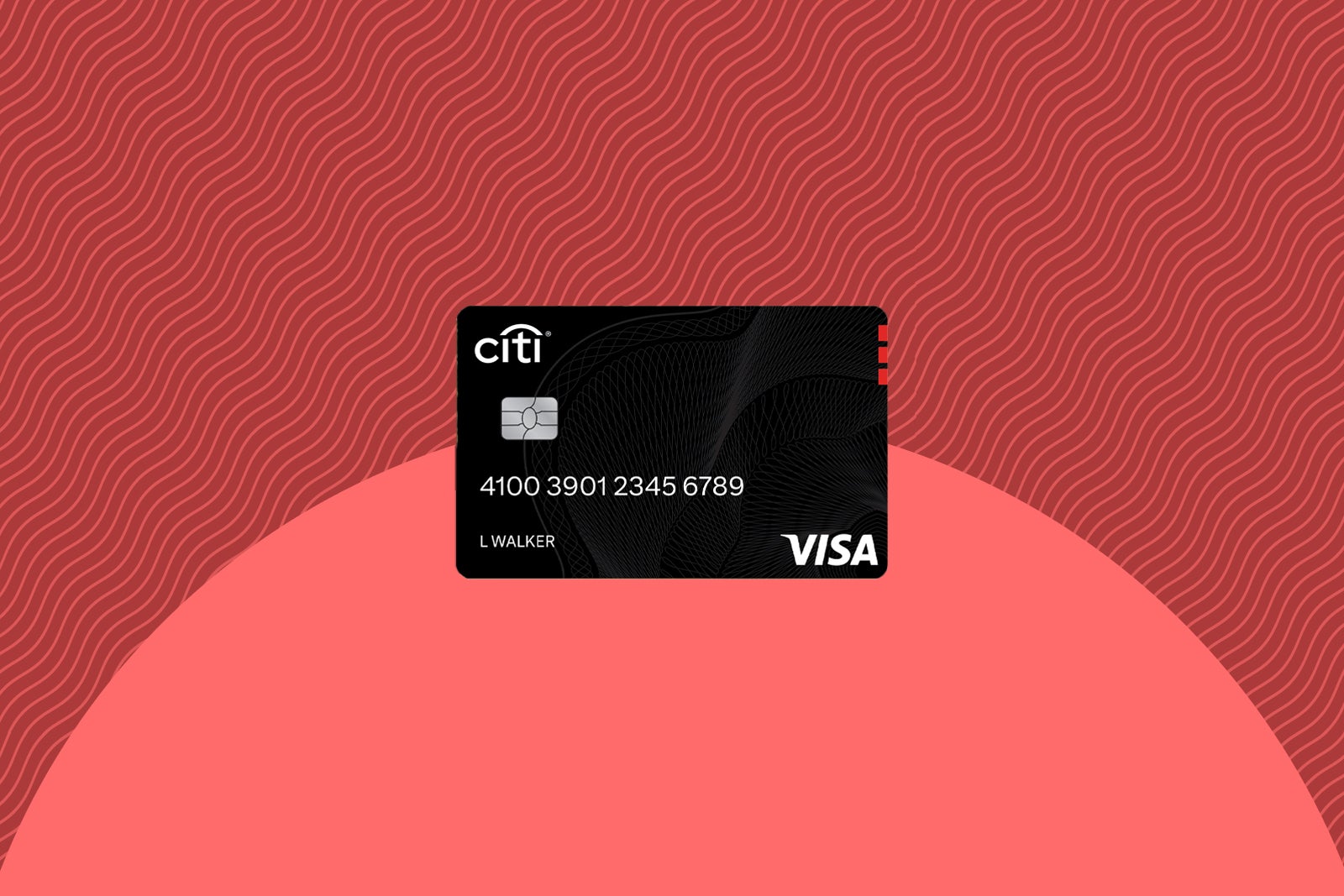
Standout benefits: Costco fans can easily benefit from holding the Costco Anywhere Visa. If you have a Costco membership, getting — and keeping — this card costs nothing thanks to its lack of an annual fee (see rates and fees). This card features solid gas earning rates and even covers EV charging, making it versatile as well.
Costco Anywhere Visa Card holders can earn 5% cash-back rewards on gas at Costco and 4% cash back on other eligible gas and EV charging purchases (up to $7,000 in combined spend per year; then 1%). This means you’re earning rewards every time you fill up your tank or charge your EV, which is especially useful for households that use both types of vehicles.
Another perk of having the open-loop Costco Anywhere Visa is that you can earn solid cash-back rates in other popular categories, like 3% at restaurants and on eligible travel purchases. Better yet, the travel rate can be stacked on top of the 2% cash back Executive members get with their premium membership for a combined 5% cash back on travel purchases. This additional 2% rate applies to the first $50,000 spent each year at Costco, costco.com and Costco Travel but does not apply to the gas category. Even so, you’re still earning between 4% and 5% on filling your tank or charging your EV.
Though I love shopping at Costco and being a Costco Anywhere Visa Card holder, and I personally don’t mind waiting a year to get my reward certificate each February, I can see how this calendar may be off-putting to some. If you prefer to earn your credit card rewards on a rolling monthly basis, this card may not be for you.
The good news is that there are plenty of other cards to choose from that earn elevated reward rates on gas purchases and offer reward access more frequently.
Welcome offer: Earn a $200 bonus after spending $500 on purchases in the first three months of account opening.
Annual fee: $0.
THE POINTS GUY
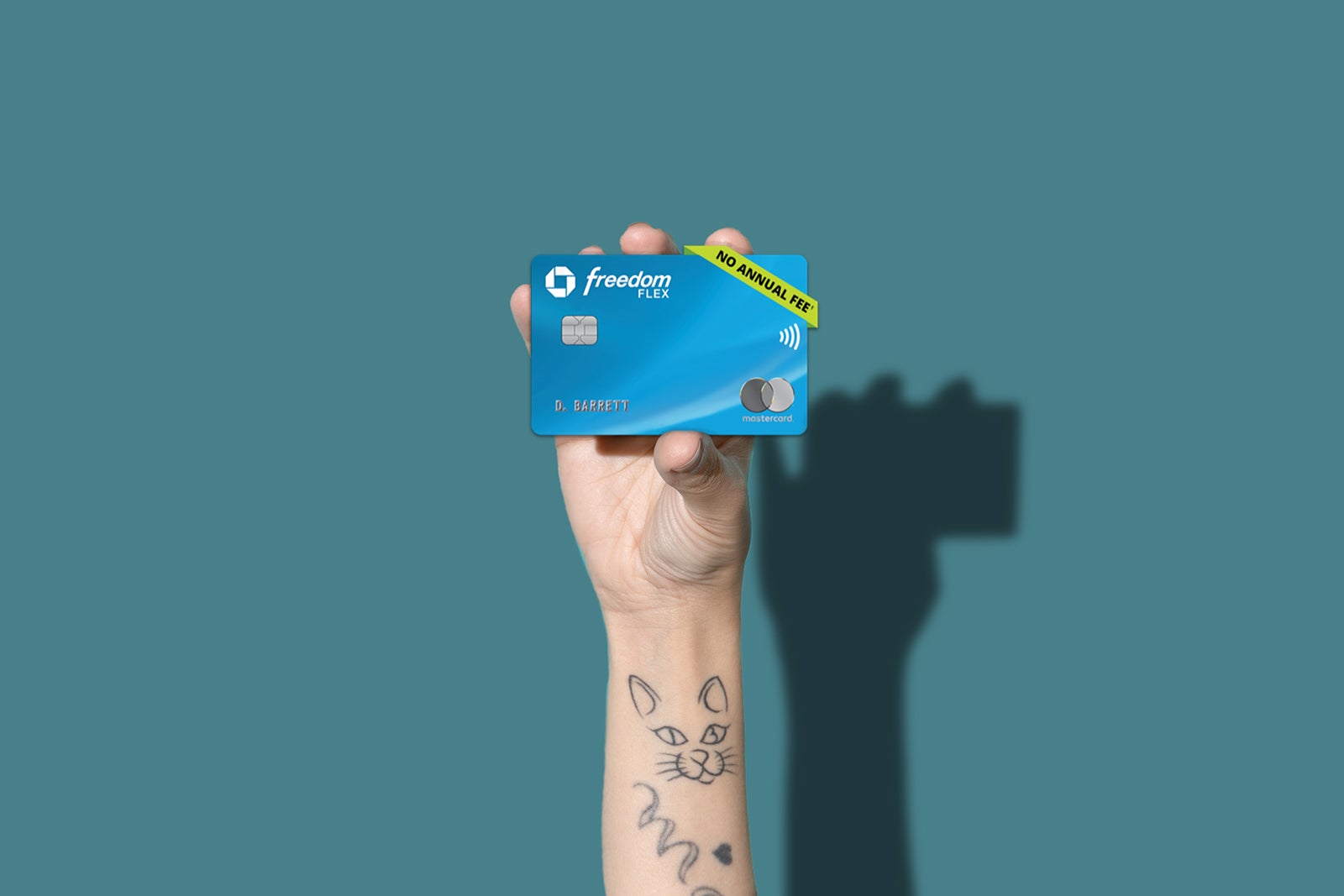
Standout benefits: The Freedom Flex is easily one of the best cash-back cards on the market. It earns generous rates in key spend categories, including 5% cash back in rotating bonus categories (on up to $1,500 in combined purchases each quarter you activate) and at least 1% cash back across all other purchases that don’t fit into any of its other reward categories.
Gas has been included as a bonus category one quarter per year since TPG began tracking the bonus categories for this card in 2014. Though these categories fluctuate, chances are that you’ll be able to take advantage of earning 5% on gas expenses three months out of the year as a Freedom Flex cardholder.
The Freedom Flex makes it so that you’re earning rewards every time you pay, no matter the purchase. This card also features some impressive perks for a no-annual-fee card, such as cellphone protection, shopping protections and trip cancellation and interruption insurance.
Whether you’re getting gas on a cross-country road trip or just filling up for your daily commute, you’re earning — at minimum — 1% cash back each time you hit the pump. Plus, when you pair this card with another Chase card that earns Ultimate Rewards points — like the Chase Sapphire Preferred Card, the Chase Sapphire Reserve® or the Ink Business Preferred® Credit Card — you can convert your cash back to this valuable point currency.
Welcome offer: Earn 60,000 points after spending $4,000 on purchases in the first three months of account opening.
Annual fee: $95.
THE POINTS GUY
Standout benefits: This card is a staff favorite at TPG thanks to stellar travel protections and solid earning rates in popular categories. The Sapphire Preferred is also an excellent card for those who are ready to add another card to their roster that earns valuable transferable points.
Gas is not a specific bonus category on this card, but you will earn a flat rate of 1 point per dollar spent when you pay with this card at the pump. That may not sound like much, but every point you earn on this card is valuable since Chase has lots of great airline and hotel transfer partners — and there are often several opportunities to take advantage of transfer bonuses throughout the year.
The Sapphire Preferred is a chameleon, earning generous reward rates across popular spending categories, though it really shines as a travel rewards card.
Cardholders earn 5 points per dollar spent on travel booked via Chase Travel, plus an up to $50 annual hotel statement credit on hotels booked through this portal. My partner has this card, and we make sure to use this hotel credit every year (which is easy to do since the credit is applied automatically without the need for activation).
Cardholders also enjoy 3 points per dollar spent on dining, select streaming services and online groceries and 2 points per dollar spent on all other travel purchases.
Because this card doesn’t charge foreign transaction fees, you’ll enjoy the previously mentioned earning rates throughout the U.S. and abroad, making the Sapphire Preferred the perfect travel companion.
Welcome offer: Earn a $250 bonus after spending $500 on purchases in your first three months of account opening.
Annual fee: $0.
THE POINTS GUY
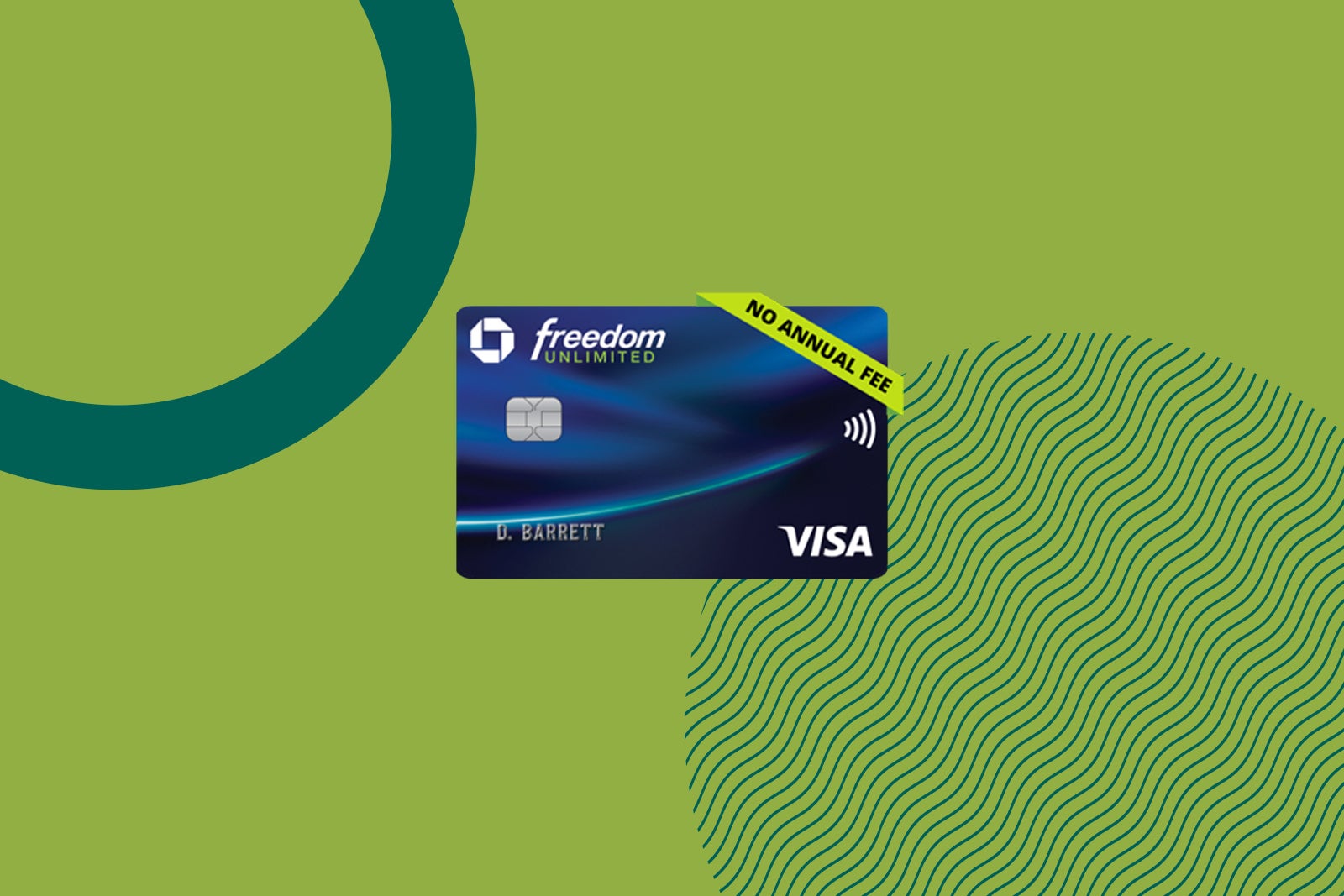
Standout benefits: Chase Freedom Unlimited cardholders will enjoy earning at least 1.5% cash back across all purchases outside of the bonus categories featured on this card.
If you choose this as your primary gas rewards card, you also enjoy the following earning rates:
5% cash back on travel purchased through Chase Travel
3% cash back on drugstore purchases
3% cash back on dining at restaurants — including takeout and eligible delivery services
A flat cash-back rate in all nonbonus categories means fueling up will automatically earn you 1.5% back on every dollar you spend, and since this card doesn’t come with an annual fee, getting and keeping it is a net positive year after year assuming responsible card usage.
This card is a great option for card novices and pros alike because it helps fill in any gaps in your reward-earning strategy.
Like the Freedom Flex, the Freedom Unlimited allows you to transfer your cash rewards into Chase Ultimate Rewards points if you hold another Chase card like the Sapphire Preferred, the Sapphire Reserve or the Ink Business Preferred.
Welcome offer: Earn up to 75,000 bonus points: 50,000 points after spending $4,000 on purchases and paying the annual fee in full within 90 days of account opening and earn another 25,000 points after spending $12,000 on purchases within 365 days of account opening.
Annual fee: $95.
THE POINT GUY
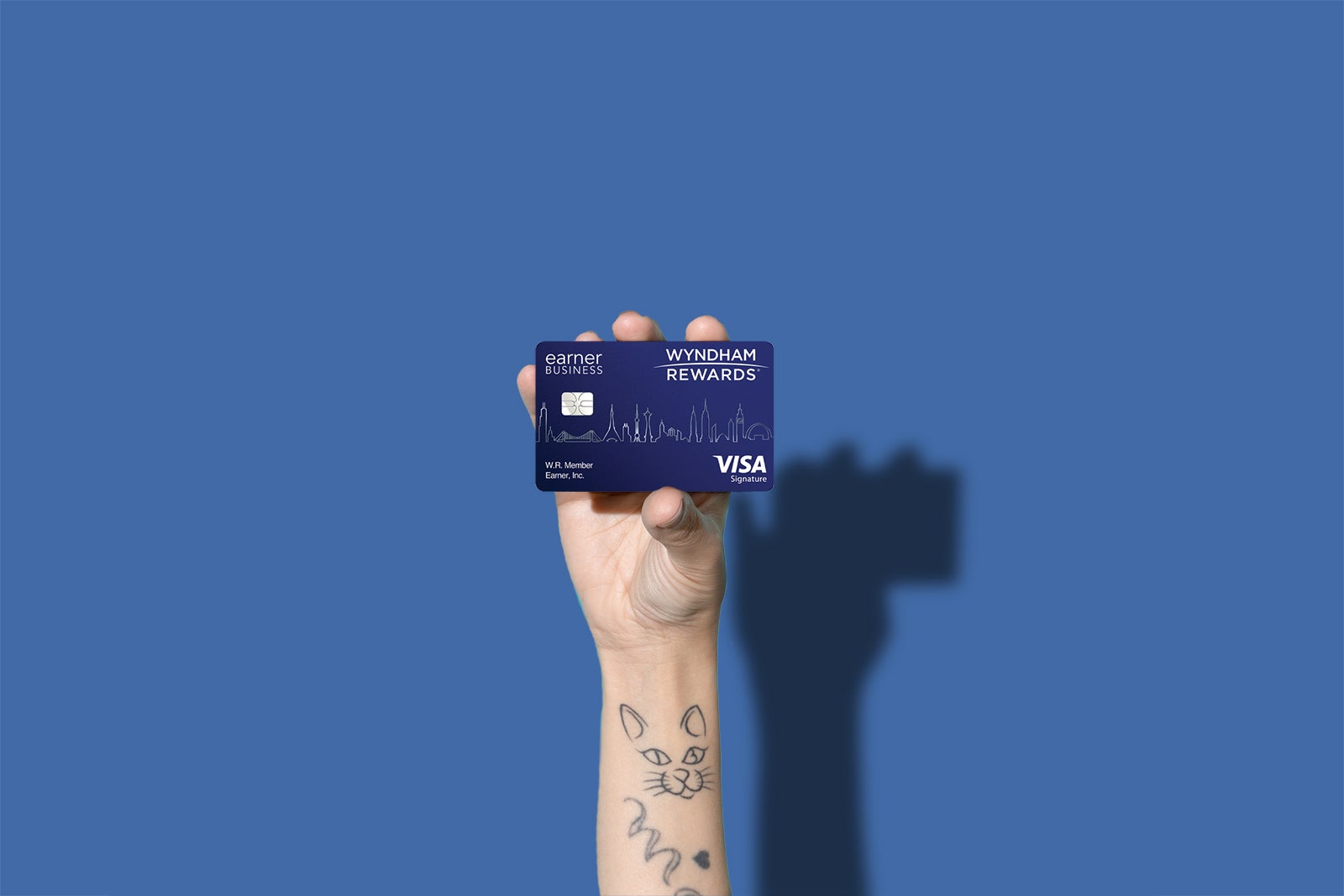
Standout benefits: In addition to being a solid earner on gas purchases — netting a generous 8 points per dollar spent — this card offers cardholders a reward balance boost of 15,000 bonus points each anniversary year.
This product makes the most sense for small-business owners who are also Wyndham loyalists, as it earns 8 points per dollar spent on Hotels by Wyndham. Others are better off with a general rewards or travel card.
In addition to a decent welcome bonus of up to 75,000 points, cardholders can maximize their business expenses by earning 5 points per dollar spent on marketing, advertising and utilities.
The cherries on top are the automatic Diamond elite status that confers perks like suite upgrades and a welcome amenity at check-in, the ability to get complimentary employee cards for easier expense tracking and the absence of foreign transaction fees — ideal for the business traveler.
The information for the Wyndham Rewards Earner Business Card has been collected independently by The Points Guy. The card details on this page have not been reviewed or provided by the card issuer.
Welcome offer: Earn 45,000 bonus points after spending $1,000 on purchases in the first 90 days of account opening.
Annual fee: $75.
THE POINTS GUY
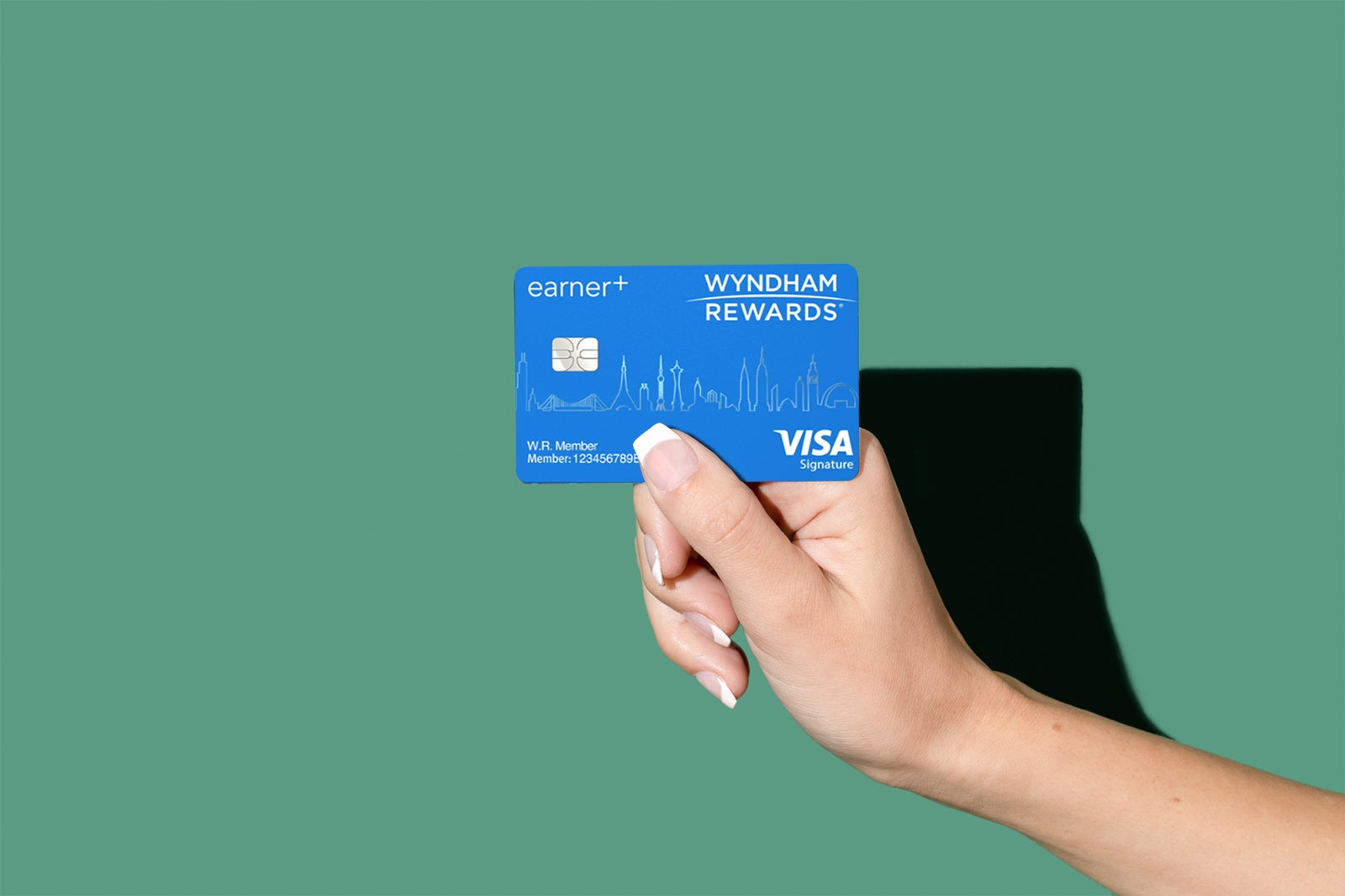
Standout benefits: The consumer Wyndham Rewards Earner card features a smaller annual fee ($75) than its business counterpart and still comes loaded with perks.
If you frequent Wyndham properties, you’ll enjoy earning 6 points per dollar spent at Hotels by Wyndham and on gas purchases, making this card another sleeper hit when it comes to earning gas rewards.
This card also comes with automatic Platinum elite status and 7,500 bonus points each anniversary year.
The information for the Wyndham Rewards Earner Plus Card has been collected independently by The Points Guy. The card details on this page have not been reviewed or provided by the card issuer.
Welcome offer: Earn 20,000 bonus points after spending $1,000 on net purchases in the first 90 days of account opening.
Annual fee: $0.
THE POINTS GUY
Standout benefits: For a no-annual-fee card, the Altitude Connect Visa offers some pretty stellar perks and earning rates where you want them — especially if you’re a traveler, commuter or foodie:
5 points per dollar spent on prepaid hotels and car rentals booked directly in the Altitude Rewards Center
4 points per dollar spent at gas and EV charging stations (up to your first $1,000 each quarter; excludes discount stores, supercenters and wholesale clubs)
4 points per dollar spent on travel purchases made directly with airlines, hotels and rental car companies
2 points per dollar spent on dining, on streaming services and at grocery stores (excluding discount stores, supercenters and wholesale clubs)
Cardholders can also enjoy up to $100 in statement credits toward their TSA PreCheck or Global Entry application fee (every four years) and a complimentary Priority Pass membership that allows four no-cost visits to over 1,600 airport lounges all over the world.
When it comes to earning points, don’t discount the Altitude Connect Visa. There are other cards that earn a more valuable reward currency than the points issued by U.S. Bank, but if these bonus categories align with your spending, this card can be a solid choice.
The information for the U.S. Bank Altitude Connect Visa Signature Card has been collected independently by The Points Guy. The card details on this page have not been reviewed or provided by the card issuer.
You have tons of options if you’re looking to choose a gas credit card. The good news is that we’ve done a lot of the heavy lifting for you. If you want a card that earns cash back or prefer one that earns travel rewards points, you’ll find an option for you on this list. Here’s what else you should think about before applying.
If you’re still relatively new to credit card rewards, a cash-back card may offer a more comfortable introduction to earning and redeeming this specific reward currency. If you’re eager to start earning valuable points you can transfer to partner programs, a product like the Chase Sapphire Preferred may be more your speed since it features a healthy welcome bonus and solid transfer partners like World of Hyatt, Air Canada Aeroplan and Virgin Atlantic Flying Club. Just make sure you prioritize a card that’s well suited to your needs.
A welcome bonus presents a stellar opportunity to earn a stash of cash back, points or miles depending on the card you choose. When it comes to applying for a gas-specific credit card, factor in whether the welcome bonus offers you decent value in addition to the main reward categories featured on the card you’re considering.
For me, getting the Costco Anywhere Visa made sense since I already had a Costco membership and was looking for ways to maximize my reward-earning strategy across my main spending categories.
Spending habits
The best reward strategy is one that covers the categories you spend the most money in; for me, groceries, travel, dining, streaming and gas are big ones.
ZORANM/GETTY IMAGES
I’ve set up my wallet to include cards that cover all these bases. When choosing your gas credit card, consider which card will earn you elevated reward rates each time you fuel up and across other categories, too.
Annual fee
Annual fees run the gamut from $0 to sky-high. Whether you’re willing to pay an annual fee — or want to avoid them altogether — our picks for best gas cards offer something for every budget.
How we chose the best gas credit cards
To choose the best gas credit cards, we selected options suitable for different types of budgets and spenders.
We also took care to choose versatile cards that earn rewards in popular spending categories like streaming, groceries and transit, as well as cards from various issuers that offer hidden gems like purchase protection and even trip delay insurance. For a deeper dive into our selection process, check out our methodologyhere.
Redemption options for gas credit cards
Most of the gas cards on this list earn cash back, though the Chase Sapphire Preferred earns valuable Ultimate Rewards points that can be transferred to several airline and hotel partners.
The best gas credit card is the one that is going to build up your reward currency stash and work for your specific needs.
Bottom line
If you drive a vehicle that runs on gas or needs to be charged, you need a gas credit card. Otherwise, you’re leaving money on the table — especially when there are so many flexible options when it comes to cards that earn elevated rates in this category.
If you already have a Costco membership, consider the Costco Anywhere Visa. If you want a no-annual-fee gas card, consider the Bank of America Customized Cash Rewards card. If you’re willing to pay a sub-$100 annual fee and spend a lot on groceries in addition to gas, you can’t go wrong with the Amex Blue Cash Preferred. You have options, and once you decide what type of rewards you’d like to earn and what your most popular spending categories are, you can narrow down your selection from there.
For rates and fees of the Amex Blue Cash Preferred, click here.
Editor’s note: This is a recurring post, regularly updated with new information and offers.
I frequently stay at IHG properties because I can get good value when redeeming IHG points. Although IHG One Rewards moved to dynamic award pricing in 2020, I’ve continued getting solid value when redeeming IHG points.
For example, last week, I redeemed 87,000 points for a four-night stay at the InterContinental Athenaeum Athens in Greece, which would have otherwise cost $889. I got a redemption rate of 1.02 cents per point on this stay, much higher than the 0.5 cents per IHG point listed in TPG’s March 2025 valuations.
Here’s what you need to know about redeeming IHG points for stays, flights and more.
Redeem IHG points for hotel stays
You can redeem IHG One Rewards points for most IHG stays through IHG’s website, app or customer care. However, you may be unable to redeem IHG points at some IHG Army Hotels and Six Senses properties.
OSCAR WONG/GETTY IMAGES
You can only redeem IHG points for standard room types. Reward nights include taxes and fees — except at Iberostar Beachfront Resorts, where you’ll need to pay local and conditional taxes or fees — but don’t include extra person charges, resort fees, service charges, transportation, gratuities and incidentals.
Since IHG uses dynamic award pricing, the number of points you’ll need to redeem for a reward night will vary. IHG’s terms and conditions say reward night pricing “may vary according to several factors, including but not limited to brand, hotel, and day of week.” Although there aren’t any reward night blackout dates, you may not find award availability for some stays because “room inventory is limited and subject to prior sale,” according to IHG’s terms and conditions.
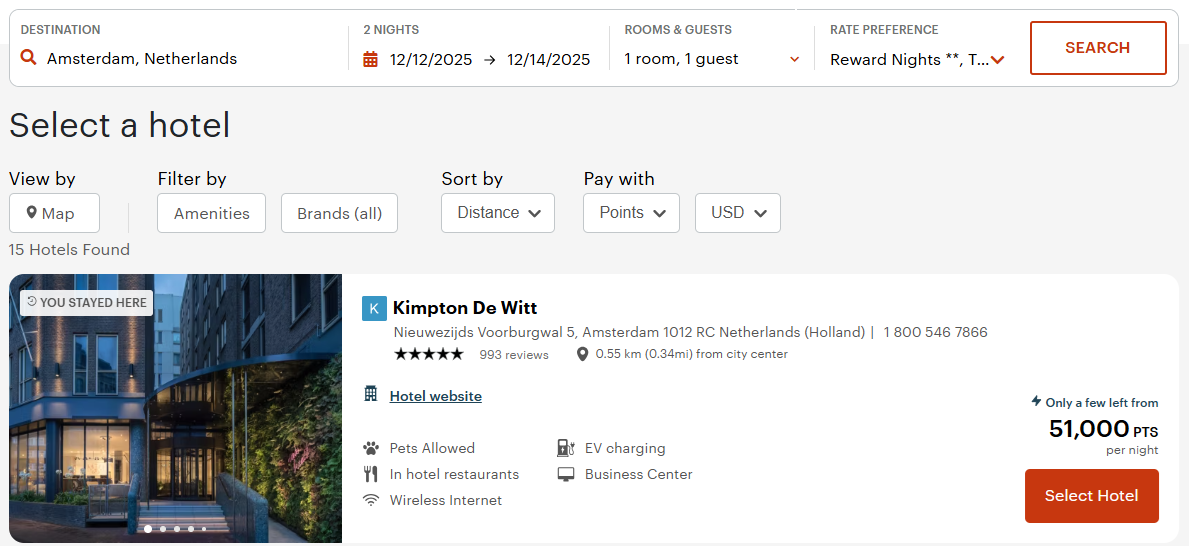
To check award night availability and pricing, start on IHG’s website or app. Enter your destination, check-in date, checkout date and number of guests. Select “Reward Nights” from the drop-down menu under “Rate Preference.”
IHG
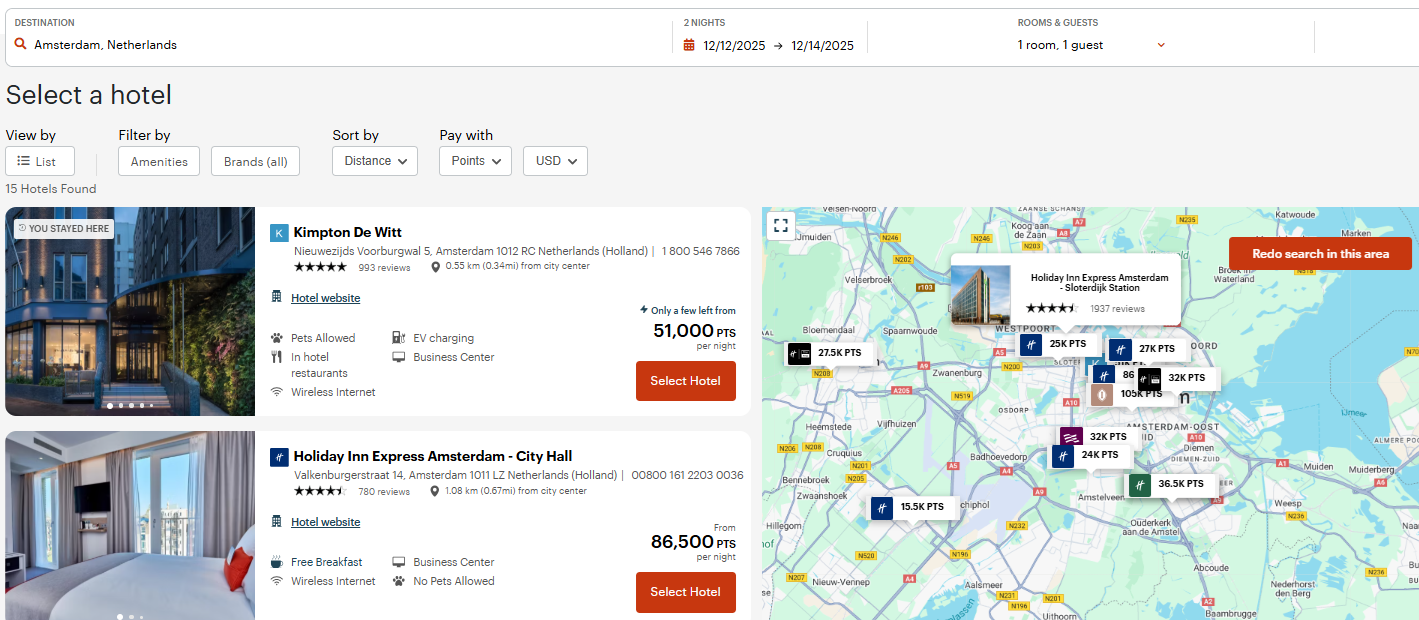
The next page will show you the award night results for your search query. You can filter these results by amenities or brands. You can also sort by various metrics, including distance, price and rating.
IHG
Click on “Map” to see where the properties are within your destination.
IHG
Once you click “Select Hotel” for one of the properties, you’ll see the room options you can book with points for your stay. Some properties may only offer one room type, while others may offer a variety of room setups or views. Scroll through the options, and pick the best room type for your trip.
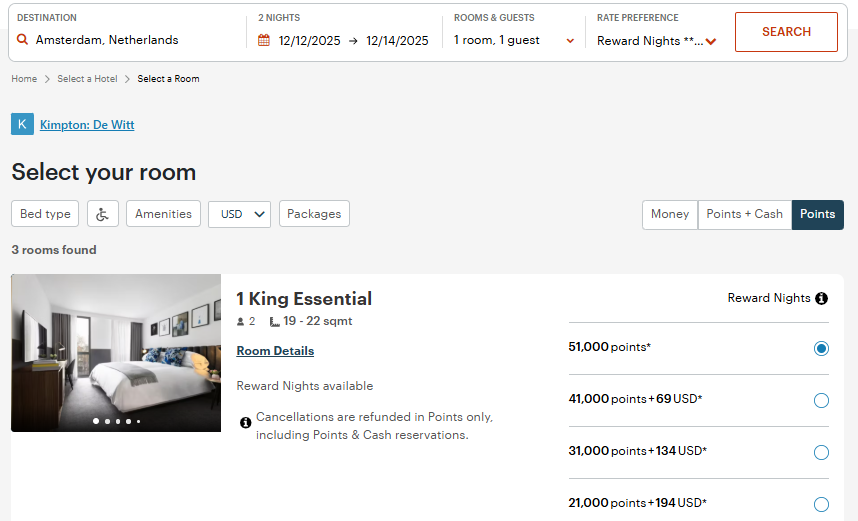
If you click on the 51,000 points per night option and then click “Select,” you’ll land on the last page before confirming your reservation. Be sure to check the cancellation policy on this final page. Most reward night stays are free to cancel until shortly before your stay, but cancellation policies vary.
IHG occasionally offers reward night discounts to eligible Platinum Elite, Diamond Elite and IHG One Rewards credit card holders. You’ll usually get an email from IHG about these reward night discounts, but you often must book quickly to enjoy the discounted rates.
Finally, note that IHG’s terms and conditions now allow a second guest listed on a reward night reservation to stay even if the member who booked the reward night isn’t staying. So, you can redeem your IHG points for a friend or family member’s stay. However, there are additional requirements if your stay is within mainland China, Hong Kong, Macau or Taiwan.
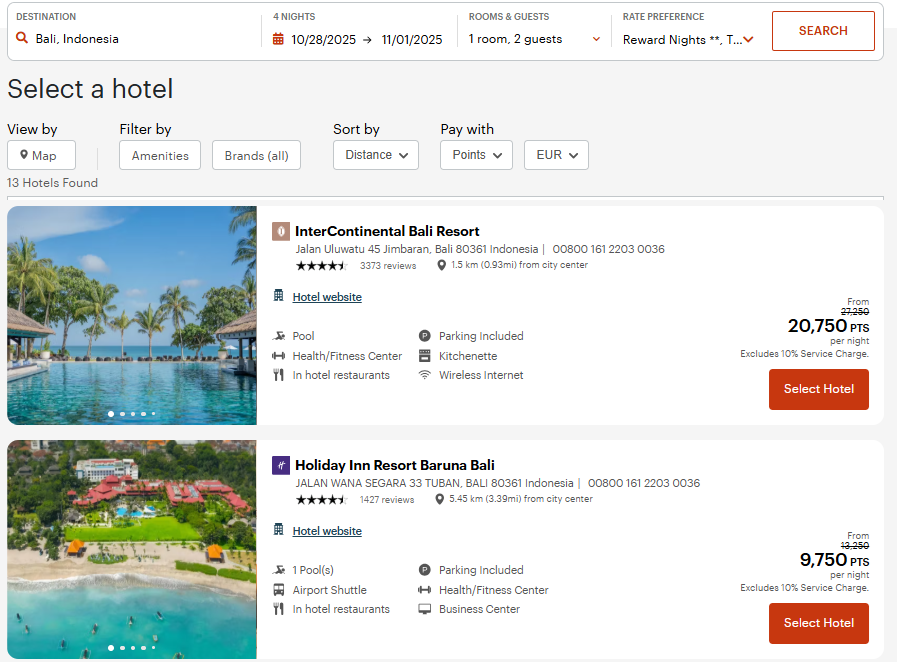
Without this benefit, this four-night stay at the InterContinental Bali Resort would cost an average of 27,250 points per night (for a total of 109,000 points).
IHG
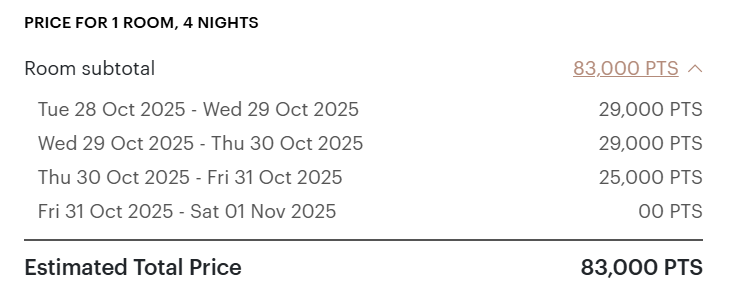
Since I have the IHG One Rewards Premier Credit Card, which offers the fourth-reward-night-free perk to cardholders, I’d only need to redeem an average of 20,750 points per night (for a total of 83,000 points for this four-night stay).
IHG
Even if you redeem IHG points only once or twice a year for stays of four nights or longer, this valuable perk makes it worth keeping an IHG credit card in your wallet.
As you might have noticed in some screenshots above, you can book points-and-cash rates. Know, though, that you’re effectively buying points when you book an IHG points-and-cash rate, so IHG will refund you solely in points if you cancel your booking within the free cancellation period.
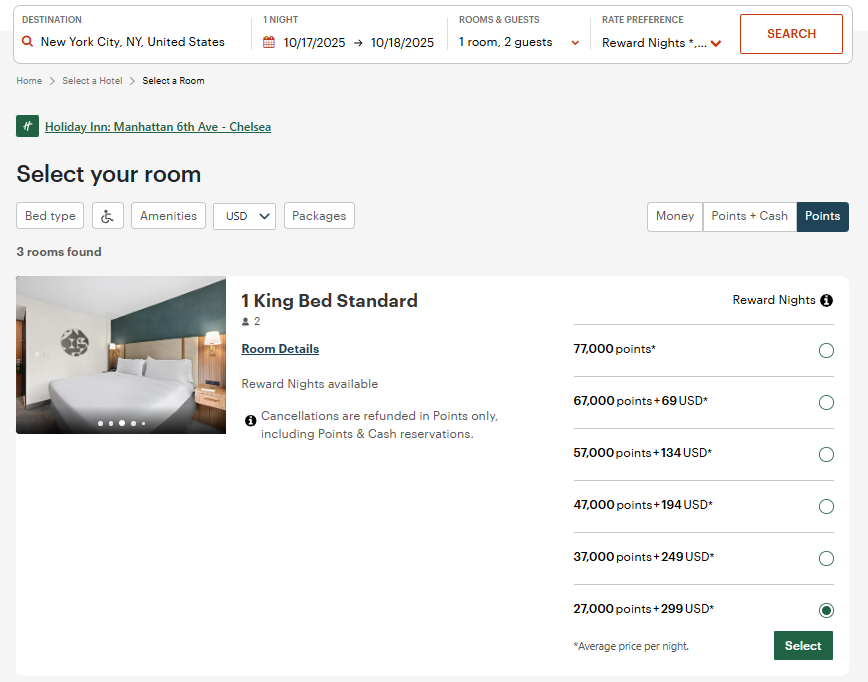
It’s worth working through the math and checking the rate at which you can buy IHG points outright before you book a points-and-cash rate. For example, consider this one-night stay in New York City.
IHG
If you redeemed 77,000 points for this night that would otherwise cost $537.76, you’d get a redemption rate of 0.70 cents per point. However, you could also book any of the following points-and-cash rates for the same night:
67,000 points and $69 (redemption rate of 0.70 cents per point)
57,000 points and $134 (redemption rate of 0.71 cents per point)
47,000 points and $194 (redemption rate of 0.73 cents per point)
37,000 points and $249 (redemption rate of 0.78 cents per point)
27,000 points and $299 (redemption rate of 0.88 cents per point)
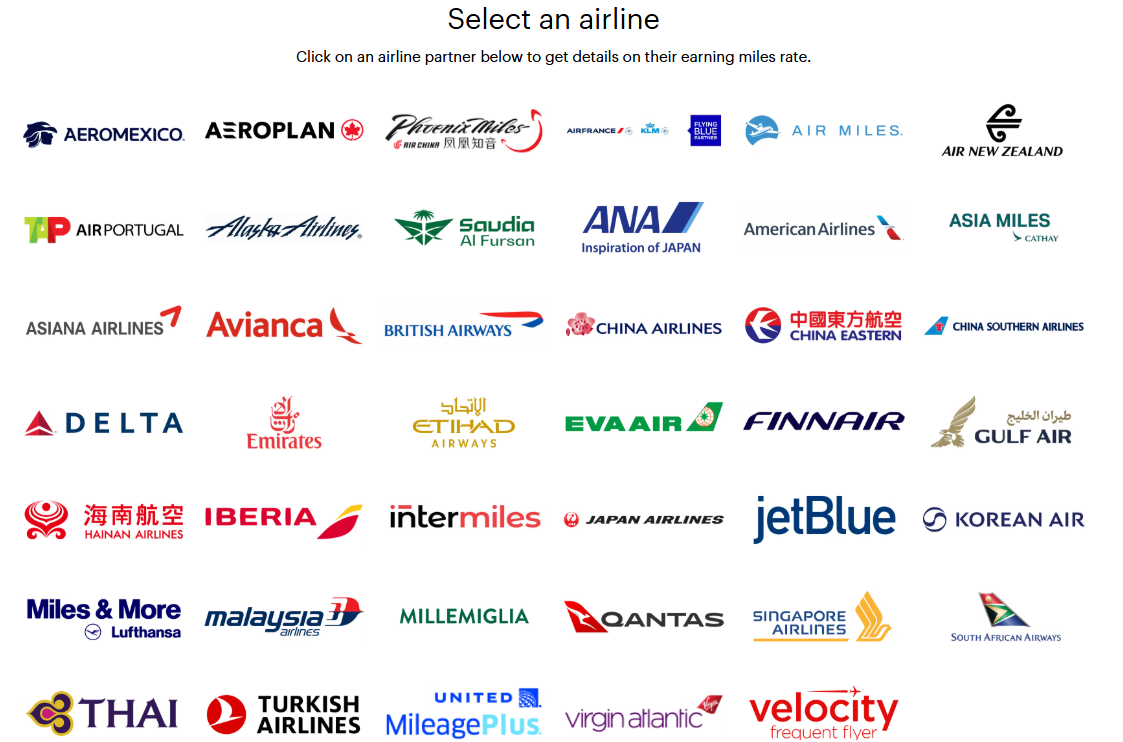
Like many hotel rewards programs, you can transfer your IHG points to various airline partners. You can see all the airline options on IHG’s earn miles page. However, most programs transfer at a rate of 10,000 IHG points to 2,000 airline miles. So, you’re almost certain to lose value when you redeem your IHG points for airline miles.
Image of the airline programs with which you can earn IHG points. You can also usually convert IHG points to these airlines’ currencies. IHG
Because of this, you should only consider transferring IHG points to an airline if you need to top up your account balance for a specific redemption. Otherwise, you’ll almost certainly get better value when redeeming IHG points for hotel stays.
You can also redeem IHG points for other types of rewards and experiences. Doing so will usually give you a relatively low redemption rate, and the exact options vary based on your region and country of residence. Here’s a look at the options available to U.S. residents.
Digital rewards
You can redeem IHG points for movies, ebooks, electronic magazines, games, mobile top-offs and software through the program’s digital rewards portal. Electronic magazines start at around 500 points, while movies start at around 1,250 points.
Through IHG One Rewards Access, you can redeem IHG points for select experiences, including sports and exclusive events. Sometimes, you can secure an experience for a set number of points; other times, you’ll need to enter a bid in an online auction for the chance to win.
Trip add-ons
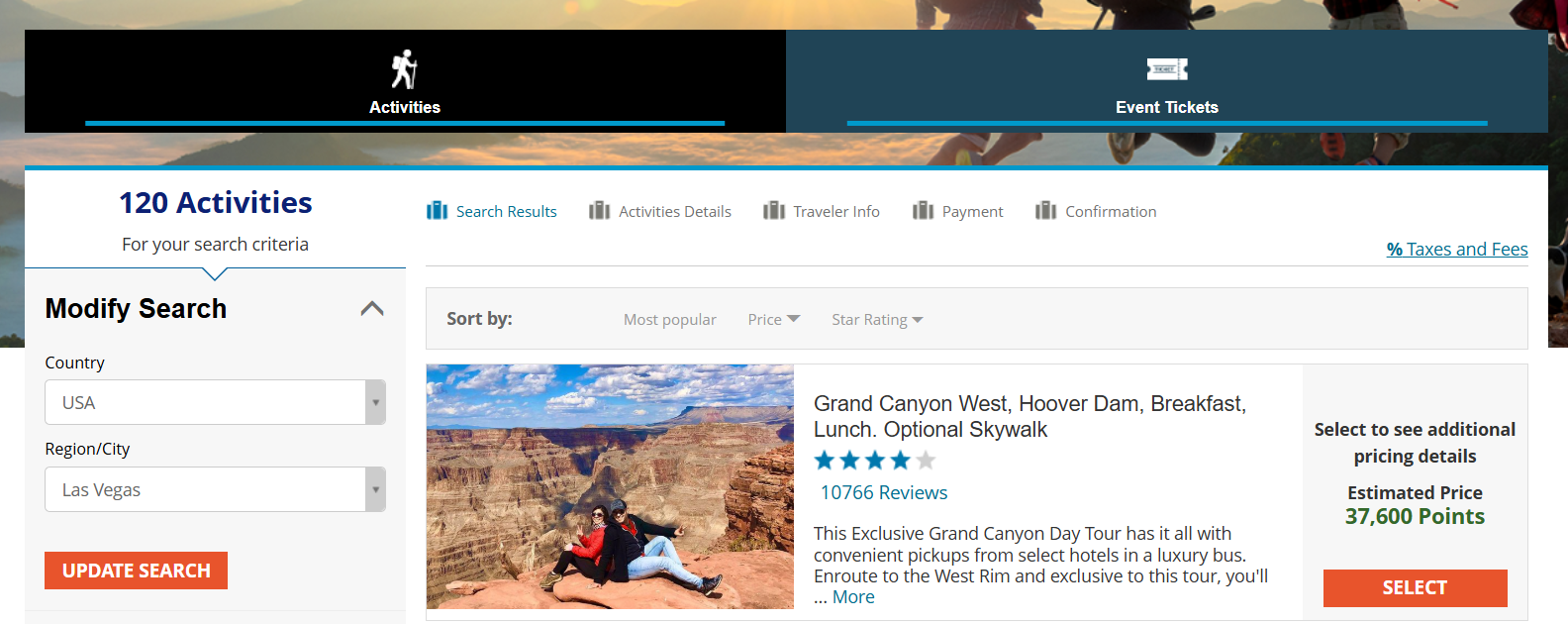
You can redeem IHG points for activities in select cities, including Las Vegas.
IHG
While this might seem appealing, check comparable paid rates before redeeming your IHG points to ensure a good redemption value.
IHG One Rewards catalog
Through the IHG One Rewards catalog, you can redeem IHG points for merchandise, gift cards, event tickets and donations, among other options.
10’000 HOURS/GETTY IMAGES
For example, you can redeem between 1,000 and 2,500 IHG points for a yearlong magazine subscription. You can also redeem IHG points for gift cards to various merchants. Here’s how many points you’ll need to redeem for physical gift cards of varying amounts:
$50 gift card: 25,000 points (redemption rate of 0.2 cents per point)
$25 gift card: 13,000 points (redemption rate of 0.19 cents per point)
$15 gift card: 8,000 points (redemption rate of 0.19 cents per point)
$10 gift card: 5,500 points (redemption rate of 0.18 cents per point)
$5 gift card: 3,000 points (redemption rate of 0.17 cents per point)
You can also redeem IHG points for merchandise. You can request specific items through the rewards concierge if you don’t see what you want in the catalog.
Finally, you can donate your points to charity, with options starting at just 1,000 points.
There are many ways to redeem IHG points. However, I almost always recommend redeeming your IHG points for hotel stays. This will give you the most value for your points and let you explore over 6,600 IHG properties worldwide.
If you want to earn more IHG points, the IHG One Rewards Premier Business Credit Card has a limited-time welcome offer when you apply by April 30. With this welcome offer, you can earn 140,000 bonus points after spending $4,000 in the first three months from account opening, plus earn 60,000 bonus points after spending a total of $9,000 in the first six months from account opening — for a total of 200,000 bonus points.
If you prefer a consumer card, the IHG One Rewards Premier Credit Card currently has a welcome offer of 140,000 bonus points after spending $3,000 in the first three months from account opening. Meanwhile, the IHG One Rewards Traveler Credit Card has a welcome offer of 80,000 bonus points after spending $2,000 on purchases in the first three months from account opening.
Psst! Don’t tell anyone, but I have a secret for you: If you want to avoid the breakfast crowds at the buffet on Celebrity Cruises‘ Edge Class ships, head to the tucked-away Eden Cafe.
The Eden Cafe has great breakfast items, including yummy breakfast wraps and several healthful choices. And, sometimes, it’s completely empty.
The buffet eatery on Edge Class ships, the Oceanview Cafe, by contrast, can often be crowded.
Heading to off-the-beaten-path breakfast nooks on cruise ships is one of the secrets to cruising like a champ that I’ve learned over the years. When you have sailed on nearly 200 ships, you pick up a thing or two.
There are a lot of cruise secrets to learn. Of all the possible things you can do on a vacation, cruising is a bit of an odd duck. Cruise ships have lots of unusual traditions, quirks and rules — “secrets” to the uninitiated — that can take many sailings to figure out.
Speaking of odd ducks, keep an eye out for the toy ducks hidden around many cruise ships by passengers, one of the more unusual phenomena of cruising in recent years. If you find one, you can take it home as a souvenir. That’s another cruising secret for you.
Here are more cruise secrets that you may not know if you’re a newcomer to cruising or even a veteran of several sailings.
There is no limit to what you can order in main restaurants
Go ahead: Ask for a second appetizer or two main courses. On cruise ships, by long tradition, there’s generally no limit on how many dishes you can order when dining in an included-in-the-fare main dining room.
It’s a common sight to see veteran cruisers request extra appetizers, main courses and desserts. You also can ask for a main course to be brought out as an appetizer in a smaller size or for an appetizer to become a main course. It may seem brazen at first to order multiple dishes at every course, but if you want to, go for it. It’s a great way to try new things.
The room service is inexpensive — or even free
PRINCESS CRUISES
Speaking of ordering up a storm, don’t be shy about calling for room service when staying on a cruise ship. Unlike at most hotels on land, room service on cruise vessels is either very inexpensive or completely free. The lines that do charge for room service generally just charge a service fee of $5 to $10 per order, sometimes only on late-night orders. A few have per-item charges, but they’re usually not all that much.
Cruisers have a penchant for heading to the main buffet restaurants on ships for breakfast, so such eateries often are packed in the mornings. But on some ships, you’ll also find alternate venues open for breakfast that many cruisers overlook.
As noted above, I’ll escape the crowds on Celebrity’s Edge Class ships at breakfast time by heading to the hidden-away Eden Cafe, which serves up breakfast sandwiches, freshly baked cinnamon rolls and other quick-serve items. The breakfast burrito-serving Cafe @ Two70 on Royal Caribbean‘s Quantum Class ships is another of my favorite alternatives for a morning meal.
The first day of a cruise is a great time to dine in a specialty restaurant
On most nights, the top specialty restaurants on cruise ships fill up fast. It can be hard to get a reservation to experience one. But you’ll find a lot more tables available at specialty restaurants on the first night of a cruise when most passengers head to an included-in-the-fare main dining room or buffet for dinner. You might even get a discount for dining in one, as some cruise lines take to special offers to fill specialty dining restaurants on embarkation day. For example, Carnival Cruise Line typically offers a complimentary or reduced-price bottle of wine in its steakhouse on night one.
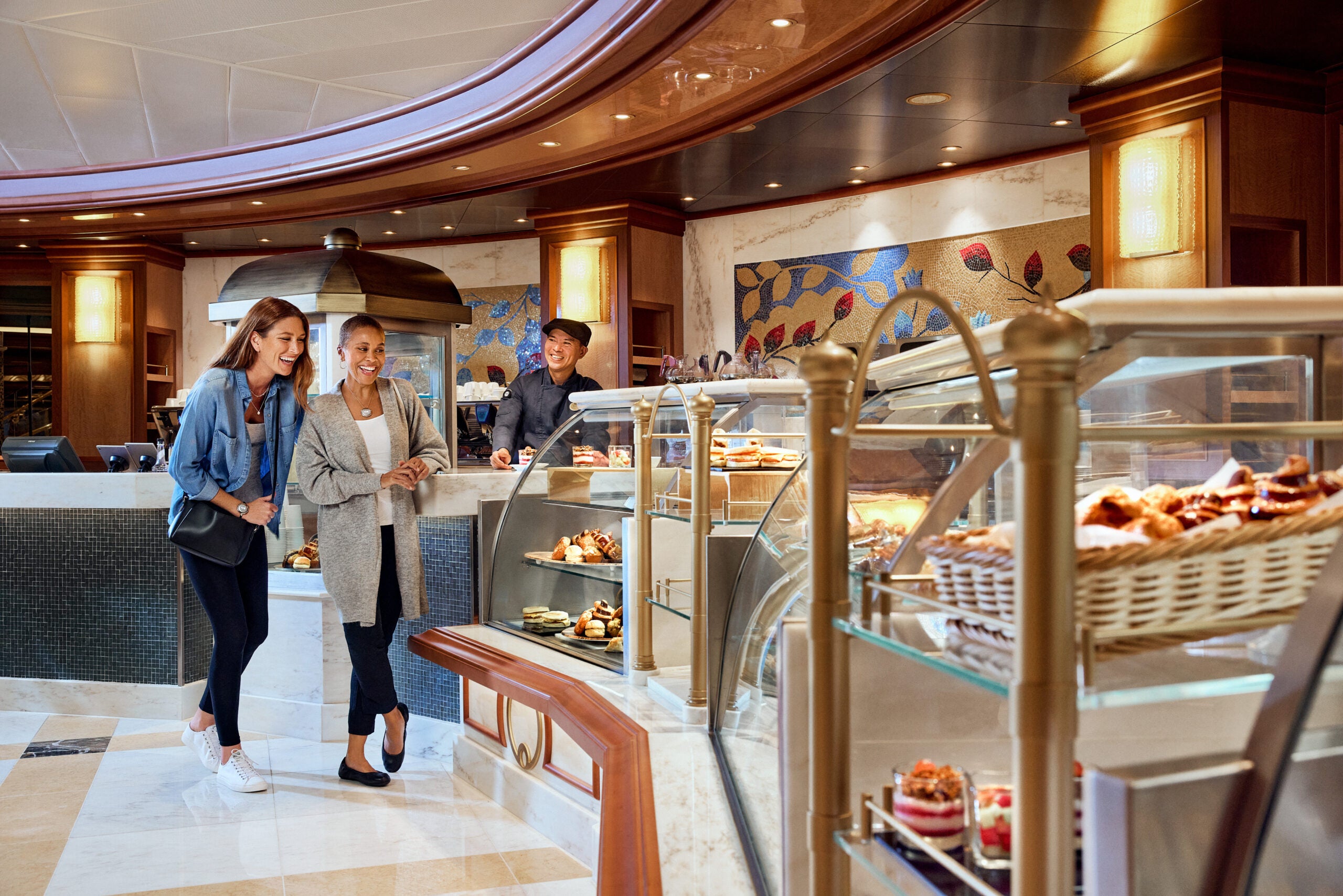
The food is often free at extra-charge coffee shops
The food is free at the International Cafe on Princess Cruises ships. PRINCESS CRUISES
Many bigger cruise ships have extra-charge coffee bars on board that serve up lattes, cappuccinos and other fancy coffee drinks for an extra charge. But unlike coffee shops at home, these venues often don’t charge extra for food items. You’ll frequently find lovely handmade pastries, miniature sandwiches and other gourmet bites on offer that can be yours for the taking — completely gratis.
There often are organized LGBTQ+ meetups
Many cruise lines organize regular LGBTQ+ meetups on ships. You’ll sometimes find them advertised in ship schedules as “Friends of Dorothy” meetings, and they’re usually held in a private area of a lounge.
You can continue Alcoholics Anonymous meetings while on a ship
Many cruise ships also host regular Alcoholics Anonymous meetings on board. You’ll find them listed in ship schedules as “Friends of Bill W.” meetings, and they usually take place in a private place on board, such as a meeting room. The “Bill W.” is a reference to William Wilson, the founder of Alcoholics Anonymous.
You can skip the buffet crowds on embarkation day by heading to a table-served eatery
The first thing many cruisers do when arriving at a cruise ship on embarkation day is head to the buffet for both a quick bite and to wait for their cabins to become available. The seating areas of these venues can quickly become unbearably crowded. To avoid the crowds, ask if there is a table-served restaurant on board open for lunch. There often is, and, in many cases, you’ll find it nearly empty.
A table-served eatery also is a good option to escape the lunchtime crowds on sea days
A table-served restaurant is also a great option for lunch on sea days as an alternative to eating at the buffet. On sea days, you’ll often find the buffet on a ship packed, as it’s typically right near the deck-top pool areas that are the focus for many passengers. Take the time to seek out a table-served restaurant option — often the main restaurant will be open — for a more relaxed and uncrowded lunch experience.
You can drink anywhere
Unlike in many cities and towns, there’s no law on cruise ships saying you can’t walk around in public areas with an open beverage container. You can carry your beer or glass of wine with you wherever you go on a ship, and no one will say a thing.
You can have the pool deck to yourself on port days
Most passengers get off their ship when it arrives in port to experience the local destination, but there’s nothing saying that’s a requirement. You’re perfectly welcome to stay on board during port calls and enjoy all the ship has to offer, including its pool decks. While some venues on ships close during port days, you’ll usually find top-deck attractions such as pools, waterslides and bars open and, often, blissfully quiet.
A spa treatment at a Silversea spa. SILVERSEA CRUISES
It’s not just the pool that you’ll have to yourself by staying on board during a port day. It’s the spa, too. With everybody off the ship touring, spas are relatively quiet on port days — so much so that many ship spas offer discounts on port days to get people to sign up for services. Ask at the spa if it offers such a discount program, and keep an eye out for spa deals in the daily newsletters that many ships deliver to cabins nightly.
You can send your kids to camp for free
Resorts on land often charge hefty fees for their daytime kids programs — if they have them at all. But kids programs on cruise ships are usually included in the fare. You often can send your kids to wonderful, counselor-supervised kids camps on ships for hours at a time for no cost.
You can get a discount on your next cruise by booking it while still on board
On many cruise ships, you’ll find a future cruise desk where you can sign on for another sailing at a discounted rate that you can’t get when booking after you return home. Often, these offers come in the form of a credit that is applied to your next booking. All you have to do is put down a small deposit on the future trip to get the savings, which might add up to $100 or $200 per cabin, or a percentage discount.
Better yet, you often don’t have to know which sailing you want to do. As long as you put down a deposit while on board, you can choose a specific itinerary and sailing later. You can also transfer the booking to your favorite travel agent, so she or he can handle the details and get paid a commission from the cruise line.
Your wine bottle will follow you
A couple drinks wine at a bar on a Princess Cruises ship. PRINCESS CRUISES
You’ll save money in most cases by buying wine by the bottle instead of the glass on cruise ships — and the good news is you don’t have to drink it all at once. If you can’t finish an entire bottle in one sitting at a bar or restaurant, your server will mark the bottle with your room number and store it away for drinking at a later time. It’ll then be there waiting for you when you next return to the venue — or even a different venue (your server at the new venue will track it down).
You can save on beer by buying in bulk
Some cruise lines will offer discounts on beer that’s bought in bulk. Look for a “bucket of beer” deal when sitting at a cruise ship bar — or ask your server if one is available. You’ll usually get four or five beers in a souvenir bucket for a cost that is a bit less than what it would be to order each one individually.
You can bring your own alcohol on board some ships
Many first-time cruisers assume they can’t bring their own drinks on board a ship. But many lines will allow this, usually with some limits. It’s one way to save money when cruising, as drink prices on ships can be high.
For example, adults can bring up to two bottles of unopened wine or Champagne or six beers onto Disney Cruise Line ships at the start of a cruise and at every port of call. At Royal Caribbean, the bring-your-own allowance is one bottle of wine or Champagne per cabin at boarding, plus up to a dozen standard cans, bottles or cartons of nonalcoholic drinks.
A caveat: Many lines levy a “corkage fee” if you want to bring your wine into an onboard restaurant. Be sure to read the alcohol rules for your line before you bring any drinks on board.
You can use your cabin walls for more storage …
Looking for a clever way to expand the storage that your cabin offers? Here’s one of our top cruise ship cabin hacks: Throw some magnetic hooks into your travel bag before you cruise. Walls on cruise ships often are made with metal that is magnetic, even if they look like wood, thanks to faux wood veneers. You can attach magnetic hooks to the walls to hang up clothes and other items. Smaller magnets can come in handy for tacking dinner invitations, excursion tickets and other important papers to cabin walls.
If you’re staying in a windowless inside cabin, you’ll find that it’s darker than dark. If it’s too much for you, there’s an easy hack that will bring just a bit of light to the room at night and allow you to tell when morning arrives.
Turn your TV on, and set it to the bridge camera station (most cruise ship TVs have this). You’ll get a picture of the darkened (but not completely dark) sky at night that will bring a touch of light to your room. When morning arrives, your TV will grow brighter, too, helping you to wake up. Don’t forget to turn the TV volume off, as this channel often plays background music.
A special spa cabin on Holland America’s Koningsdam. HOLLAND AMERICA
Spa lovers, take note: Special spa cabins on some ships come with free access to spa thermal suites and pools that normally come with a hefty extra charge. If you’re the sort of person who loves lounging daily in a spa, you might want to pay up for one of these special cabins. They often cost more than a standard cabin but not as much as the amount you’d pay to buy daily spa passes during a sailing.
Your room might have hidden storage areas …
Do you have lots of personal items you need to store away during your cruise? Do a thorough sweep of your cabin for hidden storage areas upon arrival, including looking under the bed and the couch, if there is one, and in your cabin bathroom. You may be surprised by the concealed storage nooks that you’ll find.
I once spent a whole week on a cruise before I realized that one of the mirrors in the bathroom popped open to reveal a large storage area for toiletries. Thinking the bathroom had limited storage options, I had been keeping most of my toiletries in the nightstand drawer next to my bed!
… and hidden outlets, too
While you’re exploring your room, keep an eye out for hidden electrical outlets and USB ports, or ask your room steward to help you find them. Cruise lines have been adding lots of outlets to ships in recent years to satiate guests’ ever-growing demand for power, but they’re sometimes hidden away in the most unexpected places.
I once stayed on a retrofitted Azamara vessel where USB ports were built into the bottom of new lighting fixtures next to the bed. They weren’t immediately obvious, and I only found out about them by reading a description of the room category on the line’s website while doing research for a guide to the ship.
The ship has remedies available for seasickness
Big cruise ships these days are relatively stable — so much so that you might not even feel them move. But should you start feeling seasick, you often can get seasickness medicine for free at a ship’s guest services desk. Often, the guest services desk will stock individual packets of meclizine, a seasickness remedy that is available over the counter in the U.S. Normally, you won’t be charged if you ask for a few. You also can ask room service to bring you traditional remedies such as green apples or ginger slices.
You can get free internet time by signing up early
Some cruise lines will give you a chunk of free minutes if you sign up for an internet package on the first day of a cruise. You also can get discounts for internet packages by purchasing them online in advance of your sailing. Additionally, you sometimes can get free internet minutes by attaining status in cruise line loyalty programs.
You don’t have to go to presentations to see them
Just because a talk about a port or a disembarkation briefing is happening in the ship’s theater doesn’t mean you have to run down there to see it. You’ll often find that presentations on ships are broadcast live on cabin TVs so you can watch them from the comfort of your cabin. Sometimes, they’re also rebroadcast on a loop on cabin TVs for a day or longer, so you can watch them at another time.
Bonus tip: There’s really no need to watch a disembarkation briefing. I stopped going to them years ago. Most lines will spell out how you get off the ship on the final day of a cruise in a short letter they’ll send to your cabin the night before disembarkation. It’ll repeat everything you’ll be told at the disembarkation briefing and waste much less of your time. Anyway, it’s not rocket science. The disembarkation process for most ships boils down to a long-winded version of “wake up, have breakfast, get off.”
You can usually get into shows without a reservation
On most cruise ships, there is no reservation system for nightly shows. You just show up at the theater at showtime and grab an open seat. But even on ships where a reservation system does exist, you often can get into shows — even sold-out shows — without a reservation. Many people with tickets to cruise ship shows, which normally are free, don’t show up at showtime, and that leaves lots of open seats at the last minute. Arrive a few minutes before showtime, and you’re likely to get in.
Travelers with plans to stay at an IHG brand and IHG One Rewards loyalists, listen up: You could save hundreds of dollars each year by add...
"Green Horizons Traveler" is your go-to blog for sustainable and eco-friendly travel. We explore the world’s most stunning natural wonders while focusing on responsible tourism. Through inspiring stories, tips, and guides, we help you discover breathtaking destinations that prioritize conservation. Whether hiking through forests or relaxing on pristine beaches, we show you how to travel mindfully and make a positive impact. Join us on a journey to protect our planet while experiencing its beauty.