Showing posts with label The Points Guy. Show all posts

Why I love the Amex Business Platinum’s Pay with Points perk

Editor’s note: This is a recurring post, regularly updated with new information and offers.

The Business Platinum Card® from American Express offers frequent travelers several ways to add luxury to their travel plans. From flight discounts to hotel elite status and a comprehensive airport lounge access benefit, the Amex Business Platinum Card delivers unparalleled travel perks that you can only find with a premium travel rewards card. Enrollment is required for select benefits; terms apply.

The card features a $695 annual fee (see rates and fees). However, the plethora of travel perks and a generous welcome bonus for new applicants can offset this fee.

Let’s dig into one of my favorite benefits of the card — the Pay with Points perk — which gives me a discount on business- and first-class flights.

Related: Is the Amex Business Platinum worth the annual fee?

An overview of the Amex Business Platinum

Here are just a few of the valuable features that accompany the Amex Business Platinum:

Enrollment is required for select benefits; terms apply.

Combined, these three benefits alone can more than offset the card’s annual fee. But the perks don’t stop there.

THE POINTS GUY

Additional travel benefits include access to Amex Centurion Lounges and Delta Sky Clubs (when flying on same-day Delta flights)*, hotel elite status with Hilton Honors and Marriott Bonvoy (enrollment required) and cellphone protection**.

Right now, new cardmembers can earn 150,000 bonus points after spending $20,000 on eligible purchases with the card within the first three months of card membership. Plus, earn a $500 statement credit after spending $2,500 on qualifying flights booked directly with airlines or through American Express Travel in the first three months of card membership. You can earn one or both of these offers. Offer ends June 30.

But the one Amex Business Platinum perk I hold near and dear to my heart is the Pay with Points bonus.

*Eligible Platinum Card Members will receive 10 Visits per Eligible Platinum Card per year to the Delta Sky Club or to Grab and Go when traveling on a same-day Delta-operated flight. 

**Eligibility and benefit levels vary by card. Terms, conditions and limitations apply. Visit americanexpress.com/benefitsguide for details. Policies are underwritten by New Hampshire Insurance Company, an AIG Company.

Related: Everything you need to know about Amex Pay with Points

What is the Amex Pay with Points bonus?

Most travel-focused premium cards offer flight-related benefits or credits, such as reimbursing you for fees incurred when traveling throughout the year. But the Amex Business Platinum has a unique airfare bonus for anyone who redeems their Membership Rewards points to pay for qualifying flights through Amex Travel.

By utilizing the Pay with Points function to pay for airfare through Amex Travel, Membership Rewards points are worth 1 cent apiece. On the face of it, that isn’t too exciting; TPG’s May 2025 valuations place Membership Rewards points at 2 cents apiece when utilizing Amex’s many airline and hotel transfer partners.

However, the Amex Business Platinum card offers a unique perk: you can get 35% of your points back on first- or business-class tickets on any airline or an economy ticket on one airline of your choice.
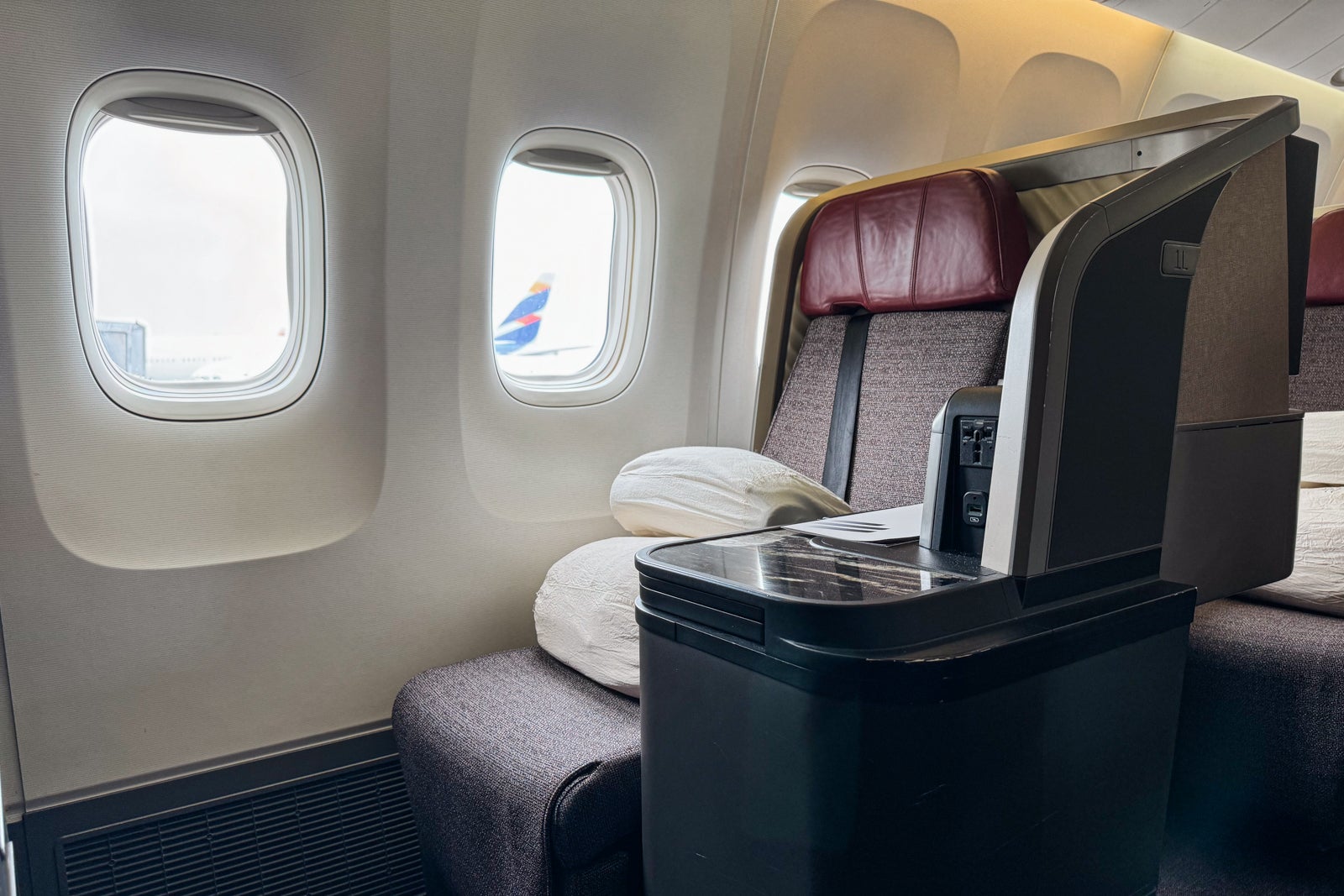
latam business class seat
ERIC ROSEN/THE POINTS GUY

When using this benefit, you can get up to 1 million points back each calendar year, meaning you would need to use 2,857,143 points to pay for flights with Amex Travel before exhausting this benefit in a year.

You can also use the Pay with Points feature toward purchases on your card, gift card purchases and car rental and hotel bookings through Amex Travel, but you will be redeeming points at less than 1 cent each, well below the 2 cents apiece that TPG values Membership Rewards points, so using it toward airfare is a better proposition.

These Amex cards for small businesses that offer a Pay with Points bonus, offering from 35% to 50% of your Membership Rewards points back when you pay with points (terms apply):

The information for the Amex Centurion Business card has been collected independently by The Points Guy. The card details on this page have not been reviewed or provided by the card issuer.

How does the Pay with Points bonus work?

For the Pay with Points bonus, cardmembers will receive a 35% bonus of the total points used when paying for any flight on their selected carrier, or any business- or first-class flights booked through the Amex Travel portal — regardless of airline — up to 1 million points back per calendar year.

Note that you must select the same airline for your 35% bonus and for the airline fee statement credit (up to $200 each calendar year; enrollment required).
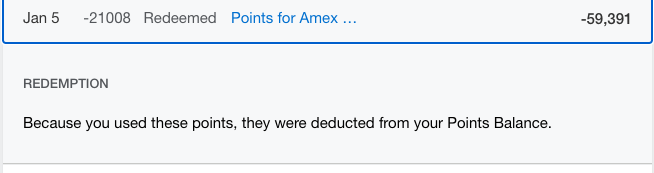
Cost of paying for a flight with points
AMERICANEXPRESS.COM
Assuming you have the Amex Business Platinum and redeem your points for eligible flights, you should receive the points bonus automatically. However, it can take up to a month.
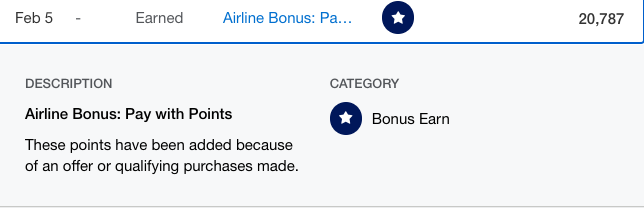
Points rebate posting to account
AMERICANEXPRESS.COM

As you can see from my screenshots, it took about a month to receive my 35% points bonus from a business-class flight I booked with Delta Air Lines using the Pay with Points option, flying from New York’s John F. Kennedy International Airport (JFK) to Harry Reid International Airport (LAS) in Las Vegas.

With my original redemption, I spent 59,391 points for a $594 airfare, but that got slashed down to 38,604 points thanks to the 35% Pay with Points bonus on my Business Platinum Card.

Related: 9 things to do when you get the Amex Business Platinum Card

How to maximize the Pay with Points bonus

Amex Travel offers several ways to save on bookings, including “Insider Fares” and discounted “Recommended Fares.” For international travel on certain airlines, you may be able to knock the price down even more when booking through the American Express International Airline Program (IAP).

When comparing your options for booking directly with the airline or booking through Amex Travel, you’ll notice fares are sometimes equal. However, thanks to American Express Insider Fares and the International Airline Program, travelers can get even greater discounts when booking their flights with Membership Rewards points.

Here’s how to stack those discounts along with the Pay with Points bonus to get even more value from carrying the Amex Business Platinum.

Stacking discounts and bonuses

This round-trip Iberia flight in business class costs $3,791 via Google Flights, which is the price you’d pay if you booked directly with Iberia.
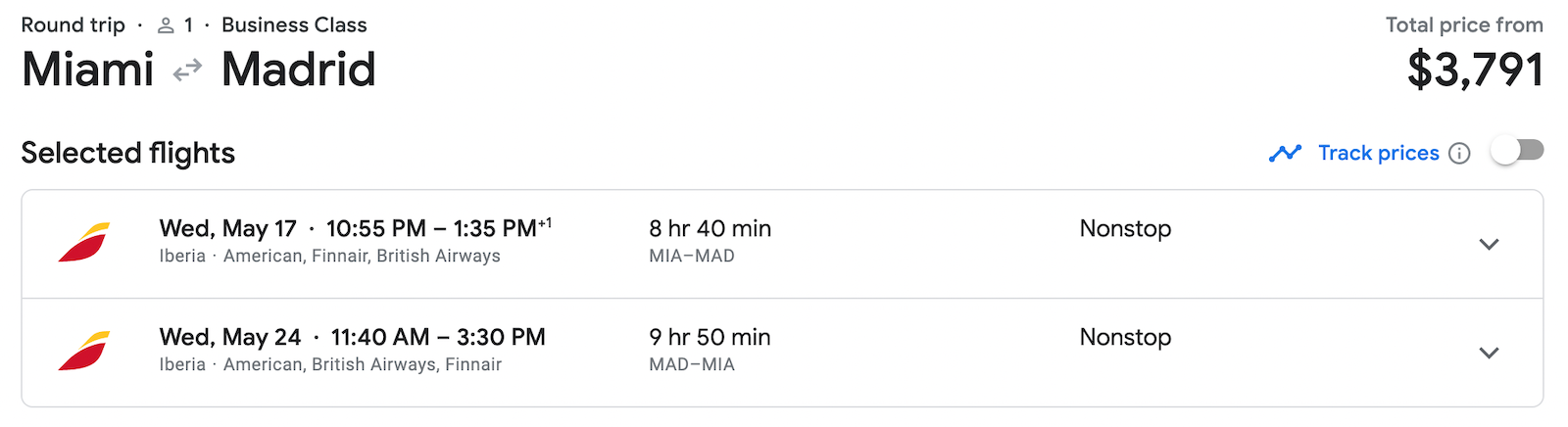
Iberia google flight screenshot
FLIGHTS.GOOGLE.COM

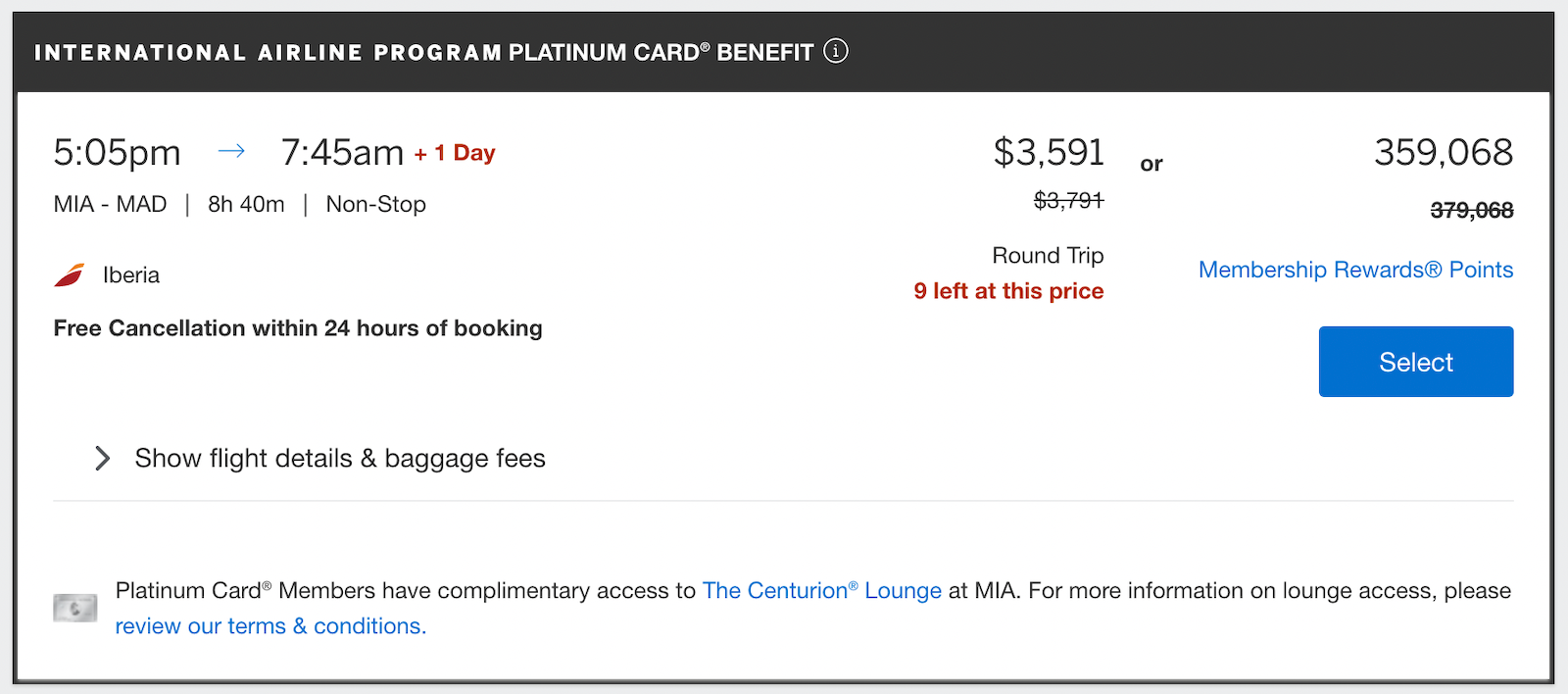
The International Airline Program through Amex Travel shows the same base fare, but it’s discounted by $200. And instead of 379,068 Membership Rewards points, you’d need 359,068 at the standard 1-cent-per-point rate when making your payment.
discount showing on plane ticket
AMERICANEXPRESS.COM

However, when you stack the Amex Business Platinum’s 35% points bonus on top of that, you’ll get 125,674 points back. Your out-of-pocket cost is 233,395 points, which you redeemed at a value of 1.54 cents per point.

Earning miles and elite status

Aside from the tremendous points savings that are possible by stacking the benefits mentioned above, the other significant benefit to booking flights this way is that airlines treat these tickets like cash bookings. Instead of needing to search for award availability and avoid blackout or peak dates, you can simply book any available ticket.

Moreover, since the flights are considered paid tickets, you should earn award miles and elite-qualifying metrics just like you would if you’d paid cash directly to the airline.

Bottom line

The Business Platinum Card from American Express offers several great benefits, but the Pay with Points 35% bonus can be one of the most significant if you frequently fly in premium cabins. Not only can it save you hundreds of thousands of points per year, depending on how you book, but you can stack it with other discounts offered through Amex Travel.

This is a win-win in my book. It’s my favorite card perk and is one of the many reasons I keep my Business Platinum Card year after year.

To learn more, check out our full review of the Amex Business Platinum.


Apply here: The Business Platinum Card from American Express


Related: 7 reasons you might want the Amex Business Platinum Card instead of the Amex Platinum Card

For rates and fees of the Amex Business Platinum card, click here.


from The Points Guy https://ift.tt/3g1vS7o
Chase Ink Business Premier card review: Solid cash back but little flexibility

Editor’s note: This is a recurring post, regularly updated with new information and offers.

Chase Ink Business Premier Credit Card overview

The Chase Ink Business Premier® Credit Card (see rates and fees) is geared toward business owners who want to earn cash-back rewards on their day-to-day purchases. Its earning rates are solid, but the $195 annual fee is high for what you get out of this card since you won’t be able to transfer your rewards to Chase’s travel partners for maximum value. Card rating*: ⭐⭐½

* Card rating is based on the opinion of TPG’s editors and is not influenced by the card issuer.

Chase has long offered “cash-back” credit cards that actually earn Chase Ultimate Rewards points.

That means if you have another Chase card that earns transferable Ultimate Rewards points, such as the Chase Sapphire Preferred® Card (see rates and fees), you could combine your rewards and then transfer your points to the program’s various airline and hotel partners, giving you more flexibility in how you could redeem the rewards you earned.

The Chase Ink Business Premier, however, is a different story.

While it earns Ultimate Rewards points, these points are intended primarily for cash back and redemptions for things like gift cards and travel through Chase Travel℠. They can’t be transferred to partners, regardless of what other Chase cards you have.

Approved applicants typically have a personal credit score of at least 670. However, you can also apply for the card using an employer identification number, which is tied to your business credit score.

All that said, this card might be worth considering for some businesses looking to save money on large expenses.

Here’s what you need to know about the Chase Ink Business Premier and its benefits.

Chase Ink Business Premier pros and cons

Pros Cons
  • High earning rate on all other purchases outside of bonus categories
  • Employee cards at no additional cost
  • Travel and purchase protections
  • Cellphone protection
  • No foreign transaction fee
  • High annual fee
  • Requires a higher spending amount for higher earning rates
  • Can’t transfer points to Chase’s transfer partners or to another Ultimate Rewards-earning account

Chase Ink Business Premier welcome offer

New Ink Business Premier cardholders can earn $1,000 in bonus cash back after spending $10,000 on purchases in the first three months of account opening.

That easily offsets the cost of the $195 annual fee for your first year, and it’s a decent welcome offer compared to similar card options. This is the standard welcome offer we typically see on this card.

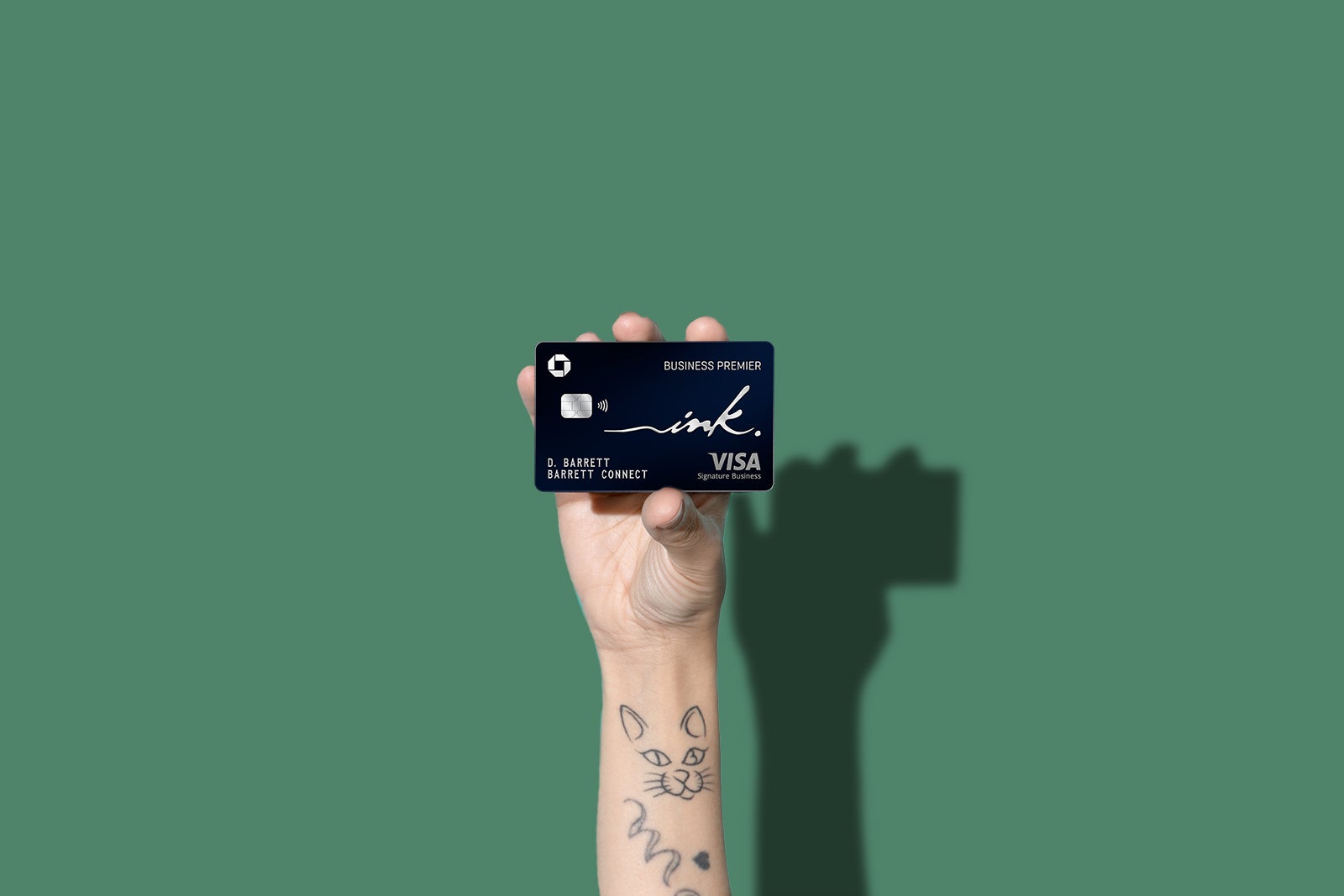
a hand holds a credit card
THE POINTS GUY

However, plenty of travel rewards credit cards offer welcome bonuses of higher value, both for business and personal use. And while this is a large bonus for a business-focused cash-back card, most cash-back business cards come with lower annual fees.

Plus, the spending requirement for this card’s welcome bonus is quite high.

Before applying, make sure you meet all of Chase’s application requirements, including being under the 5/24 rule.

Related: 15 cards currently offering welcome bonuses of 100,000 points or more

Chase Ink Business Premier benefits

Aside from certain protections, this card lacks travel-specific perks. However, it does have a few benefits that can bring business owners value and peace of mind. Some of these perks are similar to what other Chase Ink cards offer:

  • Employee cards: Similar to other Ink cards, employee cards don’t cost the primary cardholder any additional fees.
  • Cellphone protection: Coverage extends up to $1,000 per claim for up to three claims per year with a $100 deductible per claim.
  • Purchase protection: This benefit covers new purchases for 120 days against damage or theft (up to $10,000 per item and up to $50,000 per account).
  • Trip cancellation/interruption insurance: If your trip is canceled or cut short, you’ll be covered for eligible issues for prepaid, nonrefundable travel expenses (up to $5,000 per person and up to $10,000 per trip).
  • Extended warranty protection: Purchases with a three-year or less U.S. manufacturer’s warranty will include an additional year of coverage.
  • Auto rental collision damage waiver: Enjoy primary coverage that protects against theft and damage in the U.S. and most countries around the world. You’ll get up to $60,000 in reimbursement for most vehicles with a manufacturer’s suggested retail price of $125,000 or less.
Woman picking up her phone off the ground
SASUN BUGHDARYAN/GETTY IMAGES

Considering you can get cellphone protection and similar benefits with the Ink Business Preferred® Credit Card (see rates and fees) for a much lower $95 annual fee, the benefits on this card aren’t especially exciting compared to the competition.

If you’re a business owner just looking for cash back on purchases, benefits may not matter as much to you. But for that higher $195 annual fee, it’s fair to expect more valuable perks like access to transfer partners or some statement credits, like one for TSA PreCheck or Global Entry.

Earning rewards on the Chase Ink Business Premier

To be clear, the Chase Ink Business Premier does not earn transferable Chase Ultimate Rewards points. Instead, you’ll earn:

  • 5% cash back on travel booked through Chase Travel
  • 2.5% cash back on purchases of $5,000 or more
  • 2% cash back on all other purchases
business woman with luggage on phone in hotel lobby
DAMIRCUDIC/GETTY IMAGES

Unlimited 2% cash back on purchases isn’t incredibly lucrative, but it is a solid return, considering you don’t have to worry about bonus categories or spending caps. Regardless of your business’ spending habits, you know you’re earning a decent return on your purchases.

Plus, 2.5% cash back on purchases of $5,000 or more is a nice perk for businesses that tend to have larger expenses, while that 5% category is great for businesses that can make a lot of travel bookings via Chase.

However, the Ink Premier card is not the best choice for businesses that don’t make large purchases frequently. If you’re not spending over $5,000, you’re only getting 2% cash back. There are other business cards that offer 2% cash back for a lower annual fee, like the Capital One Spark Cash Plus.

Related: The top 7 credit cards to maximize large purchases

Redeeming rewards on the Chase Ink Business Premier

Ink Business Premier cardholders can redeem their points for cash back, gift cards, travel and more. Your points are worth 1 cent each toward any of these redemption options.

Unlike some other Chase cards that earn cash back, you won’t be able to transfer the rewards you earn with the Chase Ink Business Premier into your other Chase accounts to take advantage of Chase’s airline and hotel transfer partners.

Woman at laptop with phone
HALFPOINT IMAGES/GETTY IMAGES

That’s a major downside to the Ink Business Premier. Based on this reason alone, we find it hard to recommend this card, as your options for maximizing your hard-earned rewards are extremely limited.

For instance, some of Chase’s “cash-back” credit cards, like the Ink Business Unlimited® Credit Card (see rates and fees) and the Chase Freedom Flex® (see rates and fees), allow you to combine your rewards from them with your higher-tier cards, including the Chase Sapphire Reserve® (see rates and fees) and Ink Business Preferred.

Then, you can transfer those points to Chase’s transfer partners to get more than 1 cent per point (if not more) in value.

Related: How to redeem Chase Ultimate Rewards points for maximum value

Which cards compete with the Chase Ink Business Premier?

Overall, given what we know Chase is capable of, the Ink Business Premier is pretty lackluster. Unless you’re a high-spending business owner who doesn’t care about flexible travel rewards, there are other options out there that may better suit your needs.

For additional options, check out our picks for the best business cards and the best Chase cards.

Related: Chase Ink Business Preferred vs. Ink Business Premier: Which card should take a spot in your wallet?

Is the Chase Ink Business Premier worth it?

The lack of ability to transfer your points to Chase’s transfer partners or other Chase cards makes the Ink Business Premier a waste of space in the wallets of those looking to maximize rewards. If you’re a small-business owner hoping to earn points to put toward award travel, we recommend looking into other cards.

Bottom line

Some business owners who have high expenses and make large purchases regularly should be able to get solid value out of this card. Yet, its lack of redemption flexibility for award travel, limited benefits and a comparatively high annual fee are all likely to strike against it for many small-business owners.

The Ink Business Premier simply doesn’t quite hold up to the competition. As a small-business owner or someone with a side hustle who wants to earn rewards, you’ll likely want to look elsewhere to meet your business credit card needs.


Apply here: Ink Business Premier Credit Card


For rates and fees of the Amex Blue Business Plus card, click here.


from The Points Guy https://ift.tt/wjaIc42

UK raises price for new travel authorization: Here’s a step-by-step guide to applying for an ETA

Editor’s note: This post was updated with additional information. TPG founder Brian Kelly is a Bilt adviser and investor.

As we’ve reported, you now need travel authorization to visit the United Kingdom.

The application for the new British electronic travel authorization opened back in November for travel this year, and several of us at TPG have already gone through the process. There are a few things to watch out for, but it’s fairly straightforward overall.

Unfortunately, they’ve raised the price since I first wrote this article a few months ago. But you can follow these steps for a painless application process otherwise.

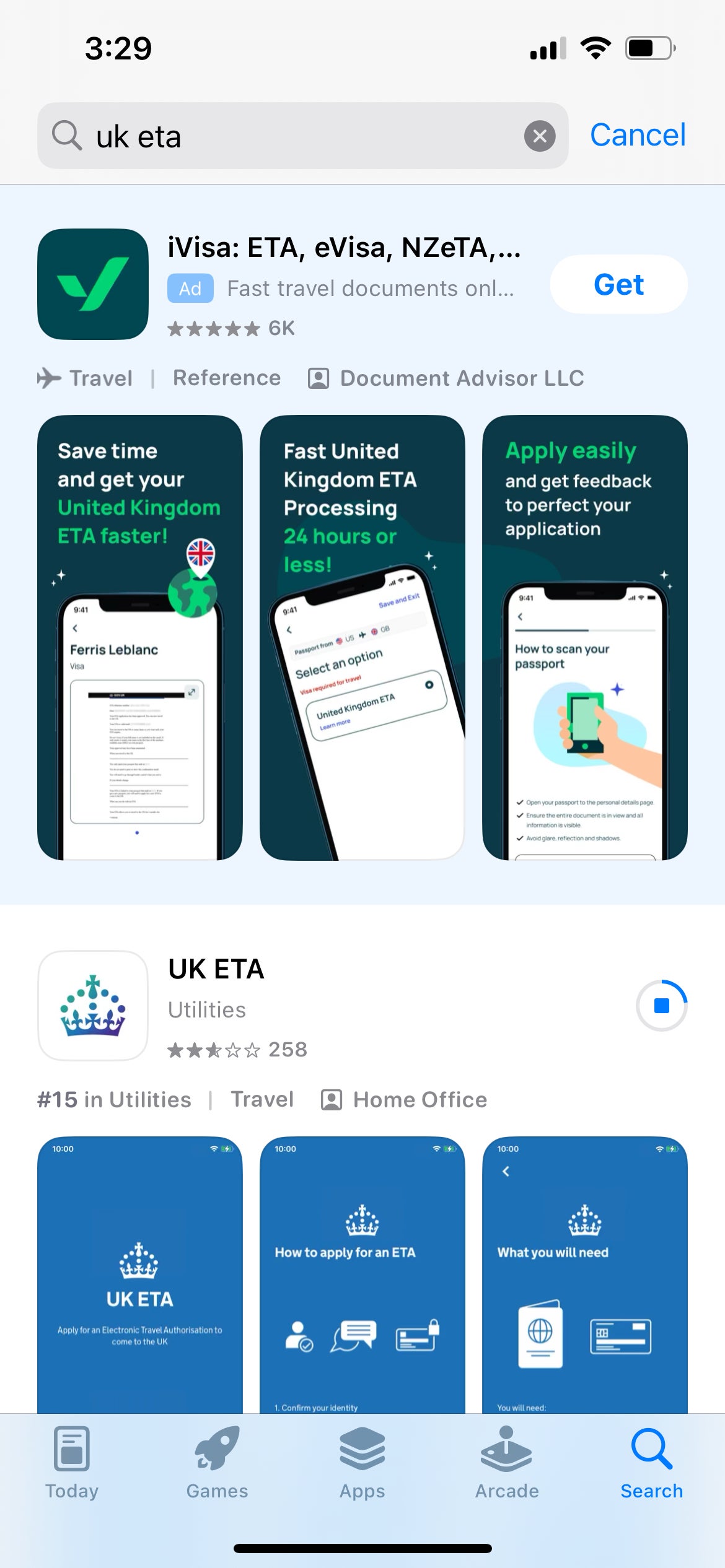
Download the UK ETA app

As the U.K. government website notes, the easiest way to apply is through the official government app, available for iOS and Android.

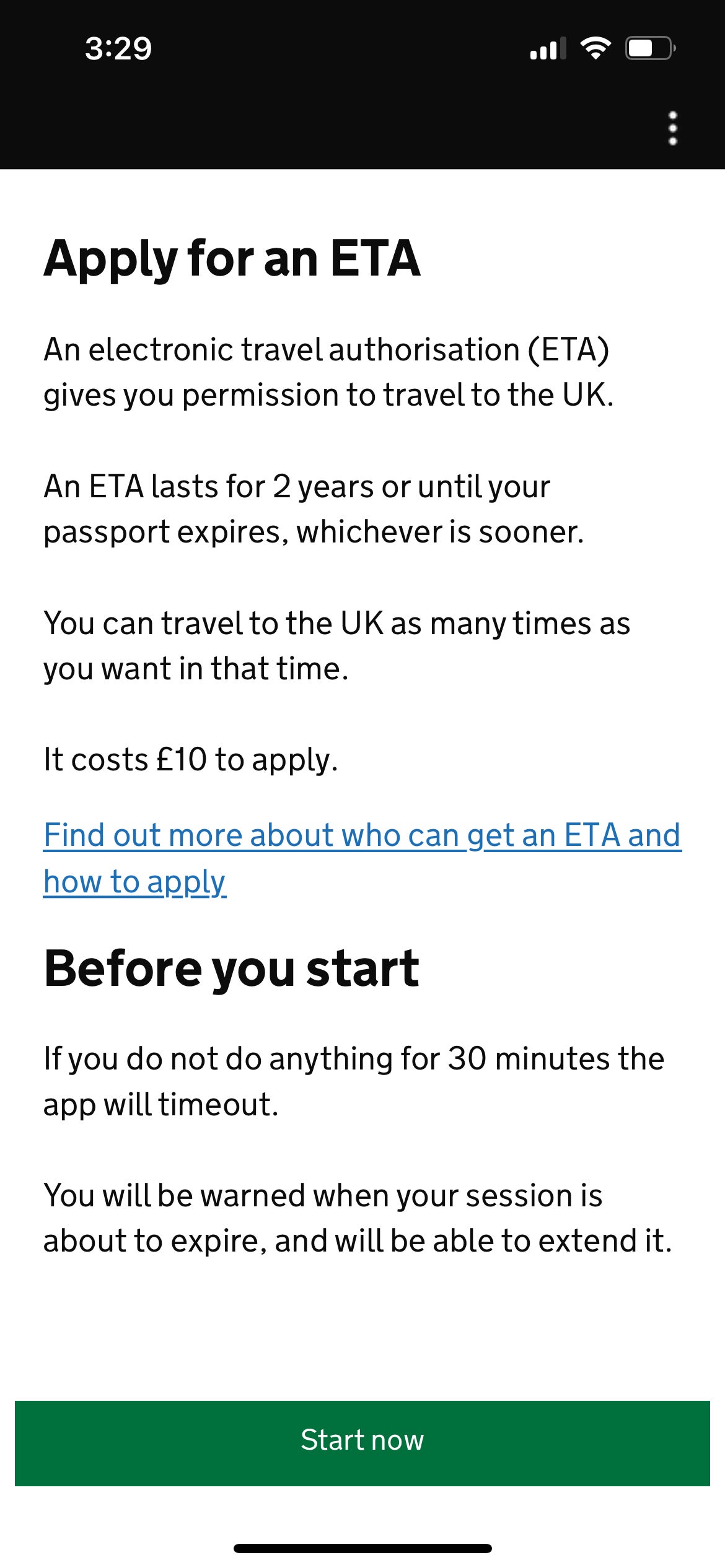
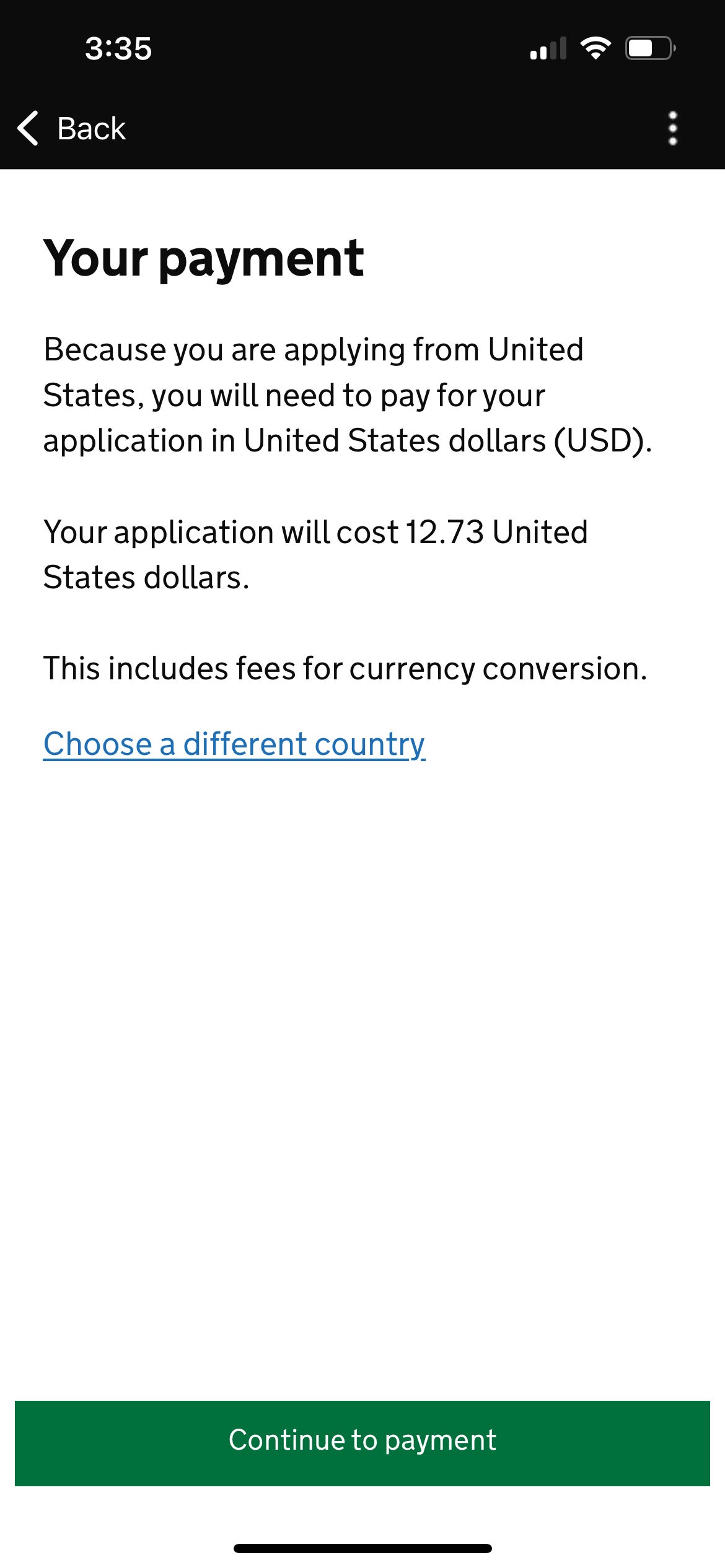
Be sure to only apply through the gov.uk website or the official app — other sites will “help” you apply but will charge you unnecessary fees. The ETA now costs 16 British pounds per person (about $21). When it was first unveiled, it was just 10 British pounds.

Note that if you cannot access the app for any reason, you can apply online. But in my case, I simply downloaded the app and applied right on my phone.

UK ETA loading in the Apple app store. APPLE
UK ETA app loading in the Apple app store. APPLE

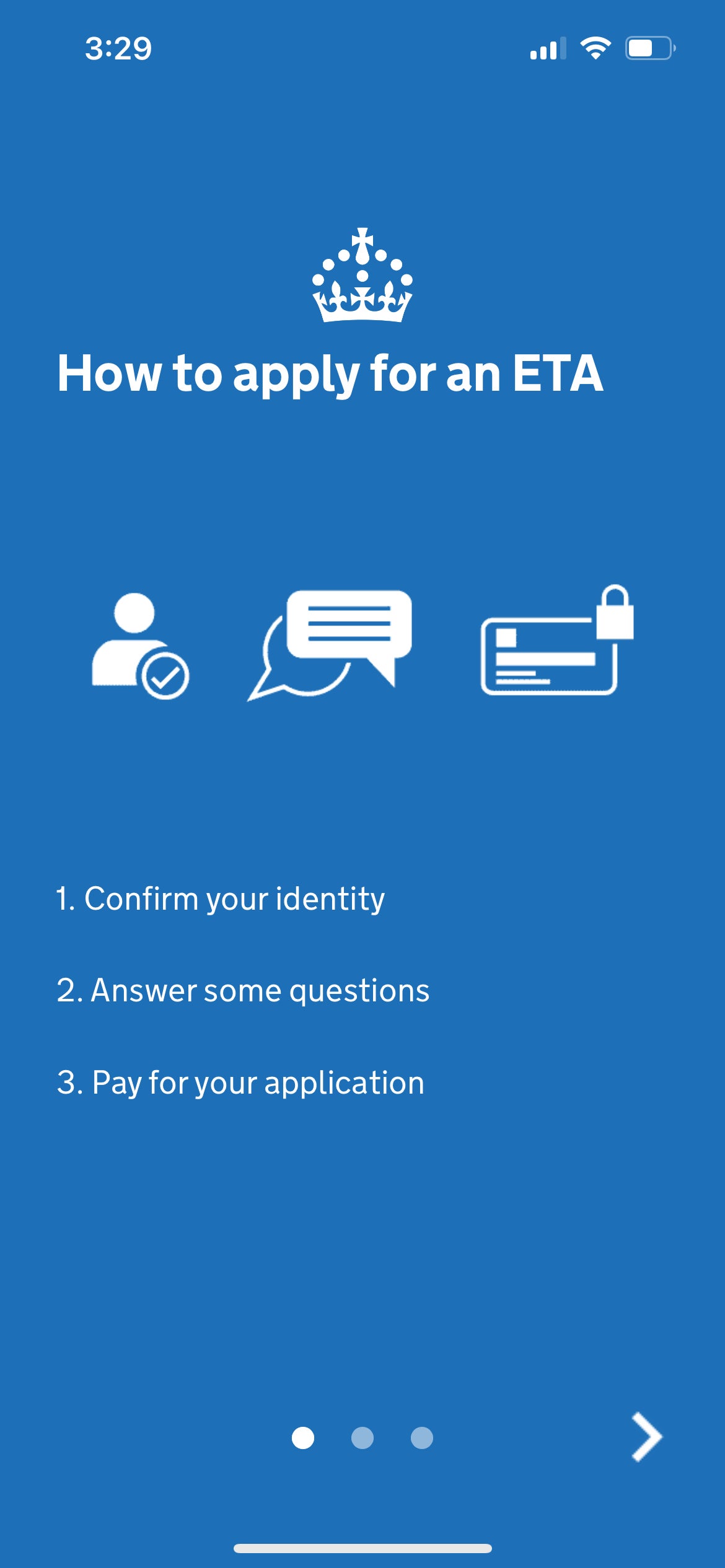
Once you open the app, it will walk you through the process. First, you’ll need to submit an email and verify it with a six-digit code.

Once you’ve verified your phone number and email, you can move on to the trickier part.

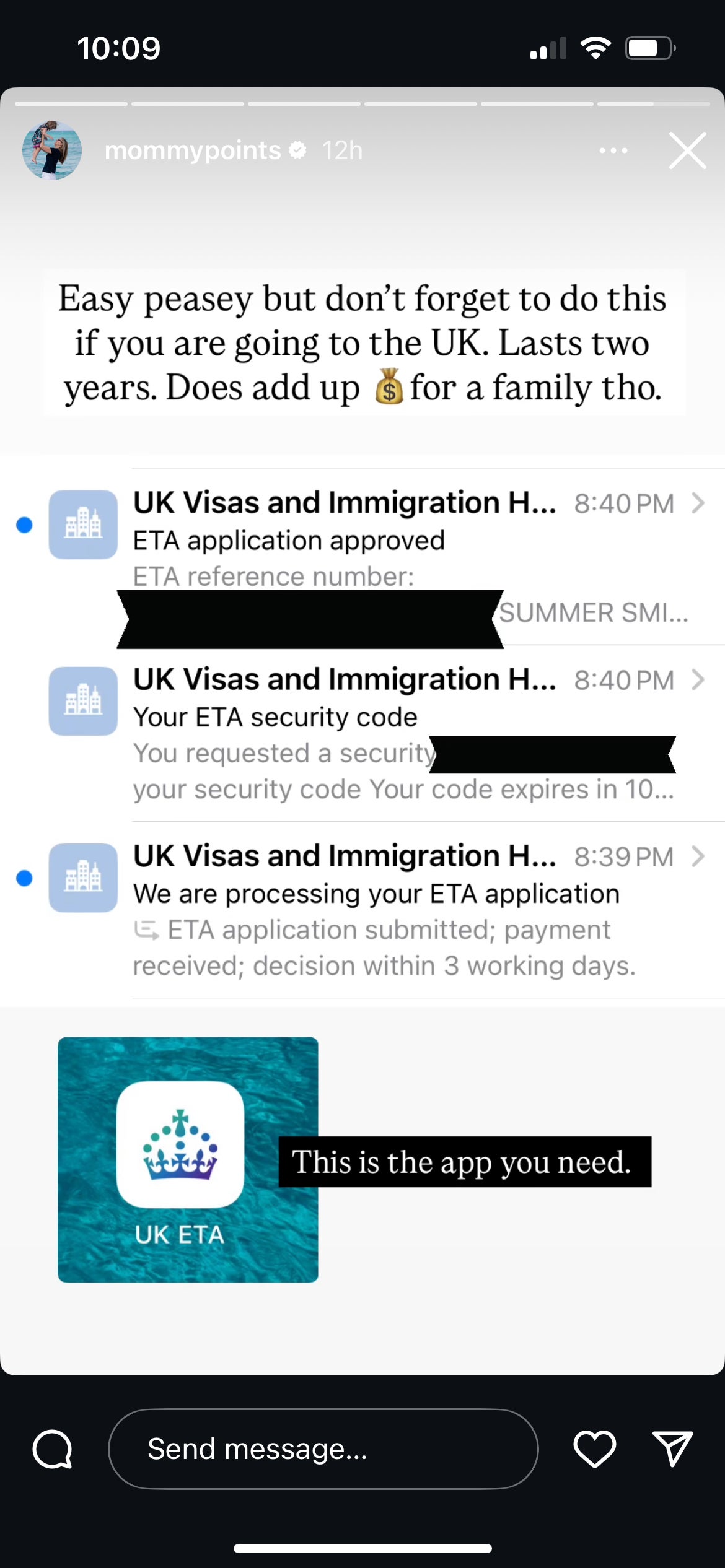
Summer Hull Instagram post. @mommypoints
Summer Hull’s Instagram post. INSTAGRAM

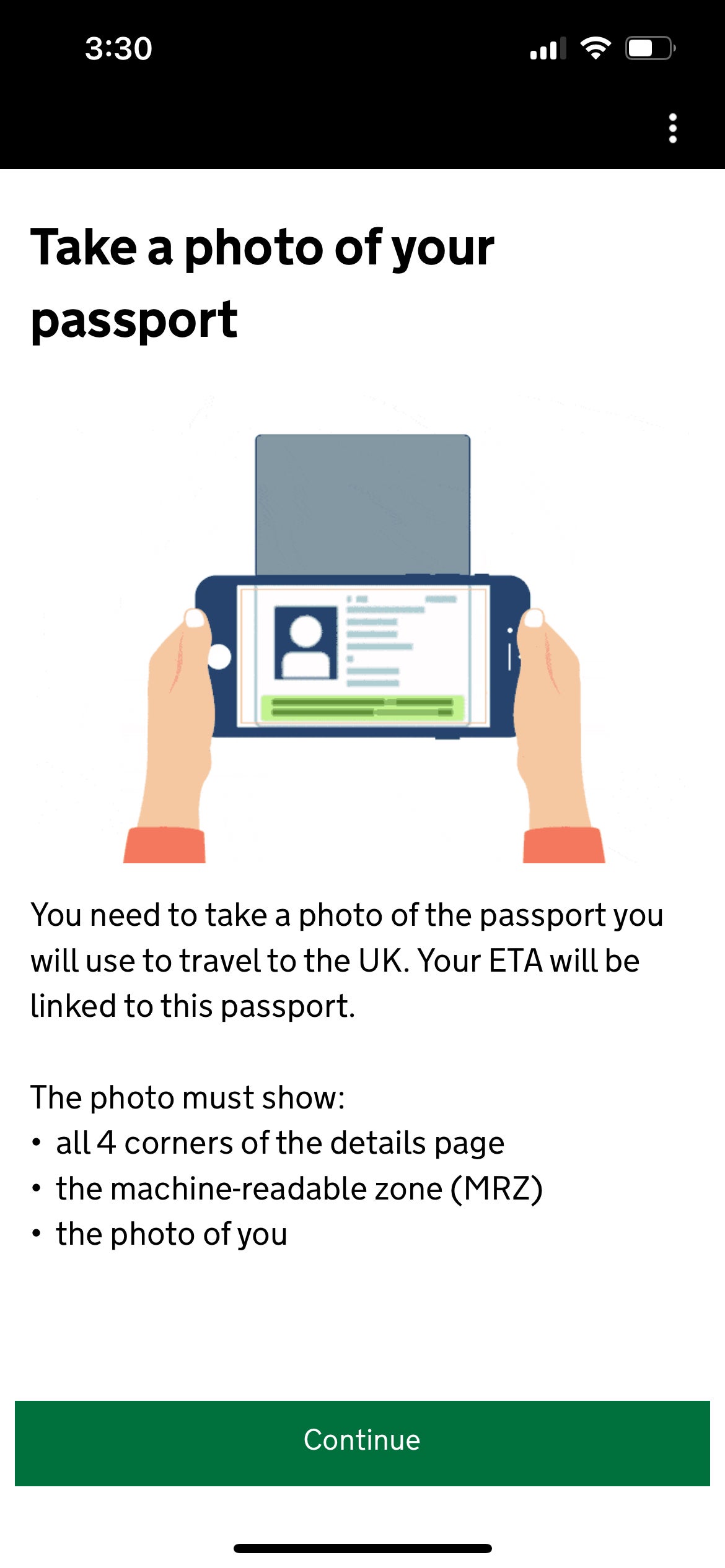
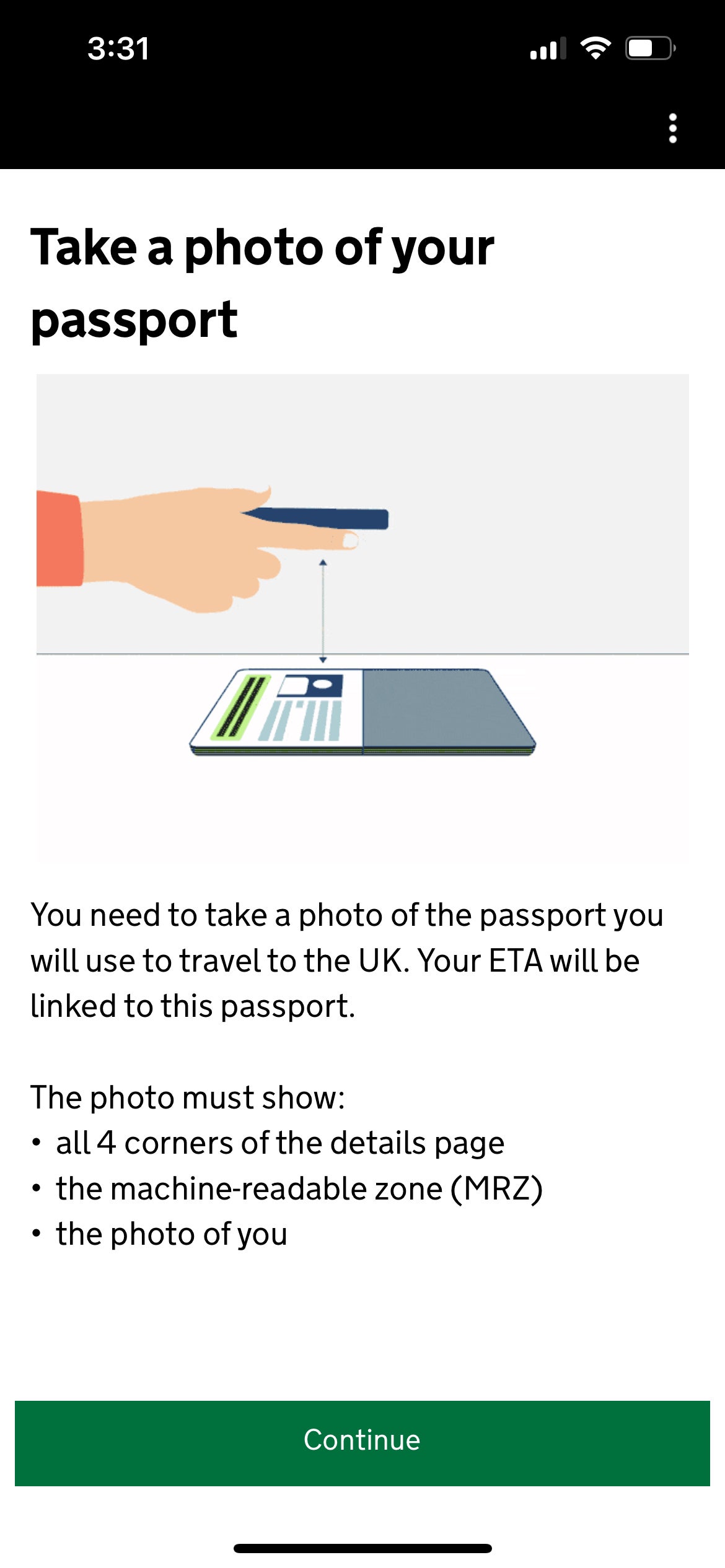
Using the app to photograph and scan your passport

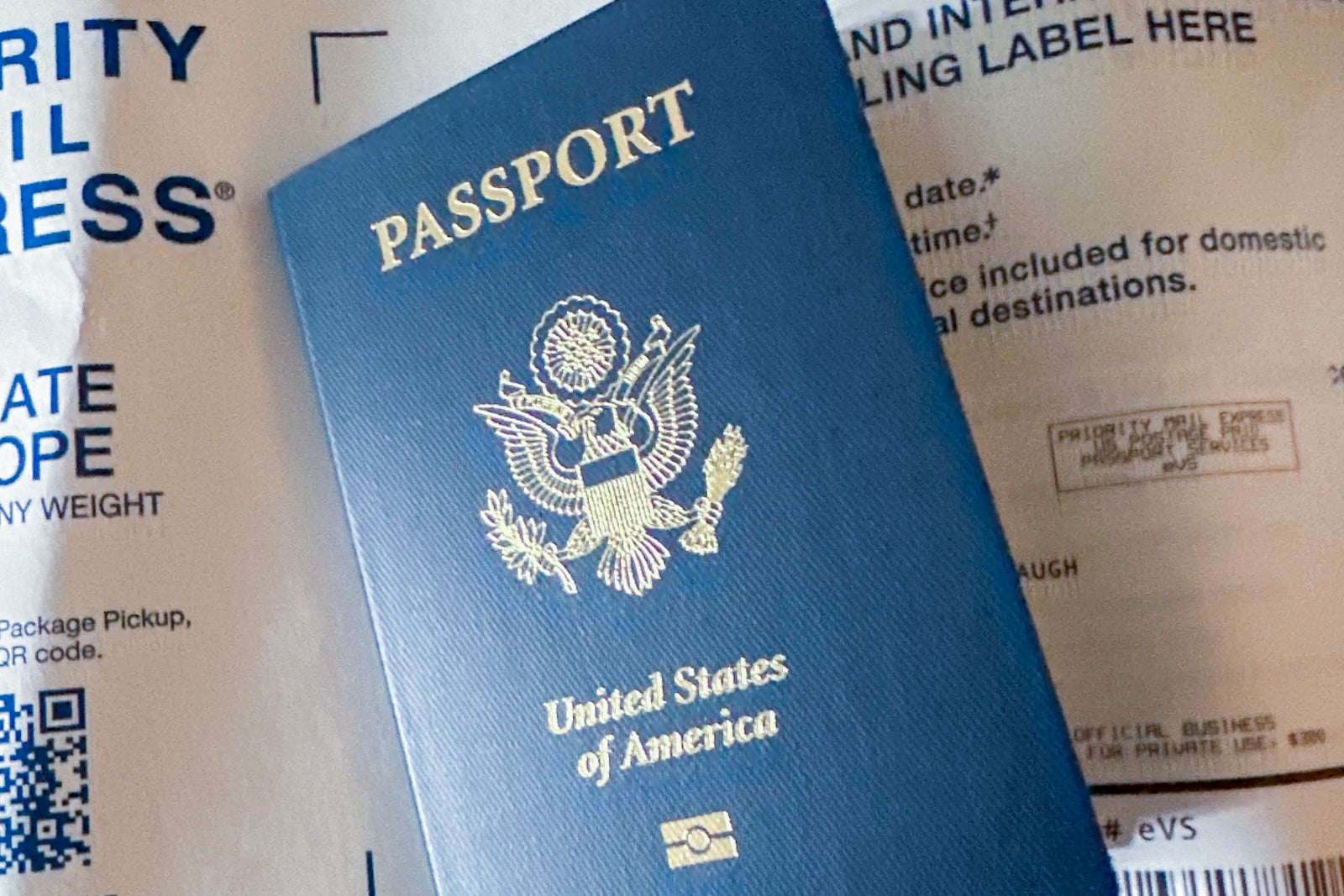
image of passport
CLINT HENDERSON/THE POINTS GUY

The next step is where some people get tripped up. You’ll need to use the app to photograph your passport — and then scan the chip inside your passport, too.

That gold symbol on the front of the passport above means a microchip is embedded inside. (Don’t worry if your passport doesn’t have a biometric chip or you can’t get it to scan; you can still get a travel authorization, but you’ll need to do it online via the link provided earlier.)

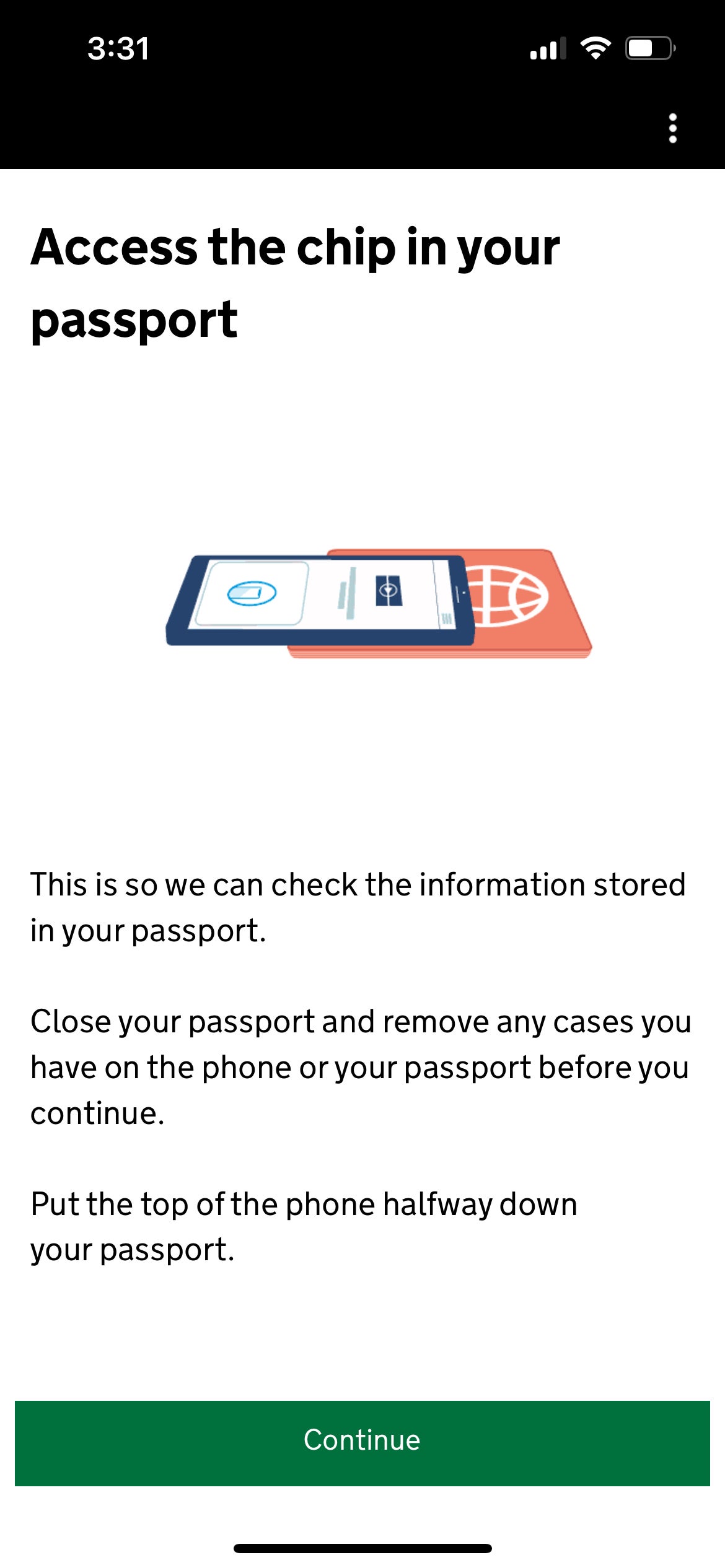
Once you are done photographing your passport, the app will ask you to move your phone up and down over the front cover to scan the chip.

That didn’t work at first for me. It didn’t work at first for my colleague Lyndsey Matthews when she applied earlier this month either. “That was the trickiest part,” Lyndsey said. “I finally got it to scan properly after four failed attempts. Pro tip: Take the case off your cellphone.”

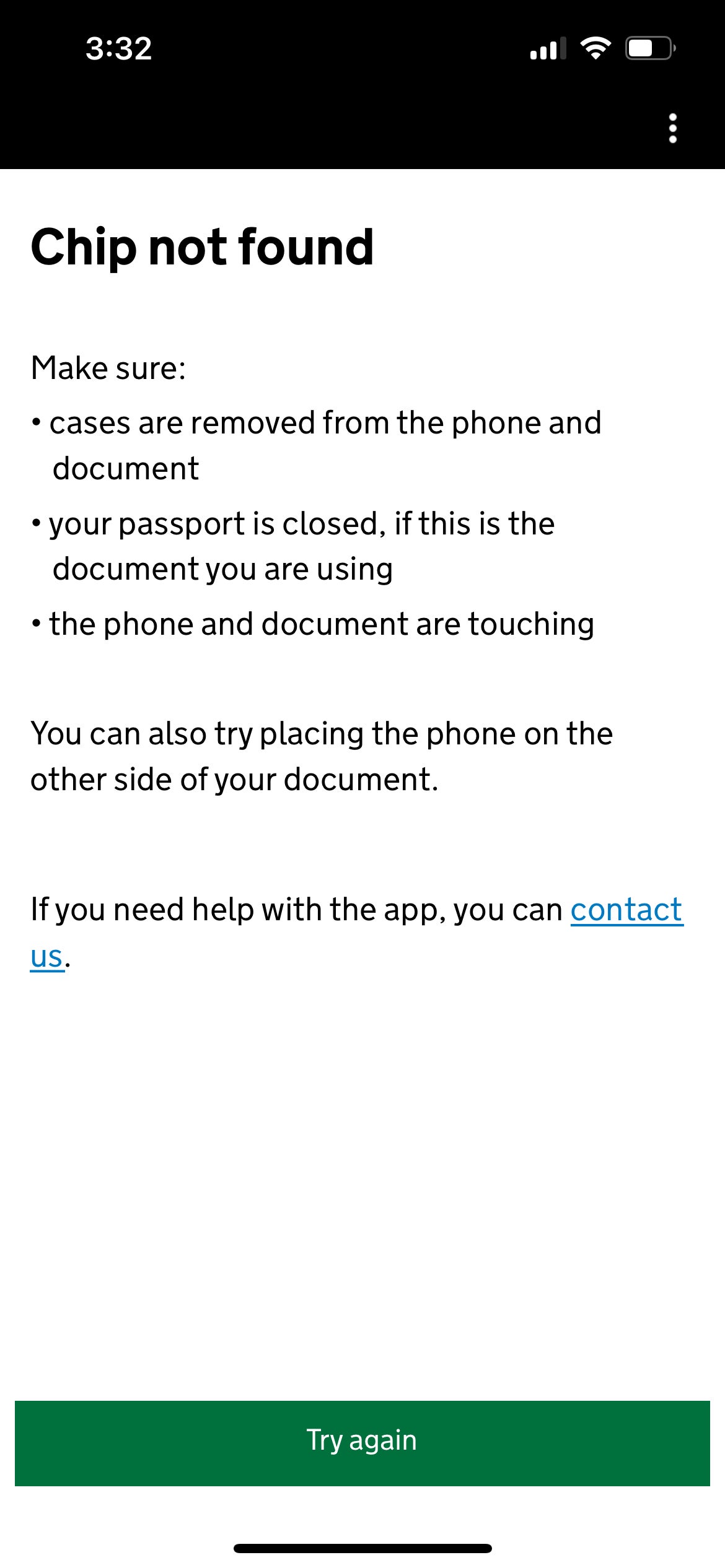
Thankfully, the app will at least tell you if it can’t find the chip.

Chip not found screen in the UK ETA instructions in the app. GOV.UK
The “Chip not found” screen in the UK ETA instructions on the app. GOV.UK

For me, it finally worked when I held my phone over the back of my passport. Apparently, in many U.S. passports, the electronic chip is actually inside the back cover, not the front.

Successful chip read notification. GOV.UK

After this article was first published, reader Dennis Markham reported, “For both my travel partner and I, we were only successful scanning the chip from the color photo page inside the passport. The scan did not work from the front or back cover, nor from the black and white photo page (the one with the Passport Number and all the information).”

So you may have to try a few different ways to get the chip to scan.

Taking a photo for the travel authorization

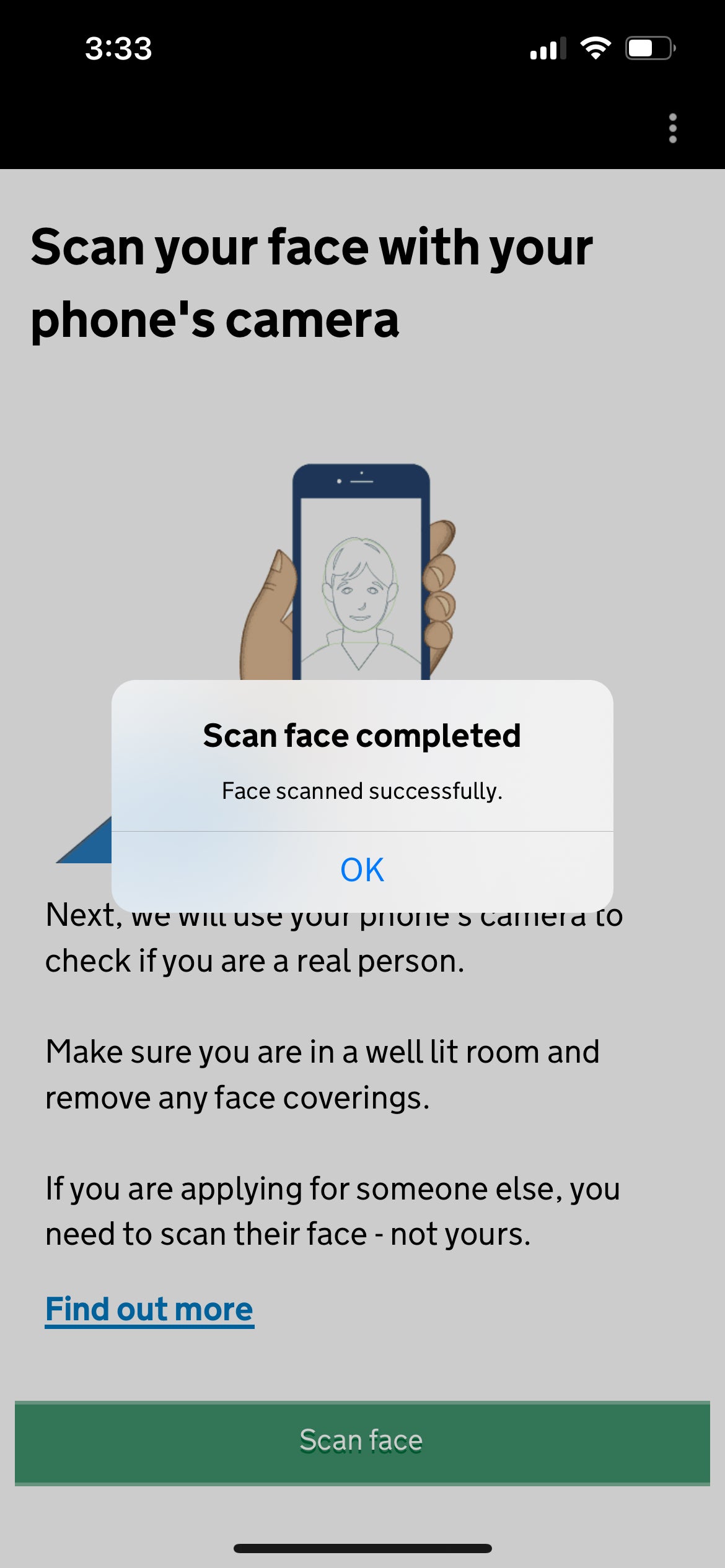
Next, you’ll need to scan your face to prove you are a human, and then take a passport-style photo.

Scan face completed message in the app. GOV.UK
Completed face scan message in the app. GOV.UK

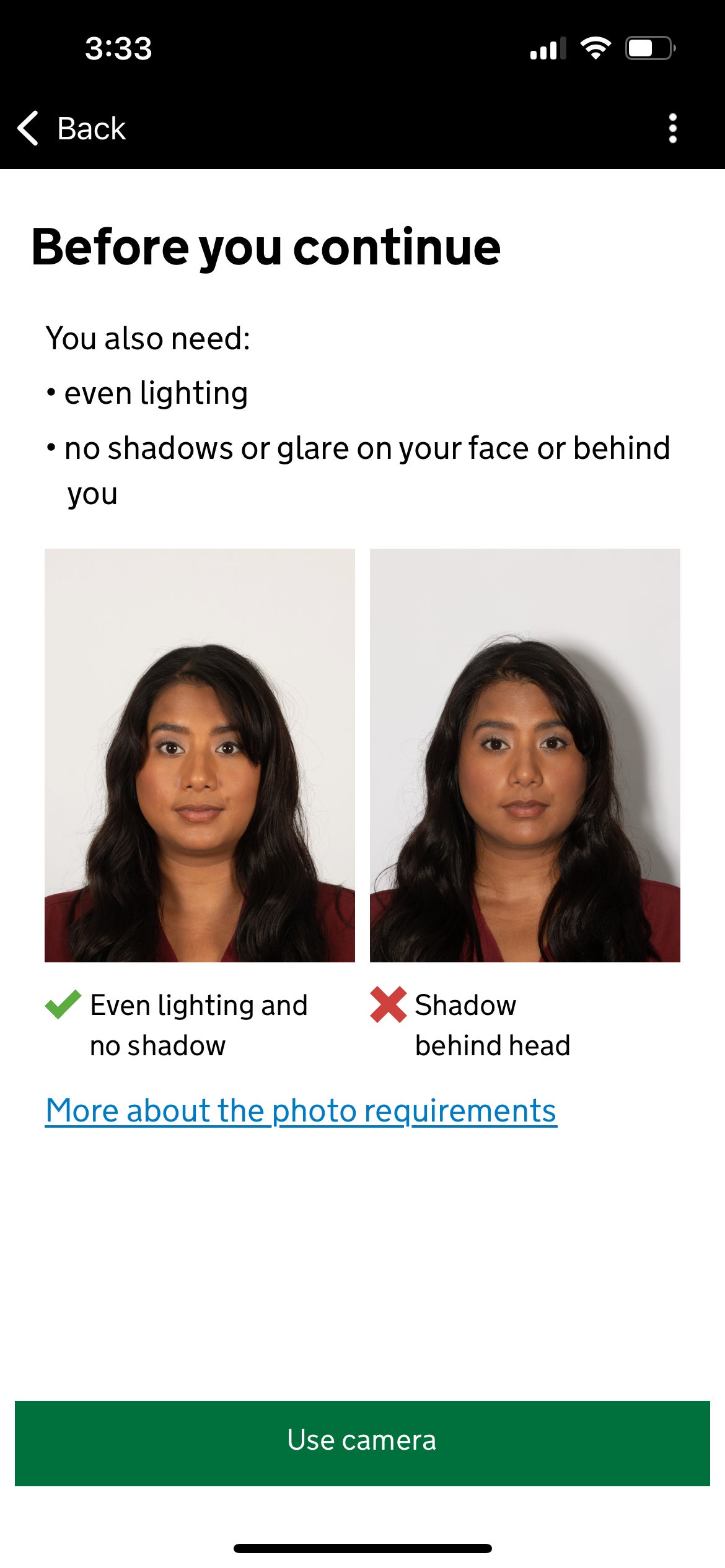
You’ll need a plain white background with no shadows for this — something that trips a lot of folks up.

“I had to retake it three times to ensure no shadows were on my face and that the background was plain white,” Lyndsey said.

I also had to retake my photo several times to get one to work. Some users report that turning on a selfie flash helps a great deal, too, though I didn’t end up needing to go that far because I had direct sunlight on my face.

Answer a series of questions to complete the UK travel authorization application

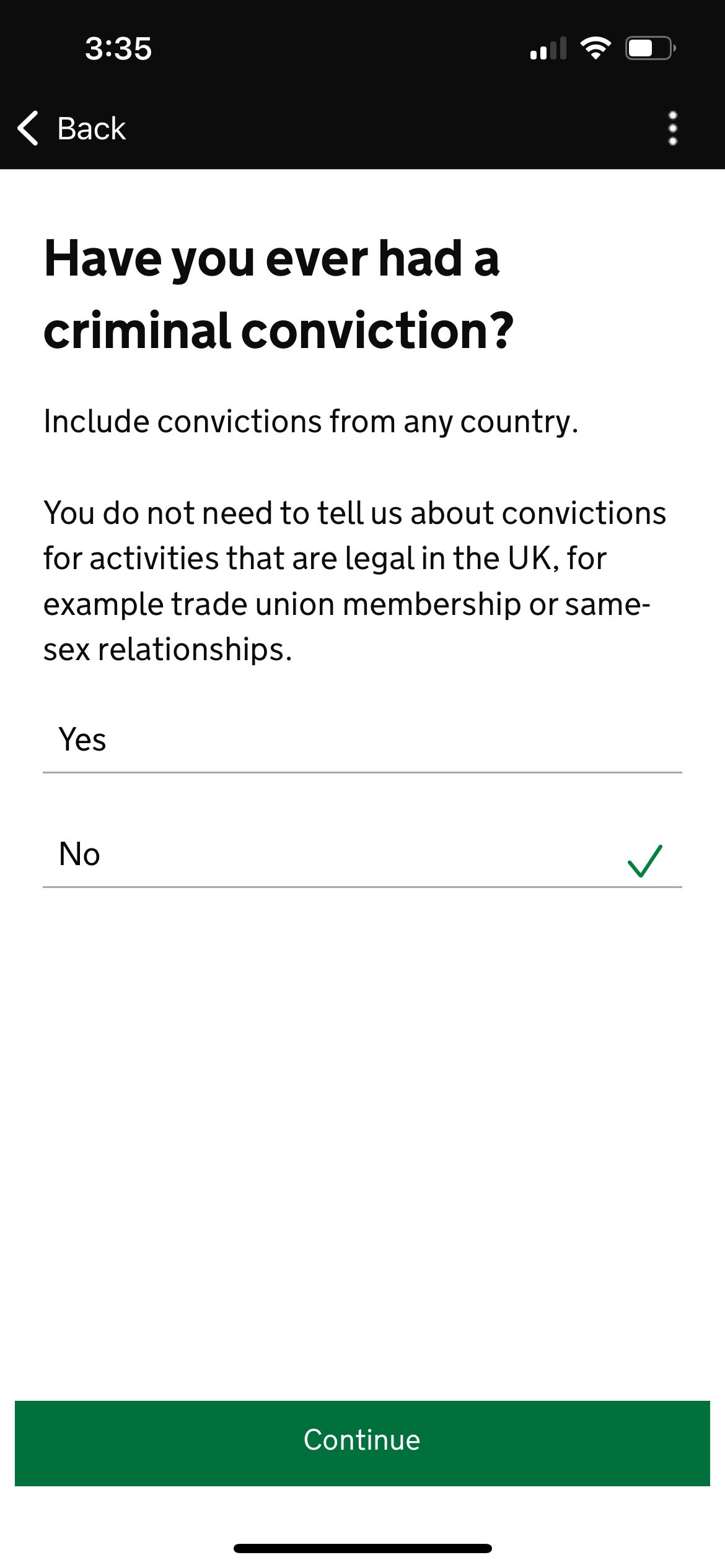
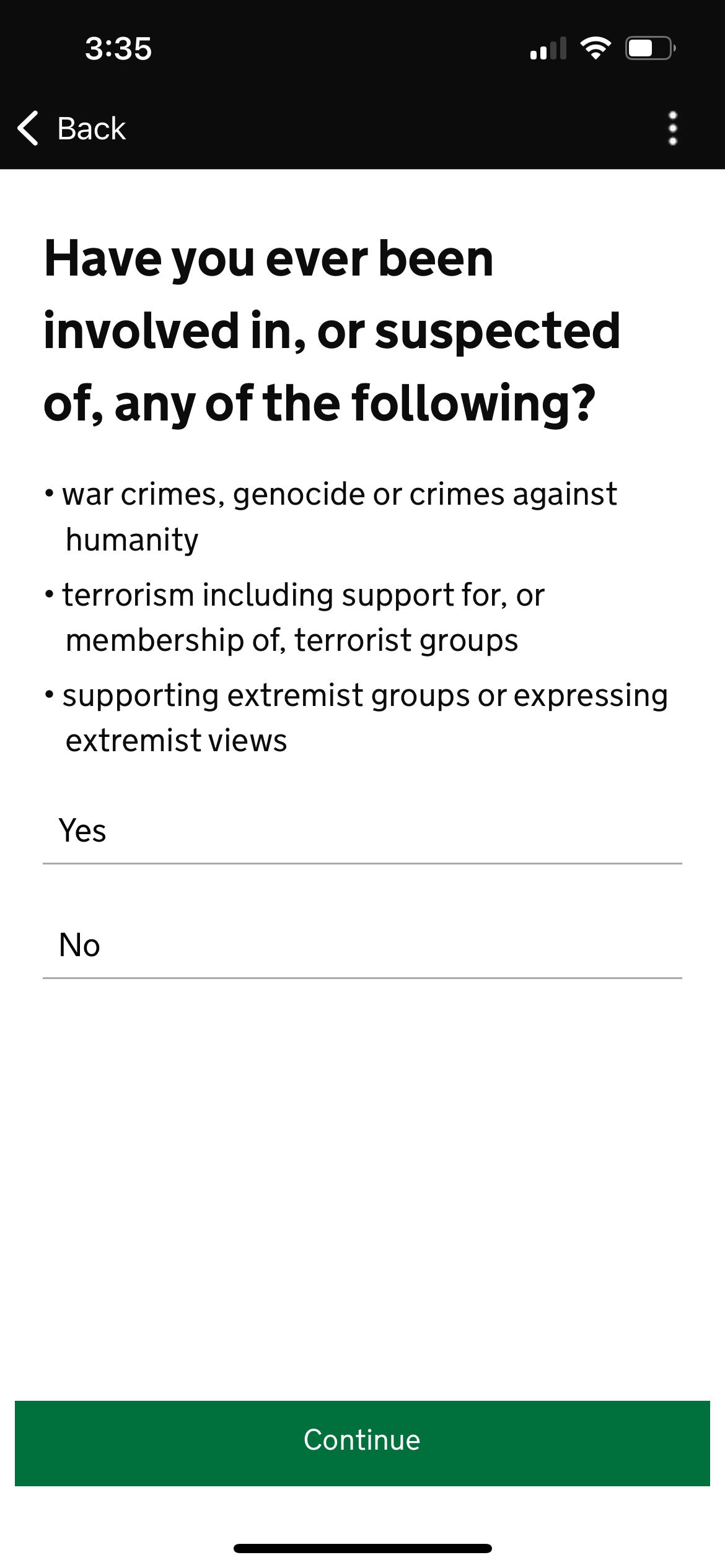
While you won’t need to fill out any details about any upcoming trips, the app will ask for your home address, what you do for work, and whether you’ve been convicted or suspected of any crimes.

Payment for UK travel authorization

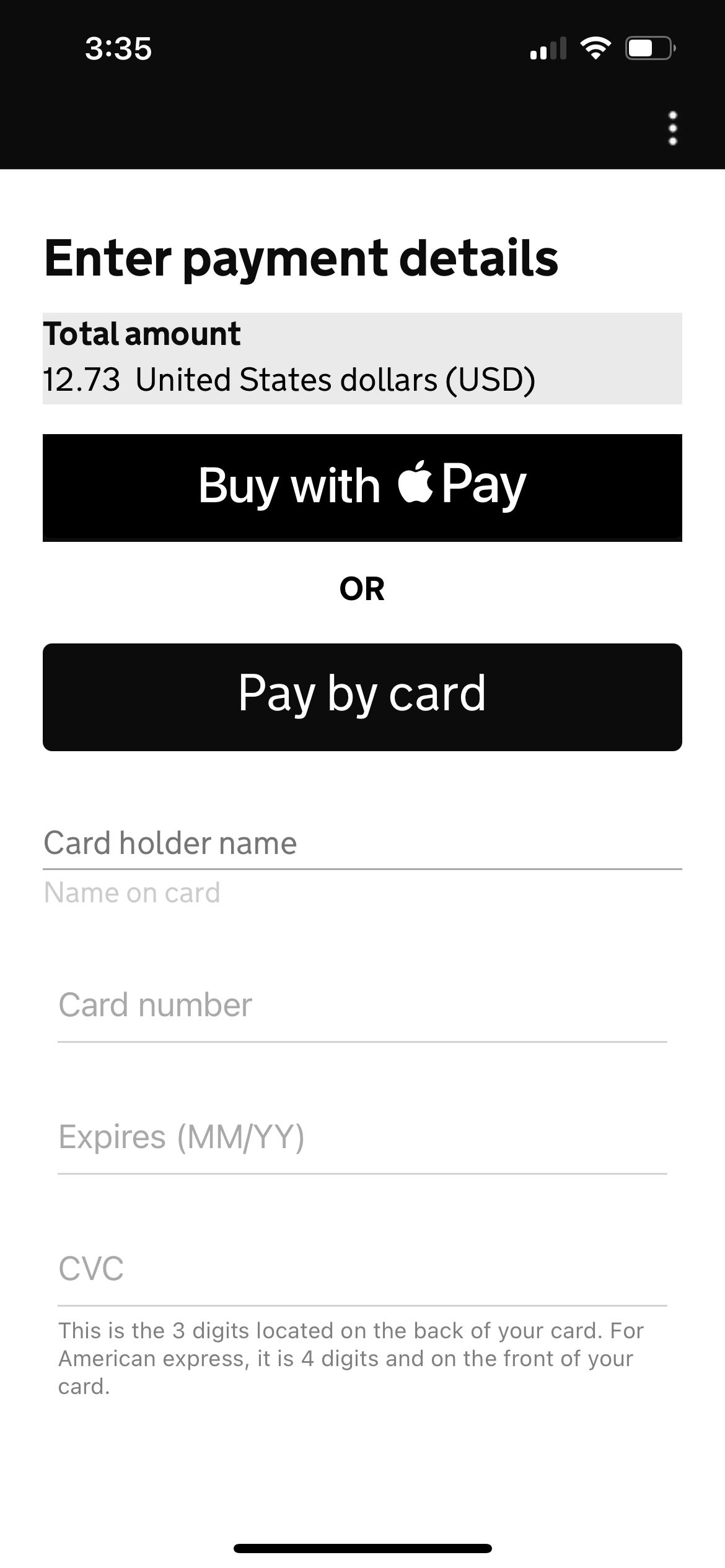
Next comes the payment screen. As you can see below, I ended up paying $12.73 for my application, but this was before the price went up to 16 British pounds, so I got a deal by signing up early. So did my colleague Lyndsey.

“I used Apple Pay through my Bilt Mastercard® and was charged $12.97,” Lyndsey said. “You can also pay with Google Pay or a credit or debit card. Because I used my Bilt Mastercard on Feb. 1, I earned a Rent Day bonus of double the points on the application fee.”

Note: Bilt cardholders must use the card five times each statement period to earn points; double points on Rent Day are capped at 1,000 points and exclude rent payments.

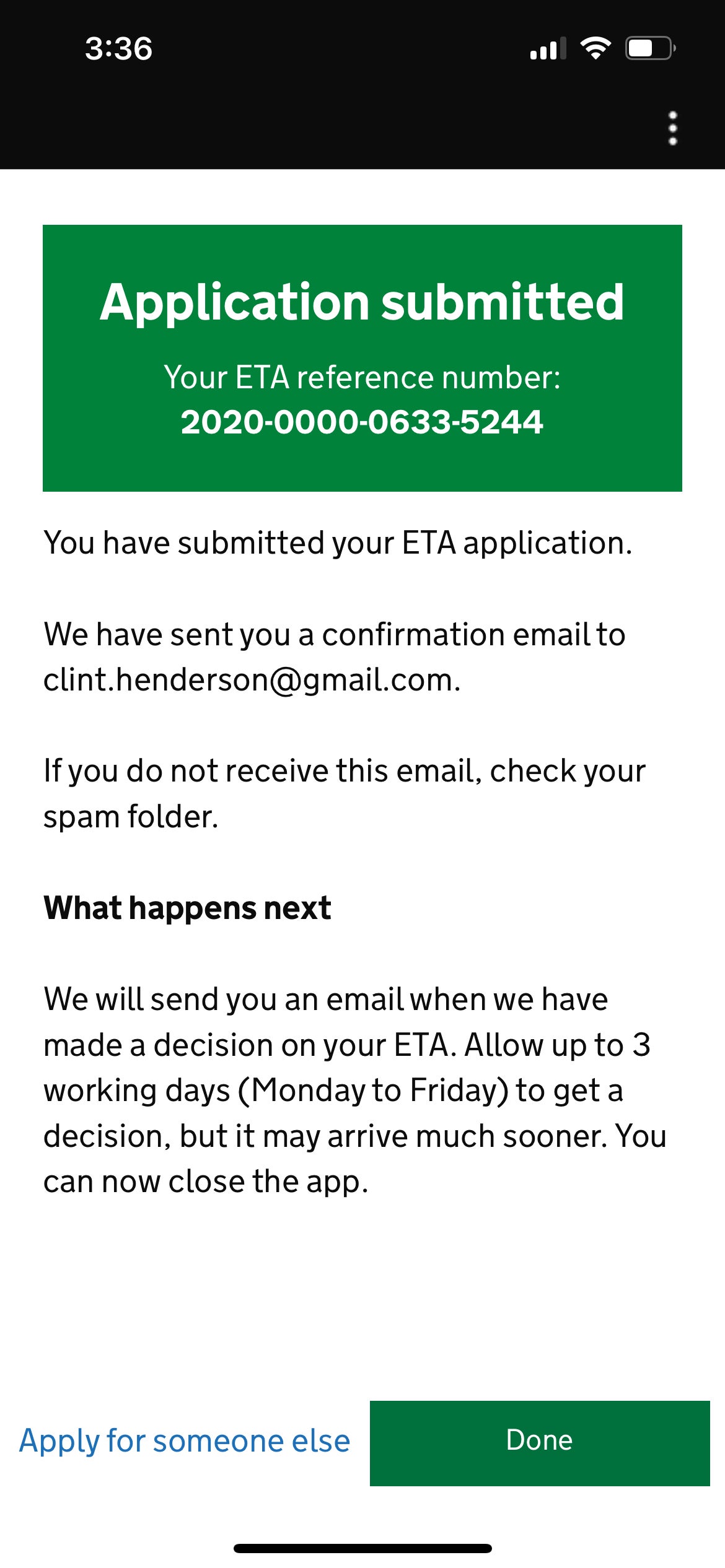
Once you’ve completed your payment, the app will display a successful application message with an ETA reference number.

Application submitted message for UK travel authorization. GOV.UK
“Application submitted” message for U.K. travel authorization. GOV.UK

Most users should receive their authorization within minutes, but the U.K. government warns it can take up to three business days to obtain clearance, so it might be better to err on the side of caution and apply well ahead of your trip.

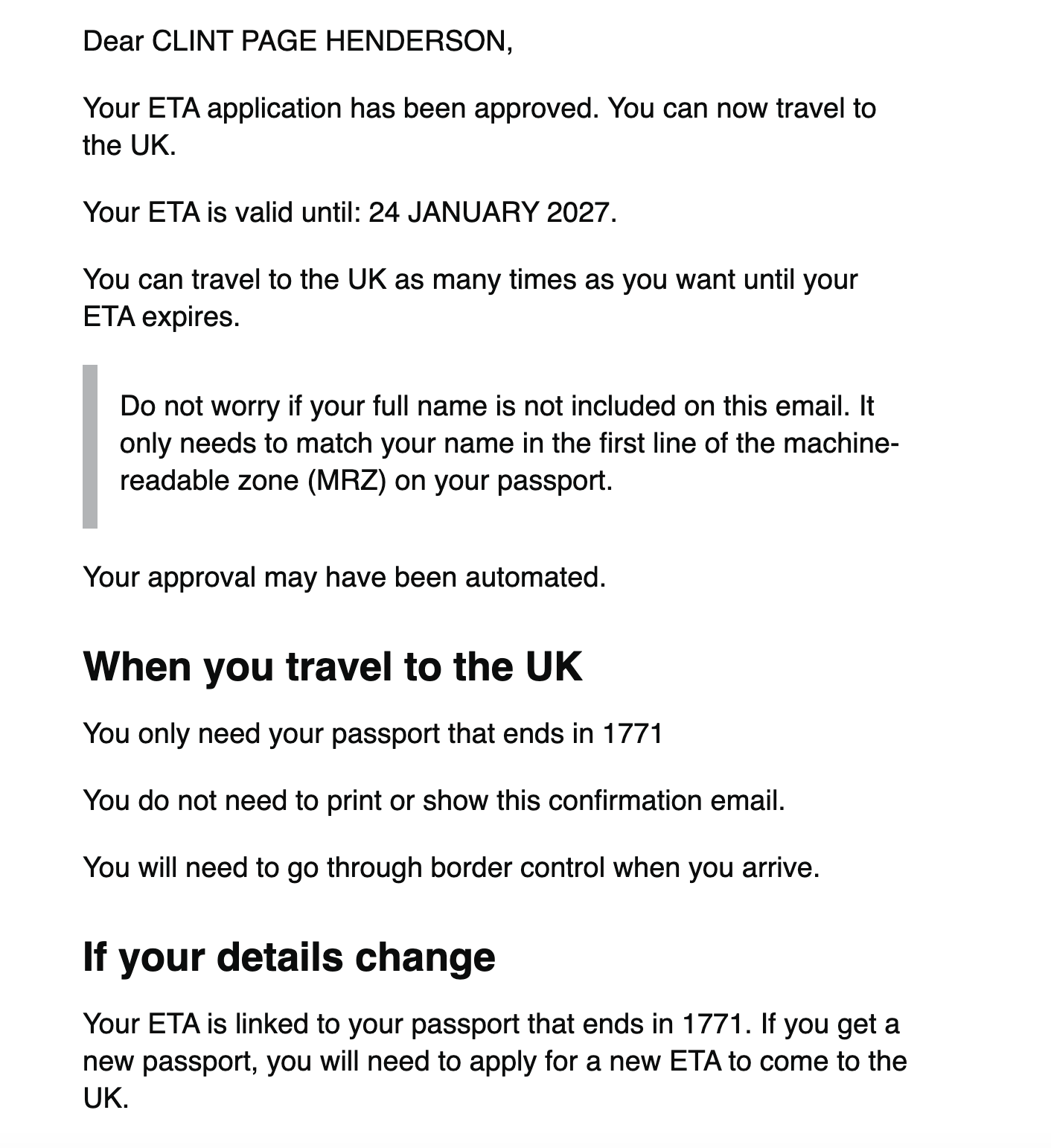
I got an email right away confirming my application was pending — and, one minute later, another email saying I’d been approved.

Email approving a UK ETA application.
Email approving a UK ETA application. GOV.UK

My colleagues Tanner Saunders and Lyndsey Matthews also received emails with their approvals in about three minutes. Look for emails from the UK Visas and Immigration Home Office to track your application.

“Since ETAs are linked to the passport you apply with, I didn’t have to print anything,” Lyndsey said. “When I landed at Heathrow, I proceeded through the ePassport gate like usual and was out of Terminal 3 to catch the Heathrow Express within five minutes.”

The travel authorization is good for two years or until your passport expires, whichever is sooner. You can also travel to the U.K. as many times as you want on the same ETA.

Bottom line

plane
CLINT HENDERSON/THE POINTS GUY

The application process for the new U.K. travel authorization is fairly painless if you have a passing familiarity with technology. The extra expense and steps for visiting the U.K. may be annoying, but predictions of long lines and travel chaos at ports of entry have so far been overblown.

Hopefully, when the European Union rolls out its own version sometime this or next year, it will be equally straightforward.

Related reading:

See Bilt Mastercard rates and fees here.
See Bilt Mastercard rewards and benefits here.


from The Points Guy https://ift.tt/1YCo4Ed

Premium credit cards vs. mid-tier credit cards: Which should you get?

Editor’s note: This is a recurring post, regularly updated with new information and offers.

Broadly speaking, there are three types of credit cards: entry-level (often with low or no annual fees), mid-tier ($100-$300 in annual fees) and premium ($400 or more).

Much of the attention goes to the two ends of the spectrum, focusing on the best credit cards with no annual fee or the best premium credit cards. While we regularly receive questions about whether premium credit cards justify their annual fees, the middle ground often gets overlooked

So, how exactly are mid-tier credit cards unique? What do they offer to justify their annual fees, and what do they lack when compared to their premium counterparts?

In this guide, we’ll compare the most popular premium and mid-tier cards from American Express, Capital One and Chase. (We’ve excluded Citi because while the Citi Strata Premier℠ Card (see rates and fees) is a popular mid-tier travel card, its luxury sibling — the Citi Prestige® Card — is no longer available to new applicants.)

The information for the Citi Prestige has been collected independently by The Points Guy. The card details on this page have not been reviewed or provided by the card issuer.

American Express mid-tier vs. premium cards

In its vast card portfolio, American Express offers The Platinum Card® from American Express, the American Express® Gold Card and the American Express® Green Card. Here’s how they’re similar and different:

Amex Platinum Card Amex Gold Card Amex Green Card
Annual fee $695 (see rates and fees) $325 (see rates and fees) $150
Welcome offer Earn 80,000 bonus points after spending $8,000 on purchases within the first six months of card membership.

You may be targeted for a higher offer through the CardMatch tool; not everyone will receive the same offer, and offers may change at any time.

Earn 60,000 bonus points after spending $6,000 on purchases within the first six months of card membership. Earn 40,000 bonus points after spending $3,000 on purchases within the first six months of card membership.
Value of welcome offer* $1,600 $1,200 $800
Key benefits
  • Up to $120 in dining statement credits per calendar year (up to $10 each month)
  • Up to $120 in Uber Cash per calendar year for U.S. spending (which can be used with Uber Eats; Uber Cash will only be deposited into one Uber account when you add the Amex Gold as a payment method and redeem with any Amex card; up to $10 each month)
  • Up to $100 in Resy statement credits per calendar year (up to $50 biannually) at U.S. Resy restaurants or toward other eligible Resy purchases
  • Up to $84 in Dunkin’ statement credits per calendar year (up to $7 each month) at U.S. Dunkin’ locations
  • Travel and shopping protections
  • Enrollment is required in advance for some benefits. Terms apply.
  • Up to $199 statement credit toward your annual Clear Plus membership fee every calendar year (subject to auto-renewal)
  • Travel protections and shopping protections
  • Enrollment is required in advance for some benefits. Terms apply.
Earning rates
  • 5 points per dollar on flights booked directly with airlines and with American Express Travel® (on up to $500,000 of these purchases each calendar year, then 1 point per dollar)
  • 5 points per dollar on prepaid hotel bookings through Amex Travel
  • 1 point per dollar on other purchases
  • 4 points per dollar at restaurants worldwide and on takeout and delivery in the U.S. (on up to $50,000 per calendar year, then 1 point per dollar)
  • 4 points per dollar at U.S. supermarkets (on up to $25,000 per calendar year, then 1 point per dollar)
  • 3 points per dollar on flights booked directly with airlines or through AmexTravel.com
  • 1 point per dollar on other purchases
  • 3 points per dollar at restaurants worldwide (including takeout and delivery in the U.S.)
  • 3 points per dollar on travel and transit
  • 1 point per dollar on other purchases
Credit score required 670 or above^ 670 or above^ 670 or above^

* Based on TPG’s May 2025 valuations; valuations are not provided by the card issuer.
**When traveling on same-day Delta flights; eligible Platinum Card Members will receive 10 Visits per Eligible Platinum Card per year to the Delta Sky Club or to Grab and Go when traveling on a same-day Delta-operated flight
^ Based on TPG’s research and not provided by the card issuer.

The information for the Amex Green Card has been collected independently by The Points Guy. The card details on this page have not been reviewed or provided by the card issuer.

Related: Amex Platinum vs. Amex Gold and Amex Gold vs. Amex Green

The argument for the Amex Platinum Card

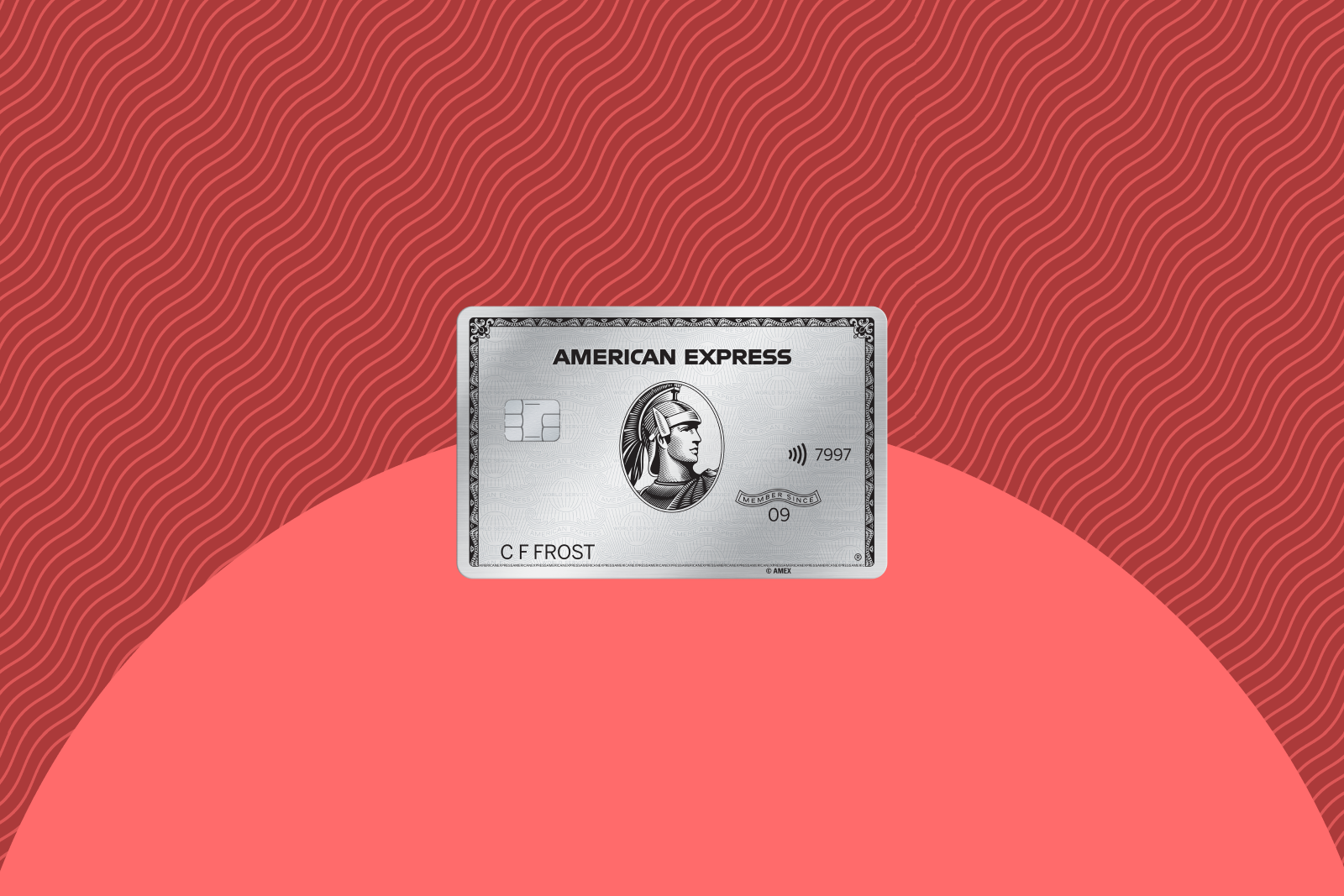
If you’re looking for a card stacked with benefits and perks, you can stop scrolling — you’ve found it in the Amex Platinum.

Cardmembers who take advantage of all the annual perks and benefits on the Amex Platinum will realize that this card is well worth its annual fee in the right hands.

THE POINTS GUY

It’s also among the best cards for buying airfare and paying the taxes and fees on your award flights. You’ll earn 5 points per dollar on those purchases (up to $500,000 per calendar year, then 1 point per dollar) and also enjoy travel and purchase protections that apply when paying with your card (terms apply).

Still, these perks come at a cost: a hefty annual fee of $695. If you can maximize the value this card offers, that annual fee is easily justified. But if not, you’ll likely prefer one of Amex’s more affordable options.

To learn more, read our full review of the Amex Platinum Card.


Apply here: The Platinum Card from American Express


The argument for the Amex Gold Card

For those looking for a card that has better earning rates on common spending categories, the Amex Gold packs a punch. It’s one of the best cards to use at restaurants, for food delivery in the U.S. and supermarkets.

American Express Gold
THE POINTS GUY

With an annual fee of $325, this card falls somewhere between the mid-tier and luxury card categories and doesn’t have a clear competitor from other issuers. But no matter how you classify it, this card offers up to $424 in annual value for those who can maximize the monthly Uber Cash benefit and credits for select dining merchants, easily offsetting the card’s annual fee.

Plus, Amex Gold cardmembers still earn a respectable 3 points per dollar on flights booked directly with airlines or through amextravel.com. Based on TPG’s May 2025 valuations, that’s a 6% return on spending.

To learn more, read our full review of the Amex Gold Card.


Apply here: American Express Gold Card


The argument for the Amex Green Card

The versatility of the Amex Green is what so many people like about it.

It comes with an up to $199 Clear Plus statement credit every calendar year to fully cover the cost of your Clear membership (subject to auto-renewal; enrollment required), which more than justifies the annual fee alone.

THE POINTS GUY

Earning categories on the Amex Green Card are also strong. Cardmembers earn 3 Membership Rewards points per dollar on broadly defined travel and commuting categories, plus 3 points per dollar at restaurants worldwide and 3 points per dollar on takeout and delivery in the U.S.


Learn more: Amex Green


Capital One mid-tier vs. premium cards

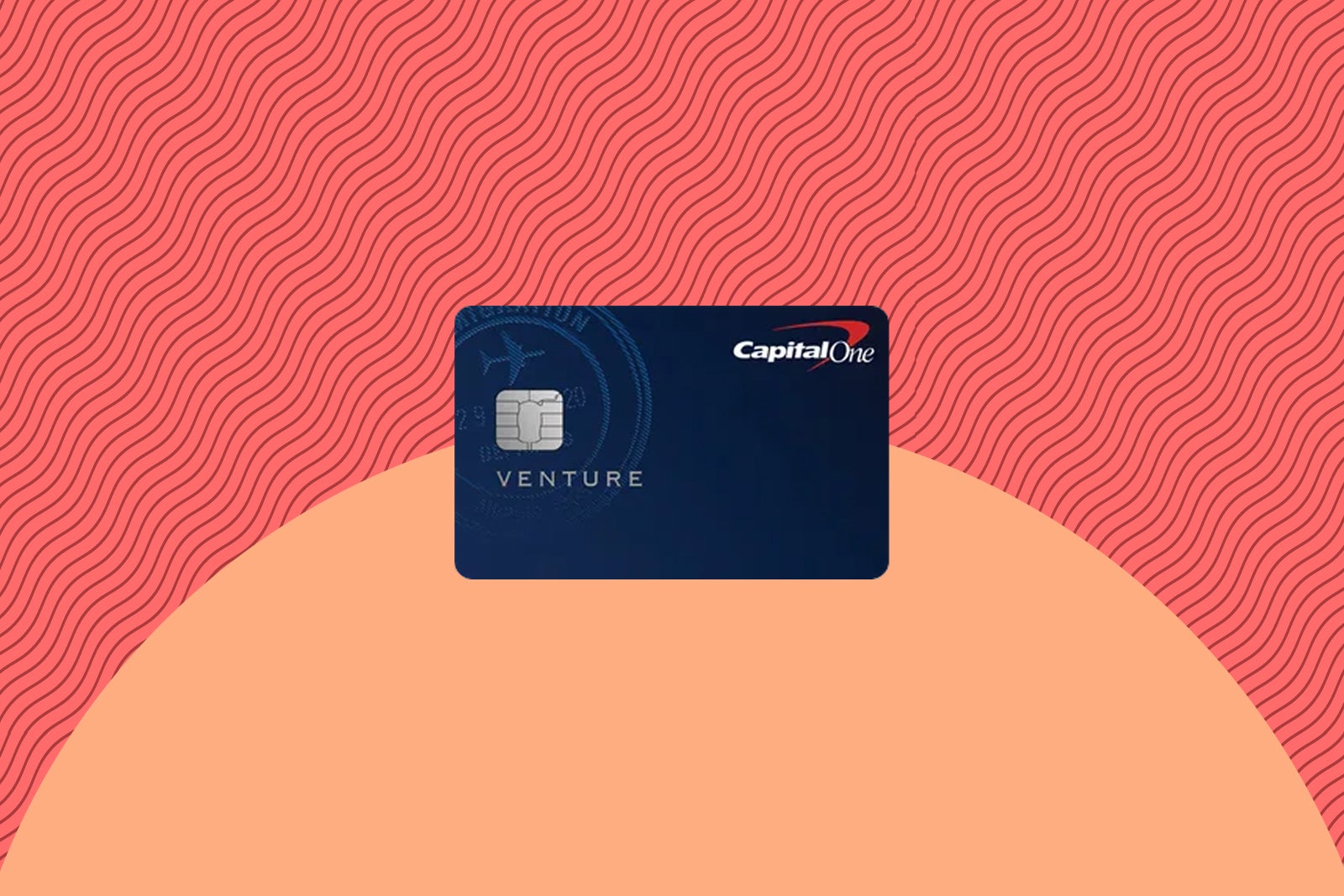
The Capital One premium credit card is the Capital One Venture X Rewards Credit Card and its mid-tier counterpart is the Capital One Venture Rewards Credit Card.

Capital One Venture X Capital One Venture Rewards
Annual fee $395 $95
Welcome offer Earn 75,000 bonus miles after spending $4,000 on purchases within the first three months from account opening. Earn 75,000 bonus miles after spending $4,000 on purchases within the first three months from account opening.
Value of welcome offer* $1,388 $1,388
Key benefits


Earning rates
  • 10 miles per dollar on hotels and rental cars booked through Capital One Travel
  • 5 miles per dollar on flights and vacation rentals booked through Capital One Travel
  • 2 miles per dollar on all other purchases
  • 5 miles per dollar on hotels, vacation rentals and rental cars booked through Capital One Travel
  • 2 miles per dollar on all other purchases
Credit score required 740^ 670^

* Based on TPG’s May 2025 valuations; valuations are not provided by the card issuer.
^ Based on TPG’s research and not provided by the card issuer.

Related: Capital One Venture vs. Capital One Venture X

The argument for the Venture X

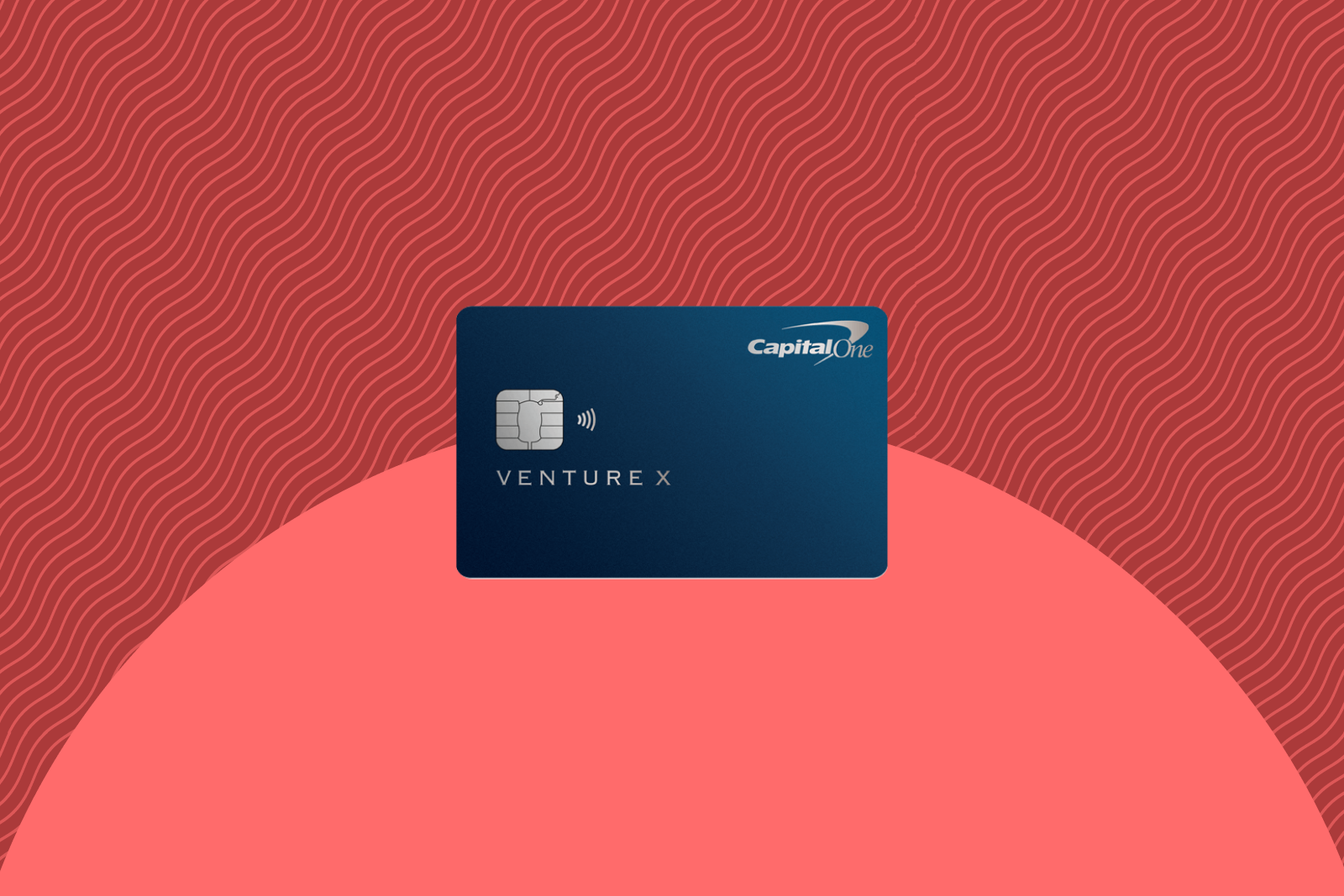
The Venture X clearly offers more benefits than its cheaper counterpart. If you’re looking for perks like lounge access, cellphone protection and an annual travel credit, this is a card that offers all of that — and more.

According to TPG’s May 2025 valuations, the combination of the anniversary bonus miles and annual travel credit is worth more than the cost of the annual fee.

THE POINTS GUY

The card’s earning rates aren’t bad, but you need to book your travel through a portal to maximize these rates. Even so, 5 to 10 miles per dollar on most travel bookings is definitely a great return on spending.

To learn more, read our full review of the Venture X card.


Learn More: Capital One Venture X Rewards Credit Card


The argument for the Venture Rewards

The best argument for Venture Rewards against Venture X is that its annual fee is $300 lower.

THE POINTS GUY

While you won’t get benefits like unlimited lounge access, you will get reimbursement for your Global Entry or TSA PreCheck application fee — a solid perk for a much lower annual fee.

To learn more, read our full review of the Venture Rewards card.


Learn More: Capital One Venture Rewards Credit Card


Chase mid-tier vs. premium cards

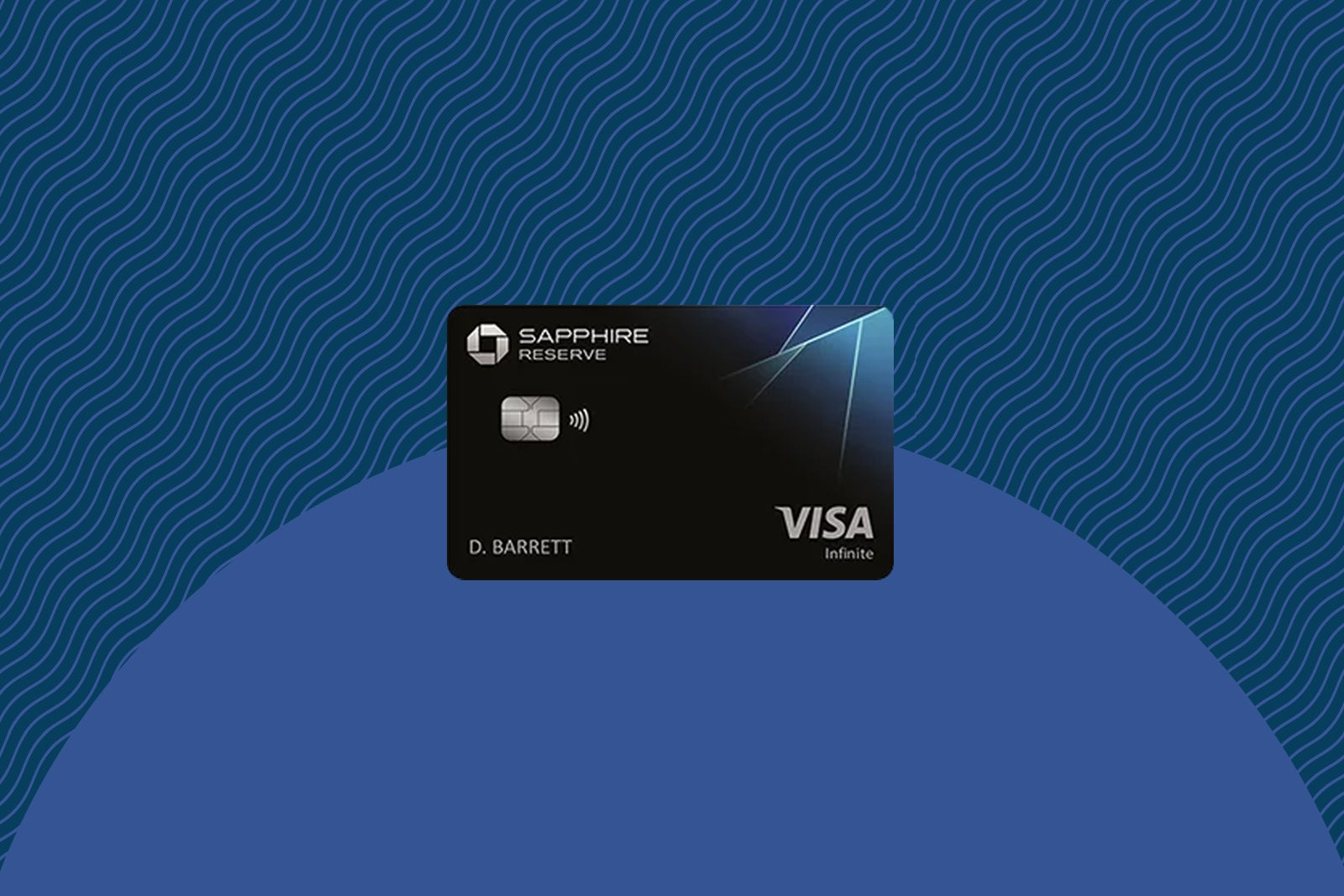
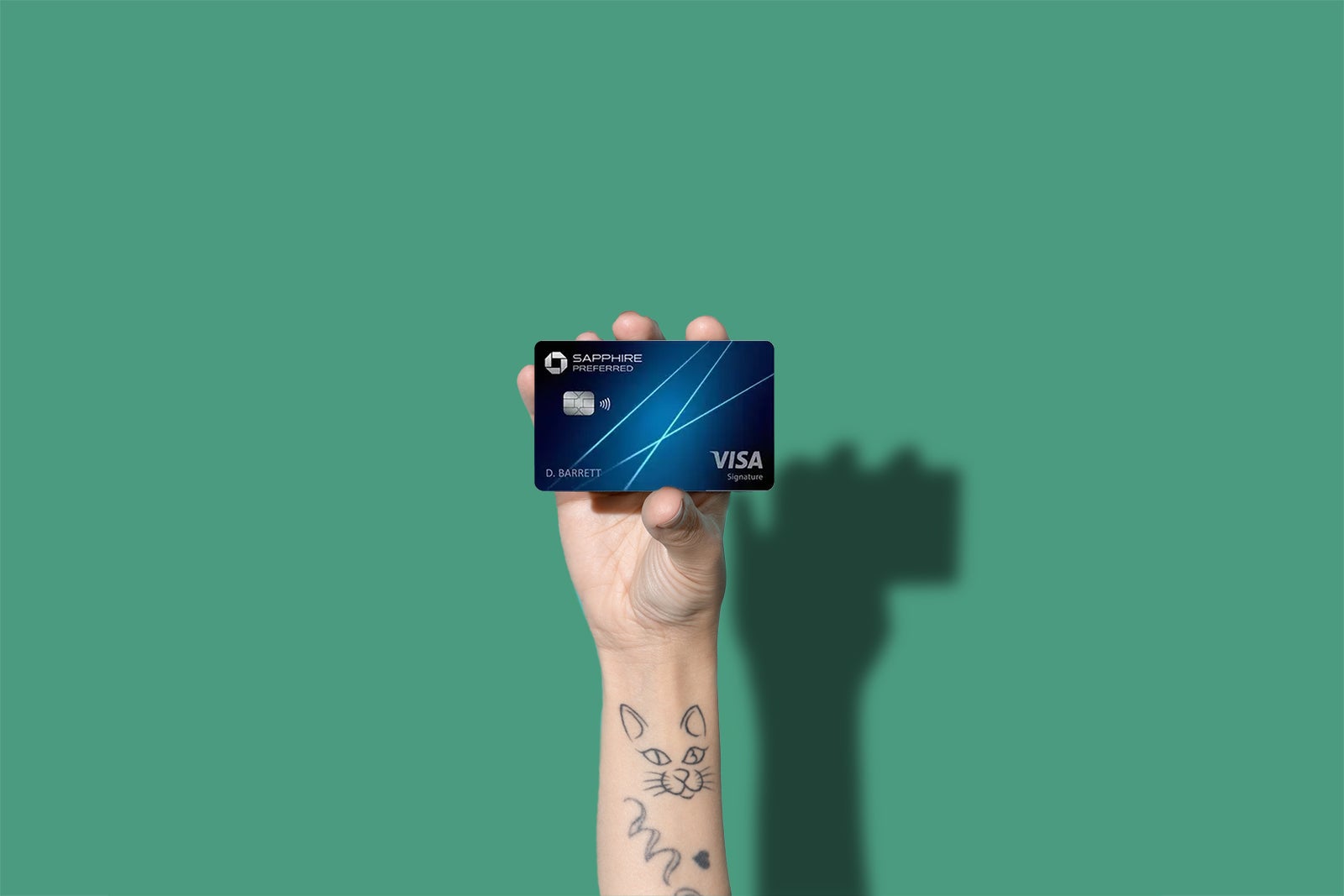
Chase’s premium credit card is the Chase Sapphire Reserve® (see rates and fees) and its popular sibling is the mid-tier Chase Sapphire Preferred® Card (see rates and fees).

Sapphire Reserve Sapphire Preferred
Annual fee $550 $95
Welcome offer Earn 60,000 bonus points after spending $5,000 on purchases within the first three months from account opening. Earn 60,000 bonus points after spending $5,000 on purchases within the first three months from account opening.
Value of the welcome offer* $1,230 $1,230
Key benefits
  • An up to $50 annual hotel credit for bookings made through Chase Travel℠
  • 10% anniversary points bonus based on your spending during the previous year
  • At least one year of complimentary DashPass membership with DoorDash (activate by Dec. 31, 2027) and up to $10 savings per month on non-restaurant DoorDash orders
  • Primary rental car coverage, trip delay reimbursement, trip cancellation and interruption insurance, baggage delay insurance, lost luggage reimbursement, purchase protection and extended warranty protection
Earning rates
  • 10 points per dollar on hotels and car rentals booked through Chase Travel§
  • 10 points per dollar on dining purchases through the Chase portal
  • 5 points per dollar on flights purchased through Chase Travel§
  • 5 points per dollar on Lyft rides (through Sept. 30, 2027)
  • 3 points per dollar on all other travel and dining purchases worldwide§
  • 1 point per dollar on everything else

§Elevated earnings on travel purchases will kick in after the annual travel credit is received.

  • 5 points per dollar on travel booked through Chase Travel (excluding purchases that trigger the $50 annual hotel credit)
  • 5 points per dollar on Lyft rides (through Sept. 30, 2027)
  • 3 points per dollar on dining, select streaming services and online grocery store purchases (excludes Target, Walmart and wholesale clubs)
  • 2 points per dollar on all other travel
  • 1 point per dollar on everything else
Points redemption rates in Chase Travel 1.5 cents each 1.25 cents each
Credit score required 740^ 670^

* Based on TPG’s May 2025 valuations; valuations are not provided by the card issuer.
^ Based on TPG’s research and not provided by the card issuer.

Related: Sapphire Preferred vs. Sapphire Reserve

The argument for the Sapphire Reserve

While the Sapphire Reserve‘s $550 annual fee seems high at first, consider that you get $300 in travel credits that apply automatically to a broadly defined concept of what counts as travel.

Moreover, perks like reimbursing your application fee for Global Entry or TSA PreCheck and complimentary food and drinks in airport lounges can bring that annual fee down to very little — or could make it effectively $0.

Chase Sapphire Reserve
THE POINTS GUY

The Sapphire Reserve also has some of the strongest travel protections in the industry, making it a great card to use when paying for even a small part of your trip.

Plus, its 1.5-cent redemption rate through Chase Travel makes it ideal for flights or hotels outside loyalty programs.

To learn more, read our full review of the Sapphire Reserve.


Apply here: Chase Sapphire Reserve


The argument for the Sapphire Preferred

Sapphire Preferred cardholders still get a great number of travel protections to help when something goes wrong during a trip.

On top of that, there’s a $50 hotel credit to use each year and a 10% points bonus on your cardmember anniversary each year. This card’s potential value here can’t be understated.

Chase Sapphire Preferred_April 2024 Update
THE POINTS GUY

And despite the fact that the Sapphire Preferred carries just a $95 annual fee, it still has strong earning categories. It earns highly on dining, streaming services and online grocery orders — categories where many spend regularly.

To learn more, read our full review of the Sapphire Preferred.


Apply here: Chase Sapphire Preferred Card


Bottom line

In this guide, we compared the top premium credit cards and mid-tier credit cards. This way, you can see how they’re similar and how they’re different while earning while earning similar rewards from the same issuer.

On the one hand, seeing a ton of perks and benefits attached to a credit card can be enticing. On the other hand, people see the high annual fees on premium credit cards and question whether those annual fees are worth it.

After looking through these comparisons, there should be something that works for your wallet based on your travel style, travel goals and spending habits.

If one of these cards caught your eye and you plan to apply, make sure to look at our guide to credit card application rules and restrictions to improve your chances of being approved.

Related: How to choose the best credit card for you

For Capital One products listed on this page, some of the benefits may be provided by Visa® or Mastercard® and may vary by product. See the respective Guide to Benefits for details, as terms and exclusions apply.

For rates and fees of the Amex Platinum Card, click here.
For rates and fees of the Amex Gold Card, click here.


from The Points Guy https://ift.tt/uSI1yao

10 extra charges on cruise ships that will make you mad — and what to do about them

One of the great allures of cruising is that the fare includes a lot.

Those $599-a-week rates that you see advertised from low-cost brands such as Carnival Cruise Line include not just a room on a ship but also meals and entertainment. The ship also acts as your transportation — it gets you from place to place at no extra cost.

Still, for the most part, cruises aren’t all-inclusive. On many ships, there are a lot of little things — and some big things — for which you’ll pay extra.

Some of the things that come with an additional charge are what you would expect. You’ll pay extra for treatments in shipboard spas, for instance, or for guided shore excursions in most cases.

But on many ships, there also are a growing number of extra fees that might take you by surprise — particularly if you haven’t been on a ship in a while.

For instance, some lines now charge extra for room service — something that always used to be free. On some ships, certain menu items in the “free” main dining room now come with an extra charge, too.

Related: A beginners guide to picking a cruise line

Here at TPG, we call this the nickel-and-diming-ization of the cruise world, and we’re not happy about it. You shouldn’t be happy about it, either.

You also shouldn’t assume there’s nothing you can do about it. In the segments below, we look at nearly a dozen different fees that you may encounter when cruising on big-ship cruise lines — and offer advice on what to do about them.

Internet access fees

Free internet has become standard at a lot of hotel chains, so it might seem logical that cruise lines would offer free internet, too. After all, cruise ships are just hotels that happen to float. In general, though, only the highest-end lines in the cruise world (and many river lines) offer free internet.

At many big brands, such as Royal Caribbean, Carnival and Princess Cruises, you’ll sometimes pay exorbitant amounts for internet access. The fastest service on Carnival vessels, for instance, was recently priced at $23.80 per person, per day. Compare that to what you pay for the internet at home.

One way to avoid the charges is to wait until you’re in a port to check your emails, read the news online and do whatever else you do on the internet. You can often find free internet in the cruise terminal where your ship docks or at a nearby cafe or eatery.

Related: Cruise secrets from a cruising expert that will blow your mind

Another option: Some lines offer less expensive internet plans that have scaled-back access. Carnival, for instance, has a less pricey “social” plan that brings access to key social sites (Facebook, X, Instagram, etc.), as well as messaging services such as WhatsApp — but not much else — for $18.70 a day. It may be all you need.

Note that these internet charges seem to do nothing but rise in cost. At $18.70, Carnival’s social plan costs significantly more than it did just a couple of years ago.

Room service ‘convenience’ fees

Complimentary room service used to be standard on cruise ships, but a growing number of lines now charge extra for it.

For instance, the world’s biggest cruise line by passenger capacity, Royal Caribbean, now levies a “service charge” of $7.95 per order for room service, even if all you order is a single side of hash browns.

It also — and this could really annoy you — adds an 18% “gratuity fee” on top of the service charge for good measure. For the record, we find the fee-on-top-of-a-fee structure absurd. Just say you’re going to charge us $9.38.

Related: How to book a cruise using points and miles

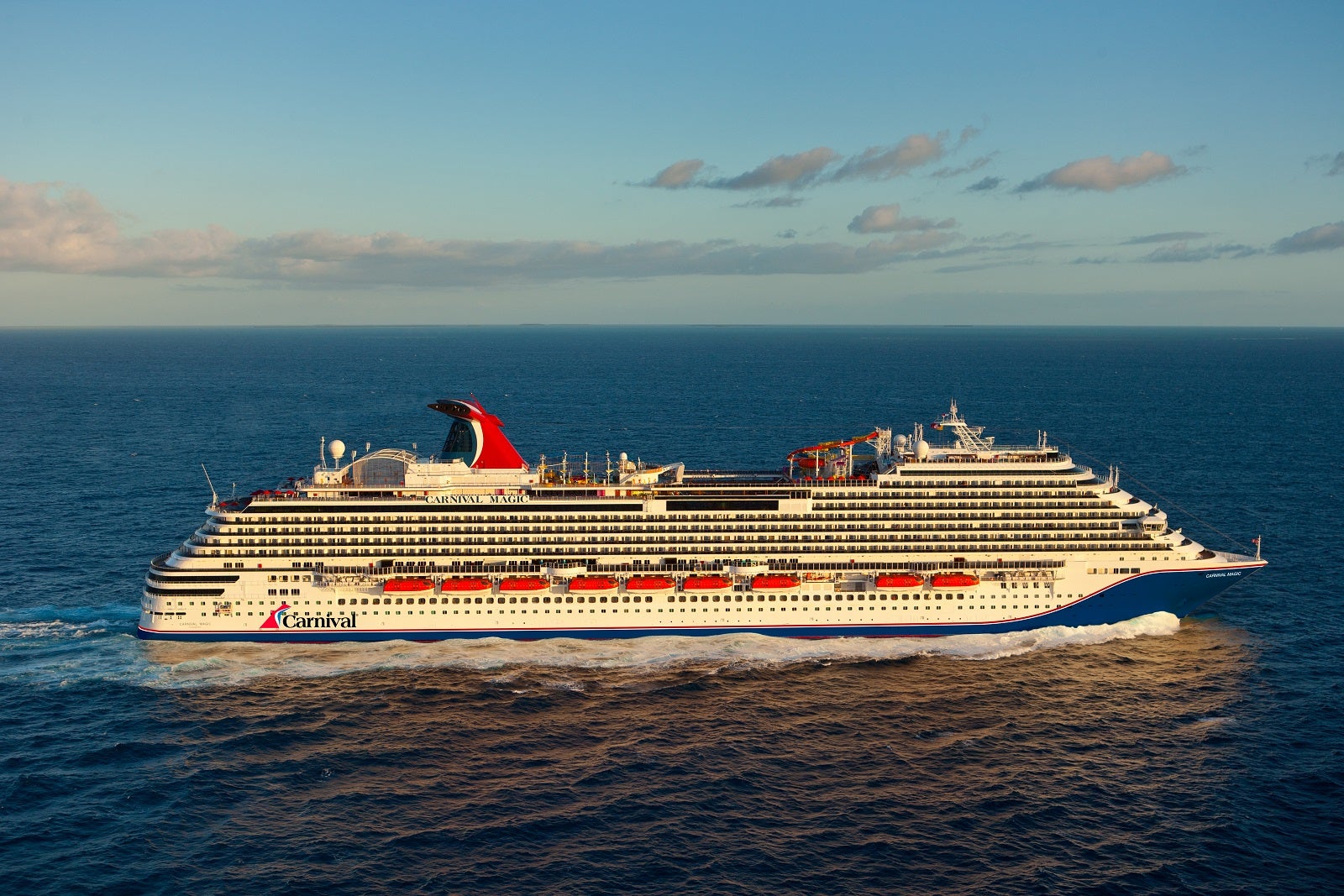
Carnival Magic
Carnival Magic. CARNIVAL CRUISE LINE

Other lines that have started charging for room service include Norwegian Cruise Line, which now has a $9.95 “convenience charge” for room service. Celebrity Cruises also recently added a $9.95 room service fee for all items except continental breakfast. Like Royal Caribbean, Celebrity adds an 18% gratuity fee on top of that charge — another service-fee-on-top-of-a-service-fee situation that we find inane.

Additionally, some lines have started adding hefty charges for certain upgraded items on room service menus. On a recent Cunard sailing, for instance, we saw upcharges as high as $44 for a room service steak served with an add-on lobster tail. Even a basic burger came with an upcharge of $11.

The way around these fees is simple: Don’t order room service.

On many ships, no-extra-charge food is available nearly around the clock from multiple outlets, including casual buffet eateries and grab-and-go pizza stands, just steps away from your room. All it takes is a short walk from your cabin to get it.

Related: Tips and tricks that will make your first cruise go smoothly 

Drink charges

While meals are generally included on cruise ships (at least, in some onboard eateries), you’ll pay extra for most drinks — and not just alcoholic beverages.

On many ships, soda and bottled water come with an extra charge (though, oddly, coffee, iced tea, lemonade and hot chocolate are usually available for free). A soda can cost anywhere from $2 to $4, depending on the line.

The exception is on luxury lines, where fares generally include drinks of all types. Many river lines will include various drinks, such as beer and wine, with lunches and dinners.

If you’re a big drinker, consider a drink package. It can save you money if you normally order a large number of drinks every day. That said, drink package prices have soared of late, with some lines charging $100 or more per day for a top-tier package.

Related: Cruise drink packages: A line-by-line guide 

Corkage fees

Speaking of drinks, many cruise lines will allow you to bring your own wine or Champagne on board, usually in limited quantities. If you do so, be careful where you drink it. Depending on where you pop open your own bottle, you might be slapped with a corkage fee of $15 or more.

Lines such as Royal Caribbean, Carnival and Princess levy corkage fees for passengers opening their own bottles in restaurants, bars, lounges and other onboard venues.

people drinking on cruise
You’ll pay $15 to open your own wine in a restaurant on a Princess ship. PRINCESS CRUISES

The only way to avoid this fee is to open your wine or Champagne in your room and then either drink it there or take it around the ship in a nondescript glass.

Not that this always works: Norwegian charges a $15 corkage fee even if you want to drink your own wine in your own room. It will levy the charge the moment you walk on board with a bottle.

Fees for lounging in adults-only areas

Several of the biggest cruise lines like to boast about the adults-only sunning areas on their ships where you can escape from the little ones. However, what they sometimes leave out is that they’ll often charge you for the privilege of being in a kids-free zone.

Princess, for instance, charges $20 per person for a half-day pass to the Sanctuary, an adults-only lounge area found on most of its ships (a full-day pass costs $40 per person).

Norwegian has an adult lounge area called Vibe Beach Club on some of its ships that can cost a whopping $99 per person for a day pass (or $278 for two if you want a cabana). Weeklong passes, which start at a bit more than $200 per person, are a better deal.

If you love the idea of an adults-only, top-deck area but don’t want to pay for it, you might want to look at Disney Cruise Line and Carnival ships. Both lines offer adults-only zones that are available to passengers at no extra charge.

Or, consider a trip with Viking or Virgin Voyages. Neither allows kids, so every lounge area on the ship is a kids-free area.

Related: The best adults-only cruises to try if you can’t stand being around kids on vacation  

Fees for select menu items in the ‘free’ dining room

One of the hallmarks of cruising is that there’s always a free meal available somewhere on a ship. All but the smallest vessels usually feature a main dining room that is included in the fare, as well as a buffet eatery where you can count on getting complimentary breakfast, lunch and dinner.

However, in recent years, some lines have started sneaking extra charges into these “free” eateries.

Carnival and Royal Caribbean now charge extra for filet mignon, lobster or a surf-and-turf combination entree in their main restaurants. The prices range from around $17 to well over $30 a plate.

Princess sometimes turns its free buffet area into a “crab shack experience,” serving such items as snow crab, jumbo shrimp, clams and mussels for a hefty fee.

The way to avoid this: Order the chicken.

Related: The ultimate guide to Royal Caribbean cruise ships and itineraries

Fees for using spa areas

A growing number of cruise ships have luxurious spa complexes that go well beyond treatment rooms.

You’ll find sprawling “thermal suites” with saunas and steam rooms, thalassotherapy pools, heated loungers, rainfall showers and even snow rooms (with real snow) where you can laze away the day. On many vessels, though, you’ll face a steep charge just to set foot in one of these areas.

Norwegian charges $199 per person, per week for a thermal suite pass at its spas (day passes also are available for $49), and lines such as Cunard and Carnival have daily fees for access to thermal suites, too.

The good news is that not every thermal suite on a ship comes with an extra charge. Fast-growing Viking has made free access to the thermal suites in its spas a hallmark of the line, as has Explora Journeys, a new luxury line.

Related: Explora Journeys cruise ship review: Setting a new bar for luxury at sea

Fees for access to top attractions

Some of the signature attractions on big cruise ships such as Norwegian Encore and Royal Caribbean’s Anthem of the Seas come with extra fees.

Norwegian Encore’s much-ballyhooed go-kart track (it’s one of the only ones at sea) will set you back $15 for a single eight-lap ride. The ship’s nearby laser tag course will cost you $10 for a five-minute shoot-out. In both cases, you can buy a weeklong pass, but only if you’re OK with dropping an extra $199 per person.

A go-kart track at the top of Norwegian Encore
The top deck of Norwegian Encore includes a sprawling go-kart track and an outdoor laser tag area. NORWEGIAN CRUISE LINE

Royal Caribbean will charge you extra for a 60-second flying experience on Anthem of the Seas’ skydiving simulator (after one initial free ride). Carnival charges as much as $59 for a two-hour class in the kitchen classroom on one of its newer ships, Carnival Panorama, and tacks on an 18% gratuity fee on top of that, too.

Other cruise ship attractions that often come with an extra charge include wine-tasting events, IMAX theater shows, escape rooms and behind-the-scenes tours.

Related: The best cruise ships for people who never want to grow up 

Fitness class fees

Access to the fitness center on your cruise ship will be included in the fare, but that doesn’t mean you can go to fitness classes for free. On many ships, you’ll pay $10 or more for classes in yoga, Pilates, spinning and the like.

This isn’t always the case. River lines and luxury lines often offer fitness classes at no extra charge, as does the adults-only line Virgin Voyages. However, on most mass-market ships, expect to pay extra.

If taking lots of fitness classes is part of your vacation routine, you might consider the value of trading up to a higher-end cruise line that includes fitness classes (and other extras) in its fare.

Automatic gratuities

Some cruise lines call them service fees. Others call them gratuity charges. Either way, the daily fees that some cruise lines tack on to passenger bills can be a shock to first-time cruisers.

At some lines, these charges run as high as $25.50 per day. Also, unlike the typical service fee or resort fee found at a land resort, they are not per room. They are per person.

At big lines such as Royal Caribbean and Norwegian, it’s not uncommon for a family of four staying in a single cabin to see around $70 to $80 a day in service fees added to its bills (Royal Caribbean recently hiked its service charge to $72 per day for a family of four). On a typical seven-night cruise, that’s around $500 in fees for a family of four.

Want to avoid such charges? One way around them is to book a cruise during one of the frequent promotions that some lines offer, where they throw in service charges for free.

Another option: Consider one of the growing number of lines that include service charges in their base fares.

Lines that now cover gratuities in their fares include Explora Journeys, Azamara, Crystal, Ponant, Regent Seven Seas Cruises, Scenic Luxury Cruises & Tours, Seabourn, SeaDream Yacht Club, Silversea Cruises and Virgin Voyages.

Related: Tipping on a cruise: What to know about cruise ship gratuities

Cruise lines without lots of extra charges

If you’d rather not bother with workarounds and just want a more inclusive cruise experience, you might want to book a trip with a luxury cruise line such as Regent Seven Seas Cruises, Silversea, Seabourn, Crystal or Explora Journeys. Luxury lines generally include almost everything in their base fares, from drinks of all kinds to gratuities.

Luxury lines have much higher fares than mainstream brands such as Royal Caribbean, Norwegian and Princess, of course, but the price differential sometimes isn’t nearly what it appears when you start to factor in all the extra charges you’ll experience on a less all-inclusive line.

River cruise lines at many price points are also known for their all-inclusiveness. It’s common for even midprice river cruise lines to include shore tours in every port, for instance. Many offer wine, beer and soda with lunch and dinner at no extra charge.

Planning a cruise? Start with these stories:


from The Points Guy https://ift.tt/pDJCky3