More than $1,000 in flights: Earn 75,000 bonus points with this Aeroplan credit card offer

The Aeroplan® Credit Card (see rates and fees) from Chase is a valuable cobranded airline credit card that offers cardholders ongoing value for a low annual fee.

Before you assume the Aeroplan card is only for those who reside in Canada, understand that this loyalty program can be very valuable.

Plus, for a limited time, the Aeroplan card is providing an elevated bonus for new cardholders that's worth over $1,000 in value, per TPG's April 2026 valuations, making it an excellent time to apply if you're interested.

Let's analyze the current Aeroplan card welcome bonus and its value to decide if it's a good choice for your wallet.

Aeroplan card welcome offer

The $95-per-year Aeroplan card is offering new cardholders a solid offer: Earn 75,000 bonus points after spending $4,000 on purchases in the first three months from account opening. This offer ends on June 10.

TPG's April 2026 valuations place Aeroplan points at 1.4 cents apiece, making this welcome offer worth $1,050.

The typical offer on this card provides 50,000 to 60,000 points, so anything from 75,000 points and above is worth considering — making now a great time to apply if you've been eyeing it.

Hand holding the Aeroplan Credit Card
THE POINTS GUY

Keep in mind that this card is affected by Chase's 5/24 rule, which means you will likely not be approved if you have been approved for five or more cards in the past 24 months, regardless of which issuer they're from.

If you are eligible, check out our ideas for quickly meeting a minimum spending requirement, including prepaying insurance, rent or taxes to earn the entire welcome offer.

Related: How my travel credit cards keep me on the go within a modest budget

Aeroplan card earning rates

The Aeroplan card is worth more than just the welcome bonus. The card is a strong earner in spending categories and accrues points at the following rates:

Friends traveling together
FRAZO STUDIO LATINO/GETTY IMAGES

Additionally, cardholders will get a 500-point bonus for every $2,000 spent on the card per calendar month, up to 1,500 bonus points per month. This is a particularly nice benefit while you work toward hitting the minimum spending requirement for this card's welcome offer.

Related: Maximizing credit cards to become points-rich without spending a ton

Aeroplan card key benefits

Beyond the points that you can earn, the Aeroplan card also offers several interesting benefits:

Related: Credit card perks and benefits you should be using this month

Bottom line

The Aeroplan card is one of the most compelling airline credit cards on the market. Not only does it confer automatic elite status on new cardholders, but it also earns points quickly and offers great day-of-travel perks, including a statement credit for a TSA PreCheck, Global Entry or Nexus membership. You get all of that for just a reasonable $95 annual fee.

Plus, the card's current offer provides stellar first-year value, thanks to its 75,000 bonus points. Aeroplan points are some of the most valuable in the market, and the program has over 50 airline partners, making it one of the most versatile currencies on the market.

To learn more, read our full review of the Aeroplan card.


Apply here: Aeroplan card


Editorial disclaimer: Opinions expressed here are the author’s alone, not those of any bank, credit card issuer, airline or hotel chain, and have not been reviewed, approved or otherwise endorsed by any of these entities.



from The Points Guy Articles https://ift.tt/0WrQTsU

Should you get an airline cobranded card to offset bag fees? We did the math

To offset rising fuel surcharges, U.S. airlines have recently raised checked bag fees. So now, for a round-trip flight, you can expect to pay about $100 extra per person for each checked bag.

As someone who doesn't have elite status from staying loyal to a specific airline and likes to book basic economy for the least expensive flight itineraries, I can say from experience that paying almost $100 in bag fees — if not more — can really dampen a traveler's cost-saving plans.

While I know you might be thinking, "Just don't check a bag," it's not a feasible solution for every getaway. Plus, as a points and miles enthusiast, I'm also now weighing the fact that some airlines have placed restrictions on earning rewards on basic economy flights.

Basically, I want to have my cake and eat it too — without paying a ton of extra cash.

That's why I've invested in several cobranded cards, and if you plan to travel at least twice a year — especially with one or two specific airlines that operate out of your hometown airport — it may make sense for you, too.

Here are the lowest-annual-fee airline cards that include a checked bag that may be worth considering.

Related: Higher fares are here: What it means for booking spring, summer flights

Save on American Airlines checked bag fees

American bag fees for standard fares:

  • $50 for your first checked bag ($45 if prepaid online)
  • $60 for your second checked bag ($55 if prepaid online)

American bag fees for basic economy:

  • $55 for your first checked bag ($50 if prepaid online)
  • $65 for your second checked bag ($60 if prepaid online)
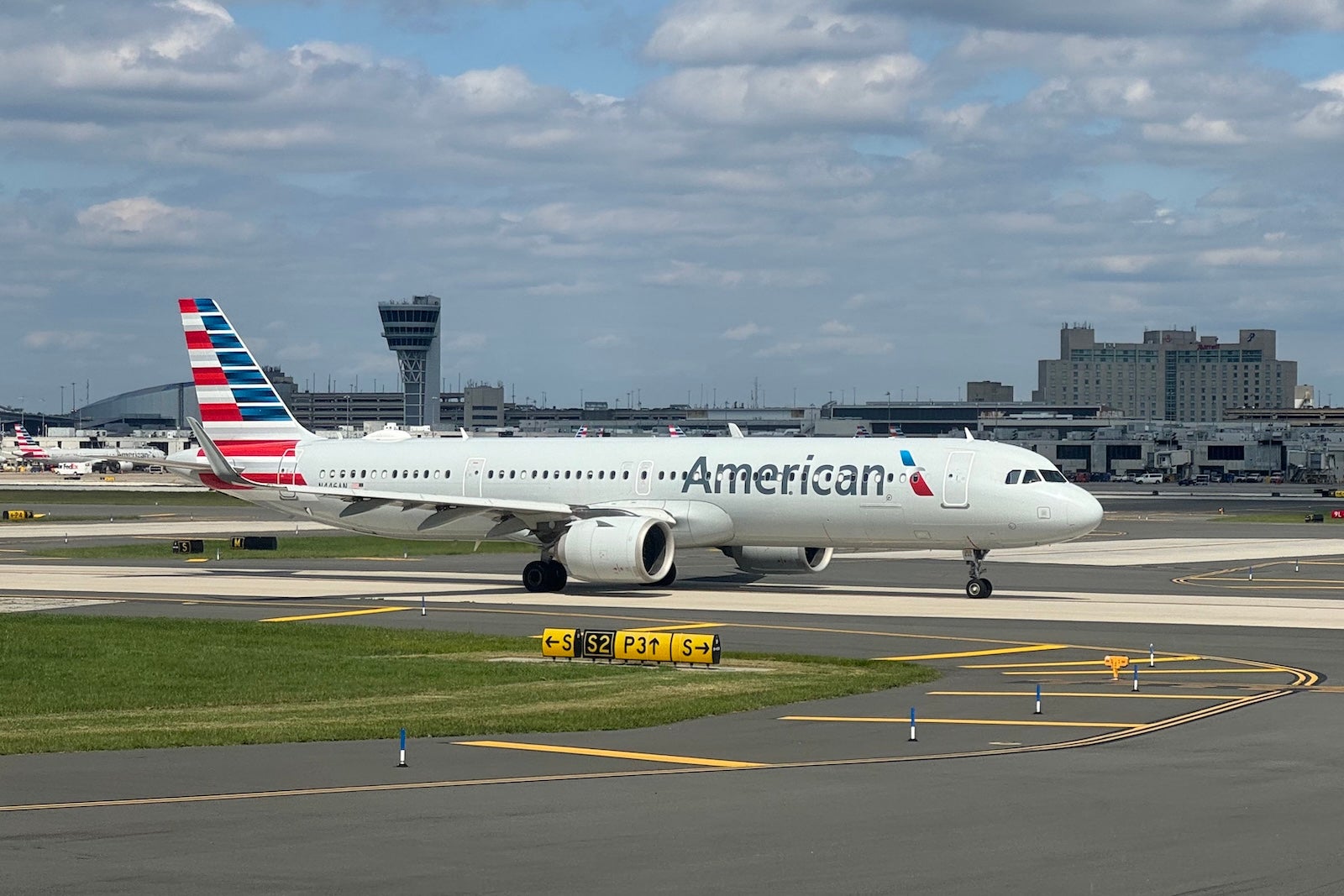
An American Airlines plane taxis at Philadelphia International Airport (PHL). SEAN CUDAHY/THE POINTS GUY

Recommendation: Citi® / AAdvantage® Platinum Select® World Elite Mastercard®

  • Annual fee: $0 introductory annual fee for the first year, then $99 thereafter
  • Checked bag perk with card: First checked bag free for you and up to 4 travel companions; only on domestic flights
  • Basic economy fare earning rate: Earn 0 AAdvantage miles
  • Basic economy fare earning rate with the AAdvantage Platinum Select: 2 miles per $1 spent on eligible American flights
  • Main cabin fare earning rate for non-elite members: 5 miles per $1 spent on American flights

Final thoughts: If you fly round-trip at least once per year, you will pay $100 per person to check your bag when you book a basic economy fare ($100 if prepaid online). This card has an annual fee of $99 (starting in your second cardholder year), which is less than the cost of checking your bag. Plus, you can enjoy additional travel perks, such as earning 2 miles per $1 spent on American flights in basic economy, Preferred boarding and more.

To learn more, check out our review of the AAdvantage Platinum Select card.

The information for the Citi / AAdvantage Platinum Select has been collected independently by The Points Guy. The card details on this page have not been reviewed or provided by the card issuer.

Save on United Airlines checked bag fees

United bag fees:

  • $50 for your first checked bag ($45 if prepaid online)
  • $60 for your second checked bag ($55 if prepaid online)
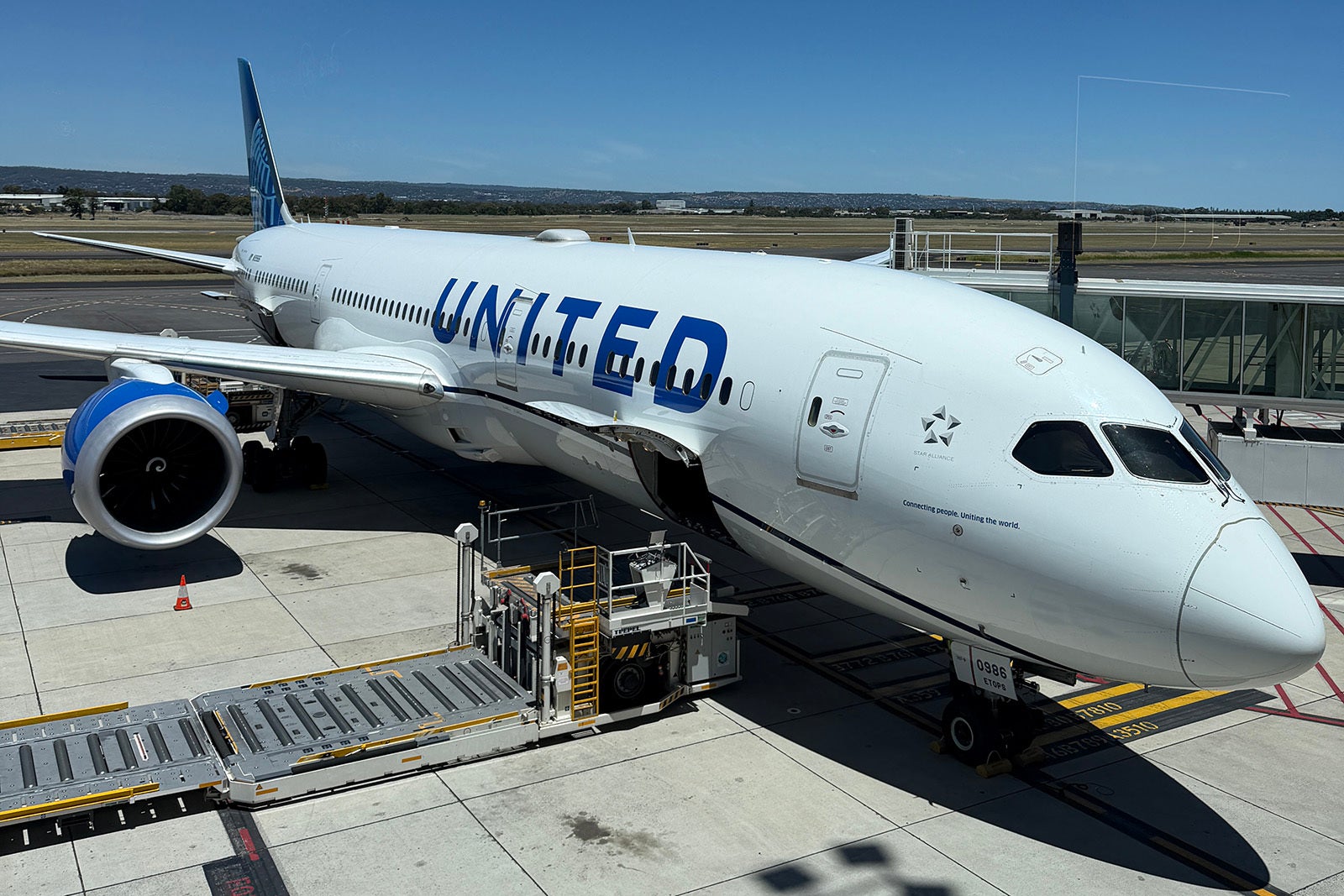
United Boeing 787 parked at the gate in Adelaide, Australia
United Boeing 787 parked at the gate in Adelaide, Australia. ANDREA M. ROTONDO/THE POINTS GUY

Recommendation: United℠ Explorer Card (see rates and fees):

  • Annual fee: $0 introductory annual fee for the first year, then $150 thereafter
  • Checked bag perk with card: Primary cardmember plus one companion can each check a bag for free
  • Basic economy fare earning rate: Earn 0 United MileagePlus miles
  • Basic economy fare earning rate with the United Explorer card: 3 miles per $1 spent on United flights
  • Standard fare mileage earning for non-elite members: 3 miles per $1 spent

Final thoughts: If you plan to fly with United at least two times per year (round-trip) and check a bag, which would cost $200 or $180 if you prepay online, the United Explorer Card could be a good match for you. Plus, as a cardholder, you'll earn the same number of miles (3 miles per $1 spent on United flights) when booking basic economy with this card as travelers who are booking standard fares with no MileagePlus status. Additionally, you can enjoy other travel perks, such as two United Club lounge passes per year.

To learn more, check out our review of the United Explorer Card.

Save on Delta Air Lines checked bag fees

Delta bag fees:

  • $45 for your first checked bag
  • $55 for your second checked bag
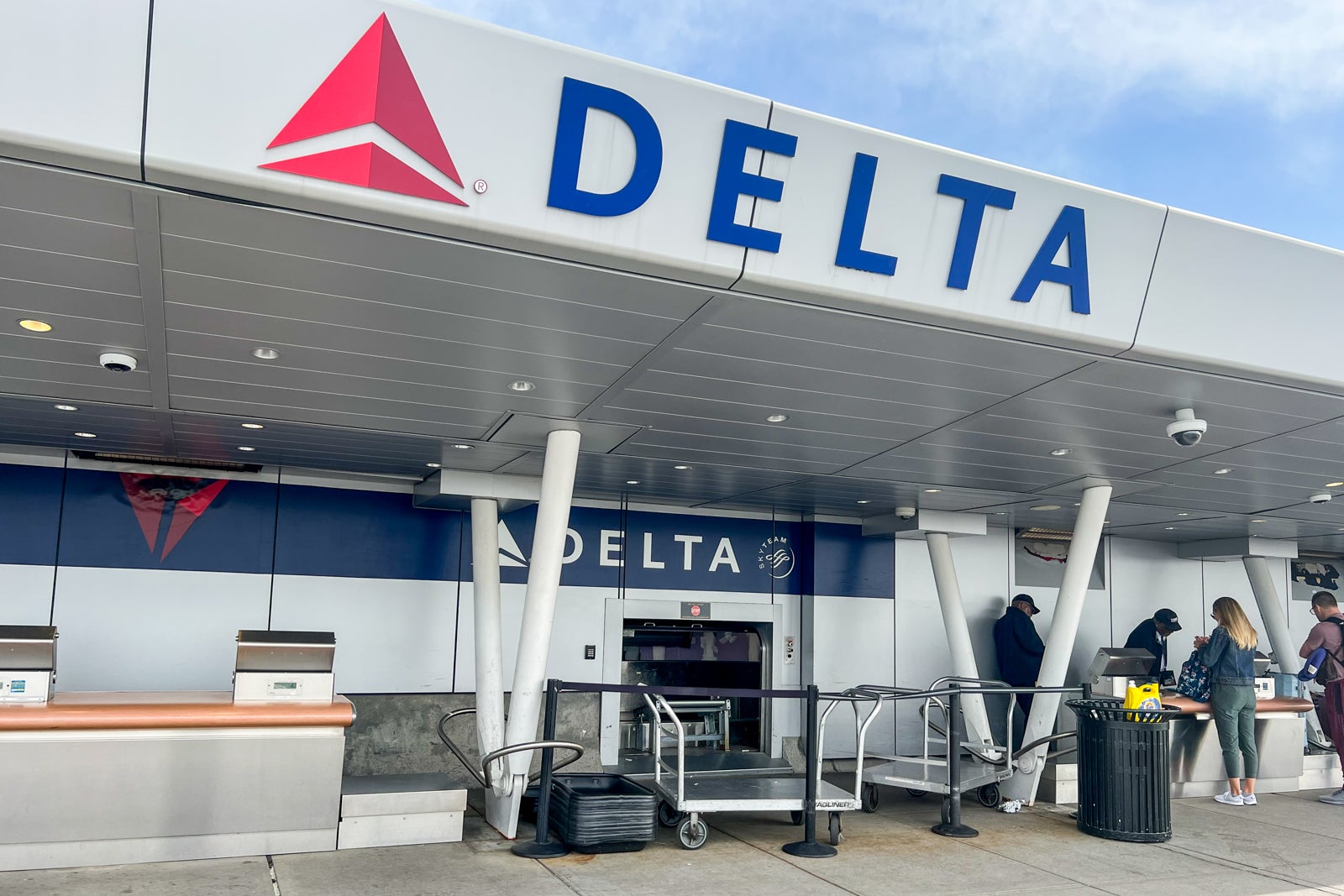
Delta signage at JFK
Airport, Bag, Clothing, Footwear, Handbag, Person, Shoe, Terminal, AccessoriesCLINT HENDERSON/THE POINTS GUYDelta Air Lines Premium Economy Boeing 767-400 JFK to LHR

Recommendation: Delta SkyMiles® Gold American Express Card

  • Annual fee: $0 introductory annual fee for the first year, then $150 thereafter (see rates and fees)
  • Checked bag perk with card: First checked bag free on Delta flights for you and up to eight travel companions (must be on the same cardmember's reservation)
  • Basic economy fare earning rate: 0 Delta SkyMiles
  • Basic economy fare earning rate with the Delta SkyMiles Gold card: 2 miles per $1 spent on Delta flights
  • Standard fare (Main Classic) mileage earning for non-elite members: 5 miles per $1 spent on Delta flights

Final thoughts: If you fly round-trip at least two times a year with Delta, this card will offset the $180 checked bag fees. Plus, you'll earn 2 miles per $1 spent on basic economy Delta flights as opposed to earning 0 Delta SkyMiles when booking this fare. Cardholders also receive other perks, such as 15% off award flights and up to $100 in statement credit every calendar year for Delta Stays (the airline's hotel travel portal; you must use your card to book).

To learn more, check out our review of the Delta SkyMiles Gold Amex Card.

Save on Southwest Airlines checked bag fees

Southwest Bag fees:

  • $45 for your first checked bag
  • $55 for your second checked bag
A Southwest plane at BWI
A Southwest Airlines Boeing 737 at Baltimore/Washington International Thurgood Marshall Airport (BWI). SEAN CUDAHY/THE POINTS GUY

Recommendation: Southwest Rapid Rewards® Plus Credit Card (see rates and fees)

  • Annual fee: $99
  • Checked bag perk with card: First checked bag free on Southwest flights for you and up to eight travel companions (must be on the same cardmember's reservation)
  • Basic fare earning rate: 2 Rapid Rewards points per $1 spent on Southwest flights
  • Basic fare earning rate with the Southwest Rapid Rewards Plus Card: 4 points per $1 spent on Southwest flights

Final thoughts: Southwest's former "two checked bags fly free" policy is long gone. So, if you plan to take at least two round-trip flights per year with the airline, investing in the $99 annual fee card may be worth it. Aside from the free checked bag benefit (for up to eight travel companions), cardholders also get to select their seat up to 48 hours prior to departure. With selecting a seat now costing extra, a new-ish policy (and a hot topic for the airline), Southwest flyers may find value with this card.

To learn more, check out our review of the Southwest Rapid Rewards Plus Credit Card.

Save on Alaska Airlines checked bag fees

Alaska bag fees:

  • $45 for your first checked bag
  • $55 for your second checked bag
alaska airlines plane
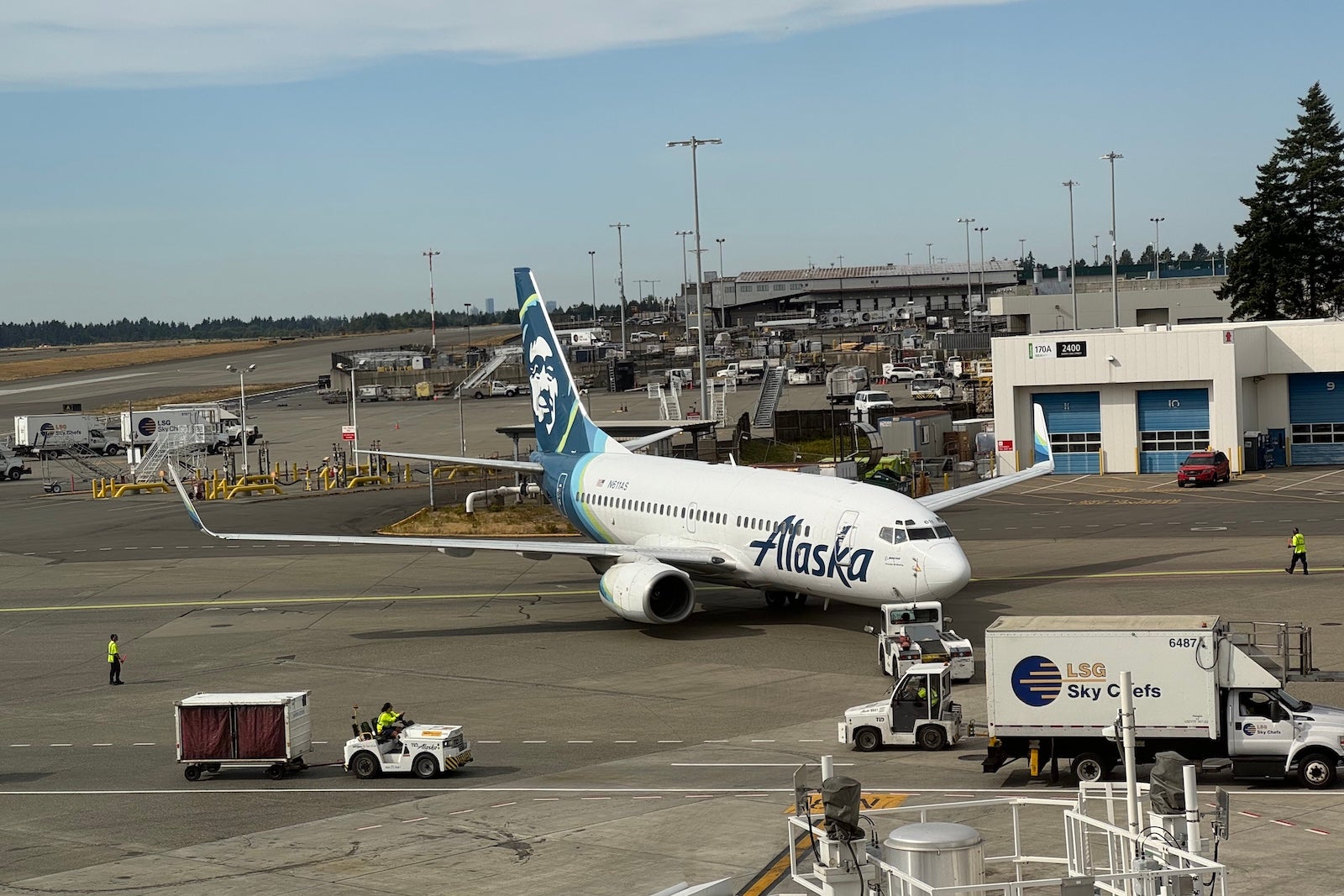
Alaska Airlines plane pushes back in Seattle. SEAN CUDAHY/THE POINTS GUY

Recommendation: Atmos™ Rewards Ascent Visa Signature® credit card

  • Annual fee: $95
  • Checked bag perk with card: First free checked bag for cardholder and up to six travel companions (must be on the same cardmember's reservation)
  • Basic fare (Saver) earning rate: 30% of miles flown (number of Atmos Rewards points you'll earn)
  • Basic fare earning rate with the Atmos Rewards Ascent credit card: 3 points per $1 spent on Alaska and Hawaiian flights
  • Standard fare (Main cabin) mileage earning for non-elite members: 1 point per 1 mile flown (distanced-based)*

*Coming later in 2026, Atmos Rewards will be changing the way members earn points.

Final thoughts: If you plan to check a bag with Alaska or Hawaiian Airlines at least twice a year, this card will pay for itself. Aside from the free checked bag, cardholders will earn 3 Atmos Rewards points per $1 spent on Alaska and Hawaiian Airlines flights and can enjoy travel perks such as preferred boarding and 20% back on eligible inflight purchases.

To learn more, check out our review of the Atmos Rewards Ascent Visa Signature credit card.

Bottom line

Not even taking into account all of the cards' additional travel benefits and their welcome bonus offers, these low-annual-fee cobranded cards can save you money if you plan to fly with a carrier and check a bag at least once or twice a year. And, if you're always traveling with a companion, cobranded airline cards can save you significant money if you and your companion both plan to check bags.

Even if fuel surcharges do eventually go down, don't expect airlines to lower their checked bag prices. This, unfortunately, has become the new travel norm.

As a regular traveler, I personally have Southwest, American Airlines, Delta and Atmos credit cards (United is not a major operator at my hometown airport). Though I don't use each of these cards regularly, they stay tucked away in my wallet, mainly for when I have to book a flight and want to take advantage of the card perks, like a free checked bag for my partner and me.

To learn more about how to save on additional fees, check out our full list of credit cards that offer a free bag as a perk.

For rates and fees of the Delta Gold Amex, click here.

Editorial disclaimer: Opinions expressed here are the author’s alone, not those of any bank, credit card issuer, airline or hotel chain, and have not been reviewed, approved or otherwise endorsed by any of these entities.


from The Points Guy Articles https://ift.tt/qRTUwd3

The chic new Andaz Lisbon is now open

One of the most anticipated hotel openings of the year, the Andaz Lisbon, has finally opened its doors to guests.

Located in Lisbon's charming Baixa neighborhood, the Andaz Lisbon offers Praça do Comércio views, access to the most desirable parts of the city and the chance to earn and burn valuable World of Hyatt points along the way.

HYATT

Made up of 170 rooms and suites, the property is a tribute to the city itself and is designed with local touches like cork accents, layers of textures and traditional Portuguese craftsmanship. Its design might harken back to long-held traditions, but the hotel also features new-age components like immersive digital art, 55-inch TVs in the rooms and luxury Byredo bath products.

The hotel's main restaurant, Luzzi, serves traditional Lusitanian cuisine, food "inspired by the cultures and geographies that shaped Portugal," according to the hotel website. Offerings include dishes like catch of the day wrapped in banana leaf, shrimp dumplings in tucupi broth and small plates made for sharing. The restaurant's chic Z Terrace offers a rooftop bar experience with curated music.

HYATT

And from day to night, the Andaz Lounge (part coffee shop, part lobby bar) is open for guests' hydration needs, or just as a sleek place to sit back and people-watch.

The Andaz Lisbon offers a state-of-the-art fitness center with equipment from Technogym, a brand that easily allows users to make a fitness tracking account that can travel with them between hotels. And at a later date, the hotel will open a spa, as well as offer in-room spa services.

HYATT

"From our iconic city-center location, guests are invited to explore, connect, and immerse themselves in the rhythm of our city," Cajetan Araujo, the hotel's general manager in said in a statement. "At Andaz Lisbon, each stay is shaped by authentic local experiences and the heartfelt warmth that defines Portuguese hospitality."

HYATT

How to book Andaz Lisbon

Opening rates at Andaz Lisbon start around $444 per night. As a World of Hyatt Category 6 property, award nights start from 21,000 points per night.

Related reading:

Editorial disclaimer: Opinions expressed here are the author’s alone, not those of any bank, credit card issuer, airline or hotel chain, and have not been reviewed, approved or otherwise endorsed by any of these entities.


from The Points Guy Articles https://ift.tt/6EQ2tuP

Is airline merger mania back? That's the question as United-American rumors swirl

Is "merger mania" returning to the U.S. airline industry?

You certainly might think so after reading Monday's Bloomberg News report, which stated that United Airlines CEO Scott Kirby apparently floated a blockbuster merger with American Airlines to federal officials earlier this year.

Whether such a deal is ever formally proposed (as there'd be intense regulatory scrutiny on combining two of the nation's biggest global carriers), it's safe to say that the topic of airline mergers is back in full force.

It also prompts a look back at the previous wave of major airline mergers from 2005 to 2016, which helped shape the current competitive aviation landscape:

  • US Airways-America West (2005)
  • Delta Air Lines-Northwest Airlines (2008)
  • United Airlines-Continental Airlines (2010)
  • Southwest Airlines-AirTran Airways (2011)
  • American Airlines-US Airways (2014)

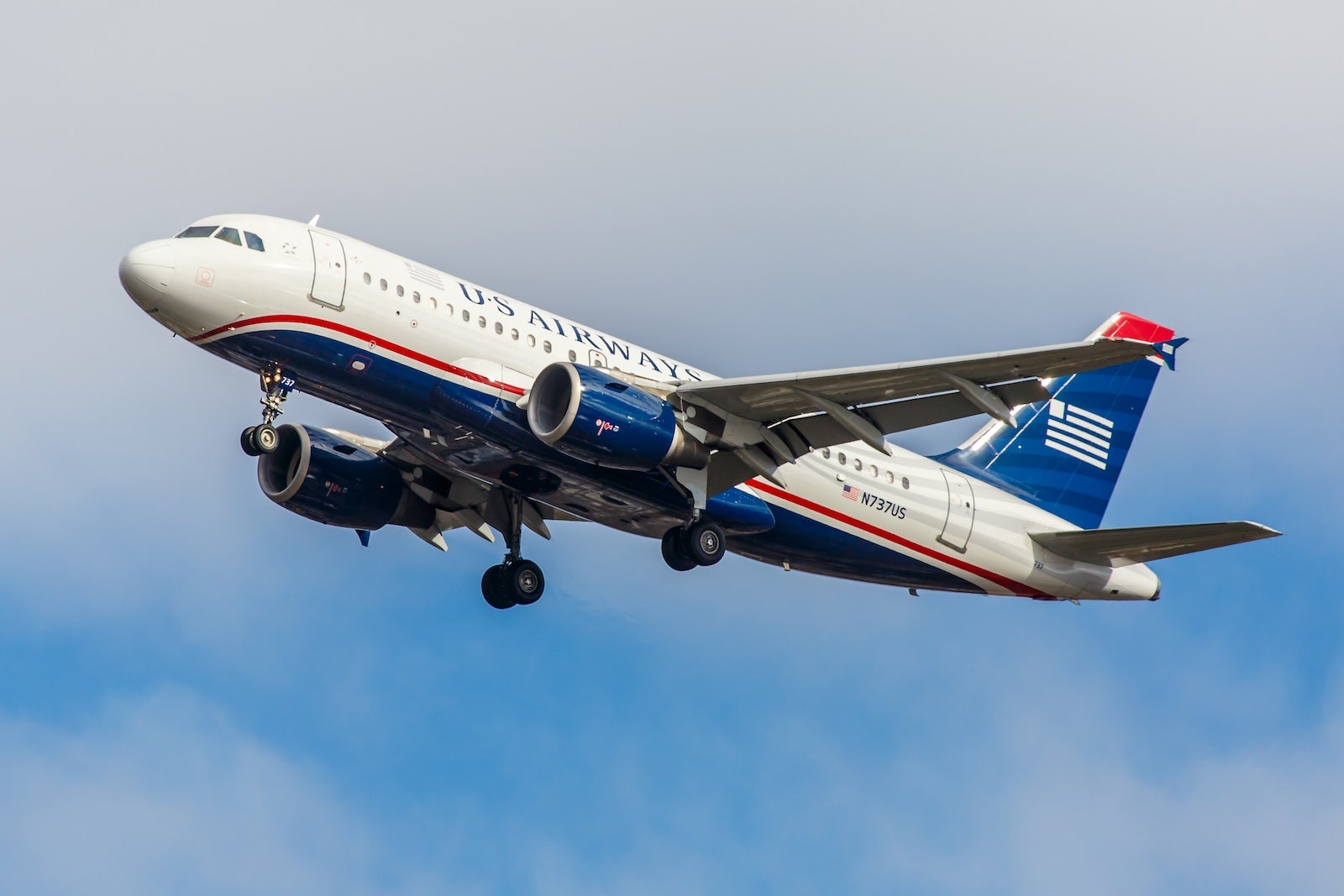
Those deals dramatically reduced the number of major airlines in the U.S. — ultimately melding nine different airlines into just four. In the process, storied brands like Northwest, Continental and US Airways fell by the wayside. This left four supersized airlines (American, Delta, United and Southwest) in control of roughly 80% of the U.S. market.

By 2015, most people didn't expect any further airline consolidation. However, in 2016, Alaska Airlines managed to complete one more major deal, outbidding JetBlue to acquire Virgin America.

But, fast forward to 2026, and government and industry leaders now seem to see the opportunity for a new round of U.S. airline mergers.

A US Airways Airbus A320 on approach to New York's John F. Kennedy International Airport (JFK) in 2013. US Airways later merged with American Airlines. CHRIS PARYPA/GETTY IMAGES

Even before reports began linking United to American, merger talk had grown amid skyrocketing fuel prices squeezing the industry.

Delta CEO Ed Bastian noted last week that high oil prices were historically a catalyst for industry consolidation.

He cited high fuel prices as a driver for that last major round of airline mergers (including Delta's own merger with Northwest in 2008, as well as the United-Continental, Southwest-AirTran and American-US Airways deals).

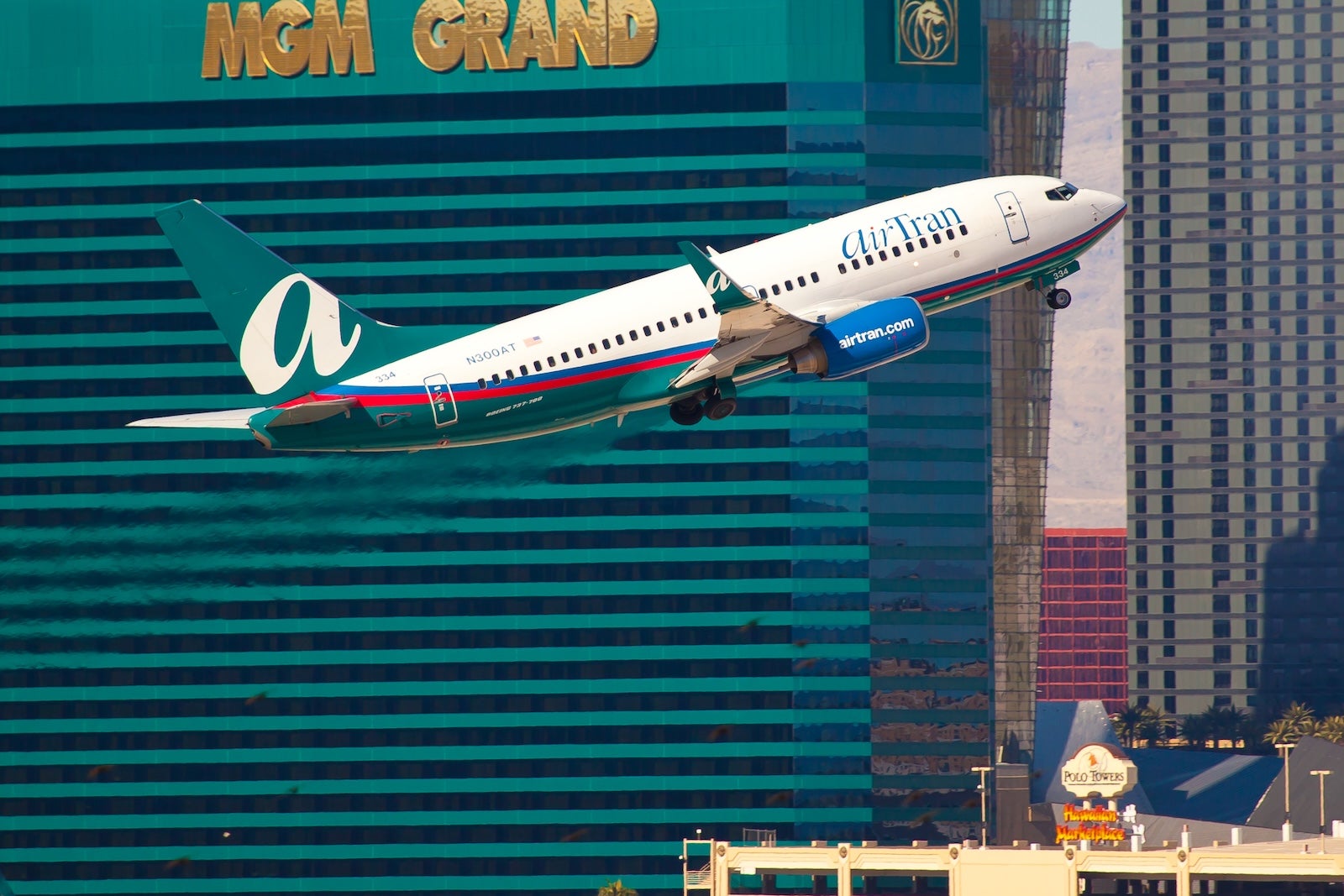
An AirTran Boeing 737 takes off in 2010 from Las Vegas. CHRIS PARYPA/GETTY IMAGES

"I anticipate higher fuel prices will cause much more significant structural reform than we've seen over this period," Bastian said. "There's a number of business models that, I think, their owners are going to start questioning whether they continue to commit capital to."

It had already been happening on a smaller scale.

Alaska Airlines announced in 2023 it would acquire and merge with Hawaiian Airlines, setting the stage for Alaska to join American, Delta and United as the nation's newest global carrier.

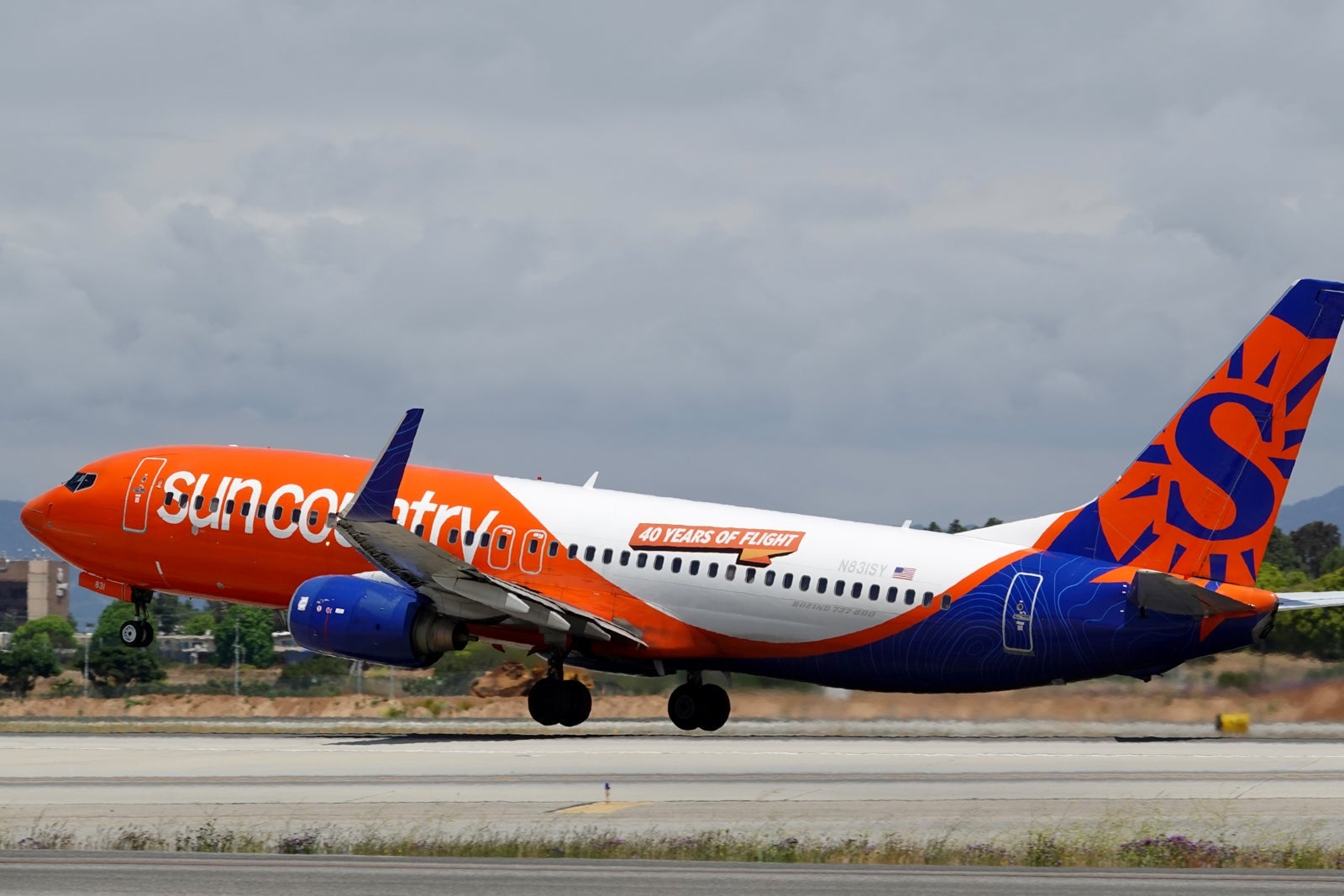
Leisure carrier Allegiant is in the midst of its own merger with niche carrier Sun Country.

ZACH GRIFF/THE POINTS GUY

And JetBlue is reportedly shopping for a merger or acquisition, which likely would've been the major prize in the industry until the United-American report emerged this week.

Even Washington, D.C. — historically one of the toughest audiences regarding this topic — has signaled openness.

Bastian's comments, for example, came just two days after U.S. Secretary of Transportation Sean Duffy said on CNBC that he sees "room" for more airline consolidation.

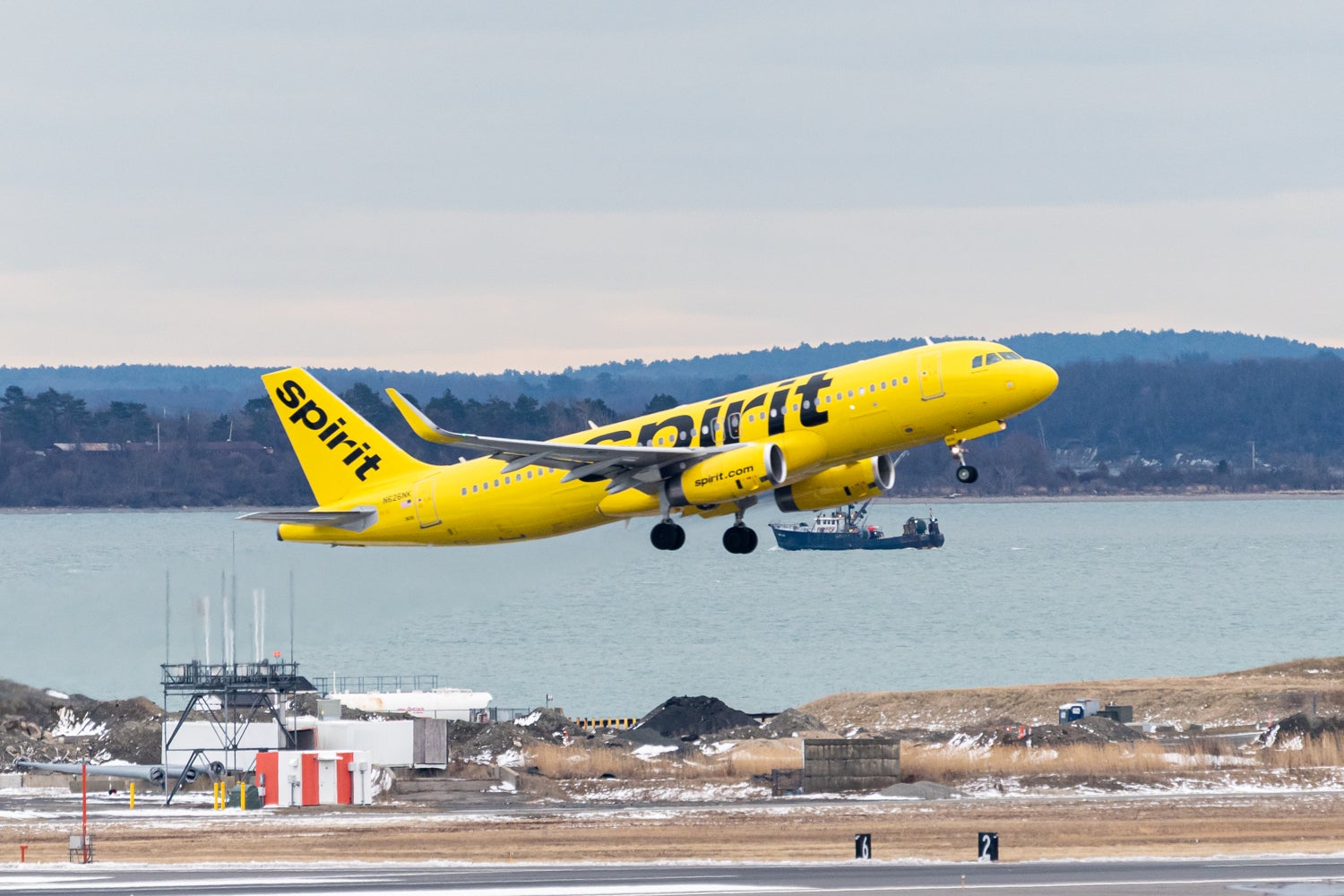
All of this merger talk comes as numerous U.S. airlines struggle financially, and at least two are considered takeover targets. JetBlue recently hired advisers to explore a potential merger with either Alaska Airlines, Southwest or United, Semafor reported in March. And Spirit Airlines certainly remains a takeover target as it continues to operate under Chapter 11 bankruptcy protection.

DAVID SLOTNICK/THE POINTS GUY

Government support

The Department of Justice provided the first sign of support in March when it ended its antitrust review of Allegiant Air's takeover of Sun Country Airlines early with no objections. While the airlines had little overlap and together represent around just 2% of U.S. domestic seats, the swift approval signaled a light regulatory touch from the Trump administration.

The Biden administration blocked the combination of JetBlue and Spirit in 2024, and successfully sued to end JetBlue's Northeast Alliance with American Airlines in 2023.

On CNBC, Duffy did say that, while Trump "loves to see big deals happen," a merger by one of the "larger" airlines would require them to "peel off some of their assets." ("Larger" airlines likely refers to American, Delta, Southwest and United, which each control about a fifth of the U.S. market.)

Secretary of Transportation Sean Duffy speaks on Aug. 5 at a news conference. KENT NISHIMURA/BLOOMBERG VIA GETTY IMAGES

The last major airline merger — Alaska's takeover of Hawaiian, which closed in 2024 — is nearing its final major passenger-facing milestone when Hawaiian moves to Alaska's reservations system April 22.

The next big airline deal

No one knows just what the next deal could occur. In the history of airline mergers, the most obvious combinations are not always the ones that occur.

That certainly would be the case with any United-American deal. But, again, such a combo would be considered the longest of long shots if past precedent holds.

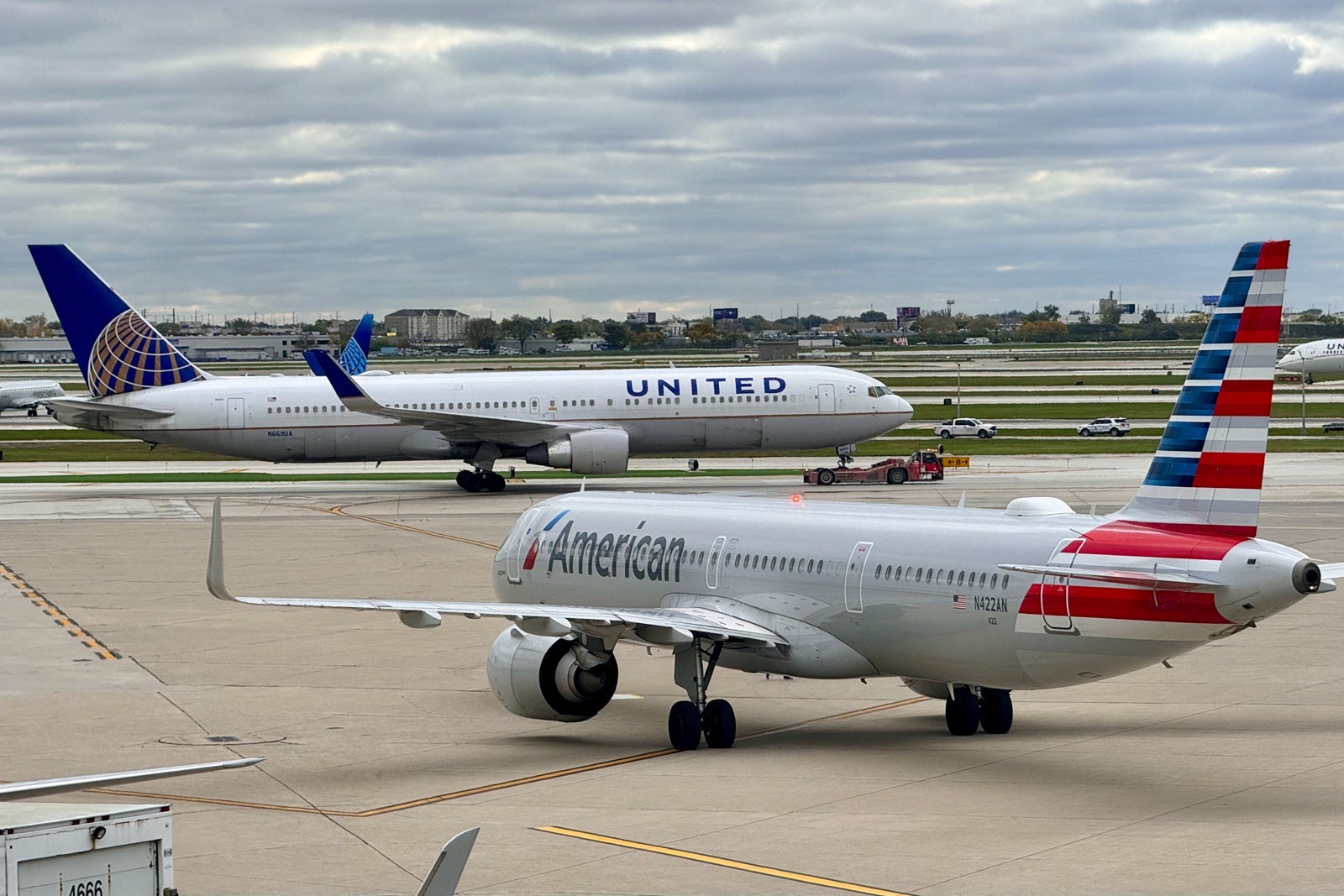
American Airbus A321 United Boeing 767 Chicago O'Hare ORD
ZACH GRIFF/THE POINTS GUY

Elsewhere, some airline mergers might be more likely candidates than others.

Frontier Airlines is widely viewed as the most suitable partner for Spirit given their similar ultra-low-cost business models and complementary route networks; Frontier is more concentrated in the western U.S., while Spirit has a larger presence in the Detroit, Florida and New York markets.

A combined Frontier-Spirit would have a roughly 7% share of U.S. domestic seats based on 2025 numbers, schedule data from aviation analytics firm Cirium shows. It would be the fifth-largest share, surpassing Alaska-Hawaiian's 6% share.

Frontier has tried and failed to merge with Spirit at least twice. It was outbid by JetBlue in 2022 and rejected in 2025.

A potential JetBlue deal is more interesting.

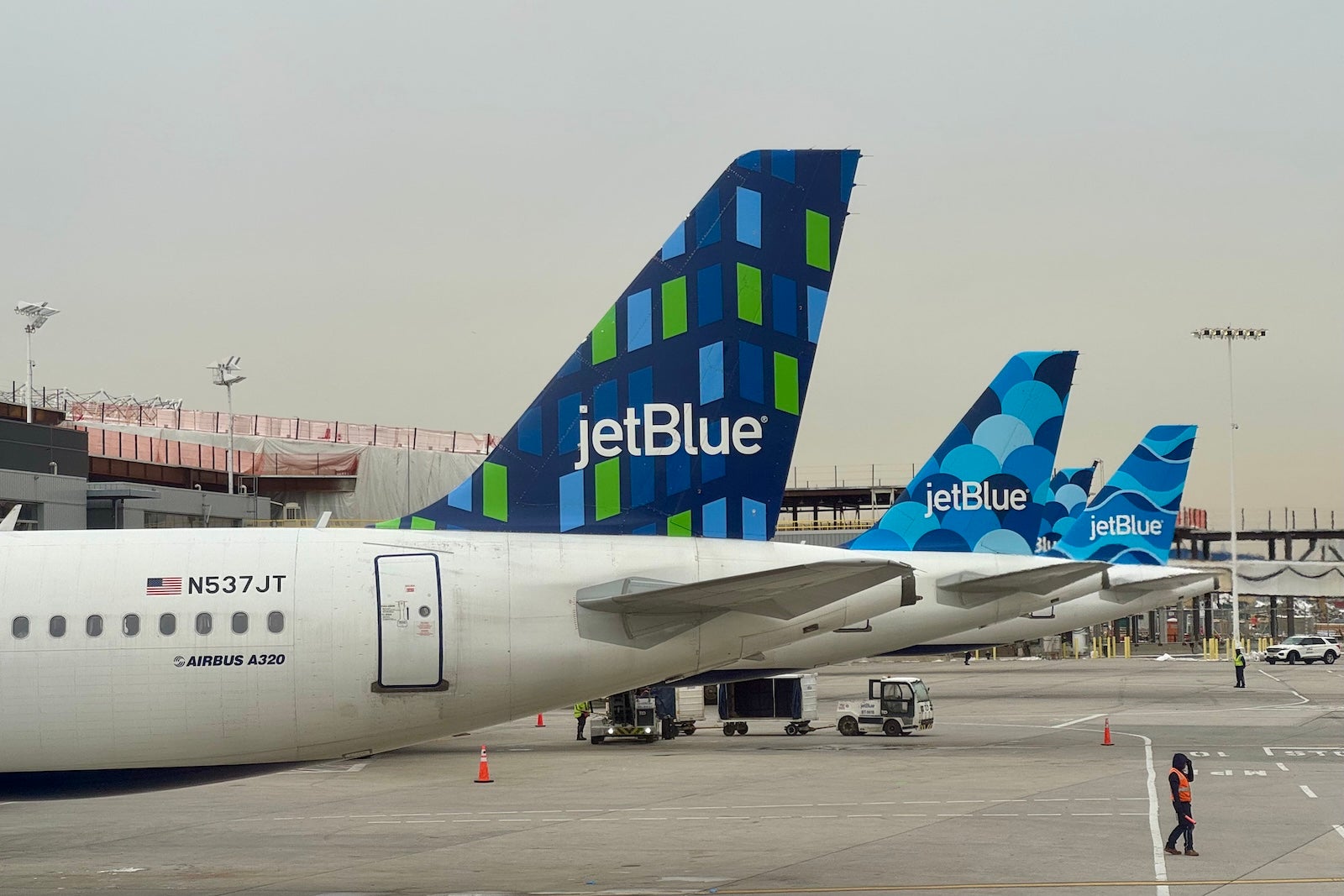
JetBlue aircraft at New York's John F. Kennedy International Airport (JFK). SEAN CUDAHY/THE POINTS GUY

While its recent partnership with United has some pundits pontificating about a possible JetBlue-United merger, others have suggested an Alaska-JetBlue combo would make sense. And while those combined carriers' networks would immediately make it a player on both coasts, it's questionable whether Alaska could absorb another airline while in the midst of integrating operations with Hawaiian.

Another view comes from Courtney Miller at Visual Approach Analytics, who wrote earlier in April that he views a Southwest-JetBlue merger as the most suitable when weighing fleet, network and antitrust considerations. He noted existing chatter that either an Alaska-JetBlue combination or a United-JetBlue combination also have merit.

"If Alaska would see limited benefit but almost certain [regulatory] approval, and United would see massive benefit but likely rejection, Southwest just kind of works," he wrote (prior to news about a potential United-American combo that would break with past regulatory precedent). "Good benefit and a very strong likelihood of approval."

A combined Southwest-JetBlue would surpass American as the largest domestic airline with a 24% share of seats based on 2025 numbers, Cirium data shows.

And while a Southwest-JetBlue deal does have issues — for one, Southwest flies an all-Boeing 737 fleet and JetBlue an all-Airbus fleet — it would achieve at least two of Southwest's strategic goals: long-haul international flying to Europe and lounges.

Related reading:

Editorial disclaimer: Opinions expressed here are the author’s alone, not those of any bank, credit card issuer, airline or hotel chain, and have not been reviewed, approved or otherwise endorsed by any of these entities.


from The Points Guy Articles https://ift.tt/ds06GJc

IHG Premier Business Credit Card review: Strong value for a low annual fee

The IHG One Rewards Premier Business Credit Card (see rates and fees) packs in an impressive amount of value for a $99 annual fee, especially for business owners who regularly stay at IHG properties. With perks like automatic elite status and an annual free night, it can easily pay for itself — but only if you actually use those benefits.

However, if you aren't loyal to IHG One Rewards, the card's limited redemption flexibility and weaker everyday earning rates may push you toward a more general business rewards card. Card rating*: ⭐⭐⭐⭐

*Card rating is based on the opinion of TPG's editors and is not influenced by the card issuer.

IHG Premier Business card: The basics

The IHG Premier Business card is a cobranded hotel business credit card designed for small-business owners who frequently stay with IHG brands like InterContinental, Holiday Inn and Kimpton.

For a $99 annual fee, cardholders get automatic IHG One Rewards Platinum Elite status, an annual free night certificate (worth up to 40,000 points) and a fourth-night-free benefit on award stays.

You'll earn the most value when booking IHG stays, when the combined earnings rate can reach up to 26 points per dollar spent when factoring in elite bonuses. Outside of IHG, earning rates are decent in select categories like dining, travel and advertising — but underwhelming on everyday purchases.

This is not a card that earns flexible rewards. Rewards are tied to the IHG One Rewards program, so value depends heavily on how often you stay within the brand.

IHG Premier Business card pros and cons

Pros Cons
<ul> <li>Bonus points on IHG stays</li> <li>Automatic Platinum Elite status</li> <li>Free night certificate each year</li> <li>TSA PreCheck/Global Entry statement credit</li> </ul> <ul> <li>Annual fee</li> <li>Weak everyday earning rates</li> <li>Redemption options outside IHG properties aren't as valuable</li> </ul>

IHG Premier Business card benefits

Annual free night award

Each year after your account anniversary, you'll receive a free night certificate valid for a stay costing up to 40,000 points. In practice, that can cover a wide range of properties, from luxurious InterContinental and Kimpton stays on peak dates to high-value properties in secondary cities.

If a property costs more than 40,000 points, you can top off the certificate with unlimited additional IHG points to book the stay, giving you added flexibility.

TPG Lead Writer Katie Genter has redeemed anniversary free night certificates at properties like the InterContinental Buenos Aires, InterContinental Madrid and Kimpton De Witt (in Amsterdam), highlighting the range of hotels where this benefit can be used.

With thoughtful use, this perk alone can easily offset the card's $99 annual fee, making it one of the most valuable ongoing benefits for cardholders.

Fourth-night-free benefit

When redeeming IHG points for a stay of four consecutive nights or longer, every fourth night costs zero points.

This benefit is automatically applied and stackable:

  • Stay four to seven nights: Get the fourth night free.
  • Stay eight to 11 nights: Get the fourth and eighth nights free.
IHG

There's no cap on how many times you can use this perk, making it especially valuable for longer stays.

What I like about this perk is that it's automatically applied, so you don't need to jump through hoops to take advantage of it.

Automatic Platinum Elite status

Cardholders receive automatic IHG One Rewards Platinum Elite status, which provides a meaningful boost to both your earning potential and overall hotel experience. Benefits include a 60% bonus on points earned from paid stays, space-available room upgrades and a welcome amenity at check-in.

While Platinum isn't top-tier status — and does not include free breakfast — it's still a valuable perk to get just for holding the card, especially if you stay with IHG even a handful of times per year. The incremental perks can add up quickly, particularly through bonus earnings.

I appreciate that this status is automatic, even if the on-property perks are somewhat limited compared to higher tiers.

The card also offers a path to Diamond Elite status after $40,000 in annual spending. Diamond members can receive free breakfast as a welcome amenity at many properties (though availability can vary by brand and region). However, that's a steep requirement, and most business owners will likely find better ways to allocate that level of spending.

Spending-based bonus perks

The card includes an additional incentive for higher spenders. If you put $20,000 on the card in a calendar year, you'll earn 10,000 bonus points (worth $60 based on TPG April 2026 valuations) and a $100 statement credit.

While that's about $160 in total value, the return on that level of spending isn't particularly compelling. Most business owners could likely earn more by putting that same $20,000 toward a card with higher everyday earning rates or more flexible rewards.

Travel credits and protections

The IHG Premier Business card includes a handful of travel credits and protections that, while not headline-grabbing, add meaningful value over time.

Cardholders receive up to a $120 statement credit every four years for Global Entry, TSA PreCheck or Nexus — a fairly standard perk among travel cards, but still a useful one if you don't already have it elsewhere.

There's also up to $50 in United Airlines TravelBank cash each year, which can help offset the cost of occasional flights, though it's somewhat niche and most valuable for those who already fly United.

Kimpton Miralina Resorts and Villas Lobby and Reception
IHG

Beyond credits, the card offers a solid suite of travel protections. Trip cancellation and interruption insurance can reimburse up to $1,500 per traveler (and $6,000 per trip) for covered disruptions, while the auto rental collision damage waiver provides primary coverage on business rentals — a notable perk that can save you from paying for rental agency insurance. You'll also get purchase protection for new items against damage or theft for 120 days from purchase.

None of these benefits stand out on their own, but together they form a well-rounded safety net that adds incremental value, especially for business owners who travel regularly.

How to earn and use your rewards

You'll get the most value from this card by understanding where it earns the most points and where it may fall short for everyday spending.

Earning points

Earning rates on cobranded hotel credit cards are usually strongest within their own loyalty programs and weaker on everyday spending, and that holds true here.

The IHG Premier Business card delivers excellent value when used at IHG properties.

When you pay for a stay at an IHG hotel or resort, you'll earn 10 points per dollar spent with the card. On top of that, IHG One Rewards members earn 10 base points per dollar spent at most brands. Since the card also includes automatic Platinum Elite status, you'll receive a 60% bonus on those base points.

Altogether, that adds up to 26 points per dollar spent on IHG stays — or roughly a 16% return, according to TPG's valuations.

INTERCONTINENTAL SAN FRANCISCO/IHG

Outside of IHG, earnings are more modest:

  • 5 points per dollar spent on dining, gas and travel
  • 5 points per dollar spent at office supply stores and on social media and search engine advertising
  • 3 points per dollar spent on all other purchases

While the bonus categories are decent for a hotel card, you'll likely find better returns on everyday spending with a more flexible business credit card. Personally, I'd mainly use this card for IHG stays and a few bonus categories, rather than everyday spending.

Related: From mountain peaks to seaside getaways: 7 IHG hotels for your next vacation

Redeeming points

IHG uses dynamic pricing, meaning award nights can start as low as 5,000 points but regularly climb to over 120,000 points at higher-end properties. While this flexibility can occasionally work in your favor, it also means you won't always get consistent value from your points.

To get the most out of your rewards, it helps to be strategic. The fourth-night-free perk is one of the easiest ways to stretch your points further, effectively lowering the cost of longer stays.

For example, a stay at the Kimpton Seafire Resort + Spa in Grand Cayman, Cayman Islands, can easily price around 70,000 points per night. A four-night stay would typically cost 280,000 points, but with the fourth-night-free benefit, you'd pay 210,000 points — saving 70,000 points.

screenshot of Kimpton hotels
KIMPTON HOTELS

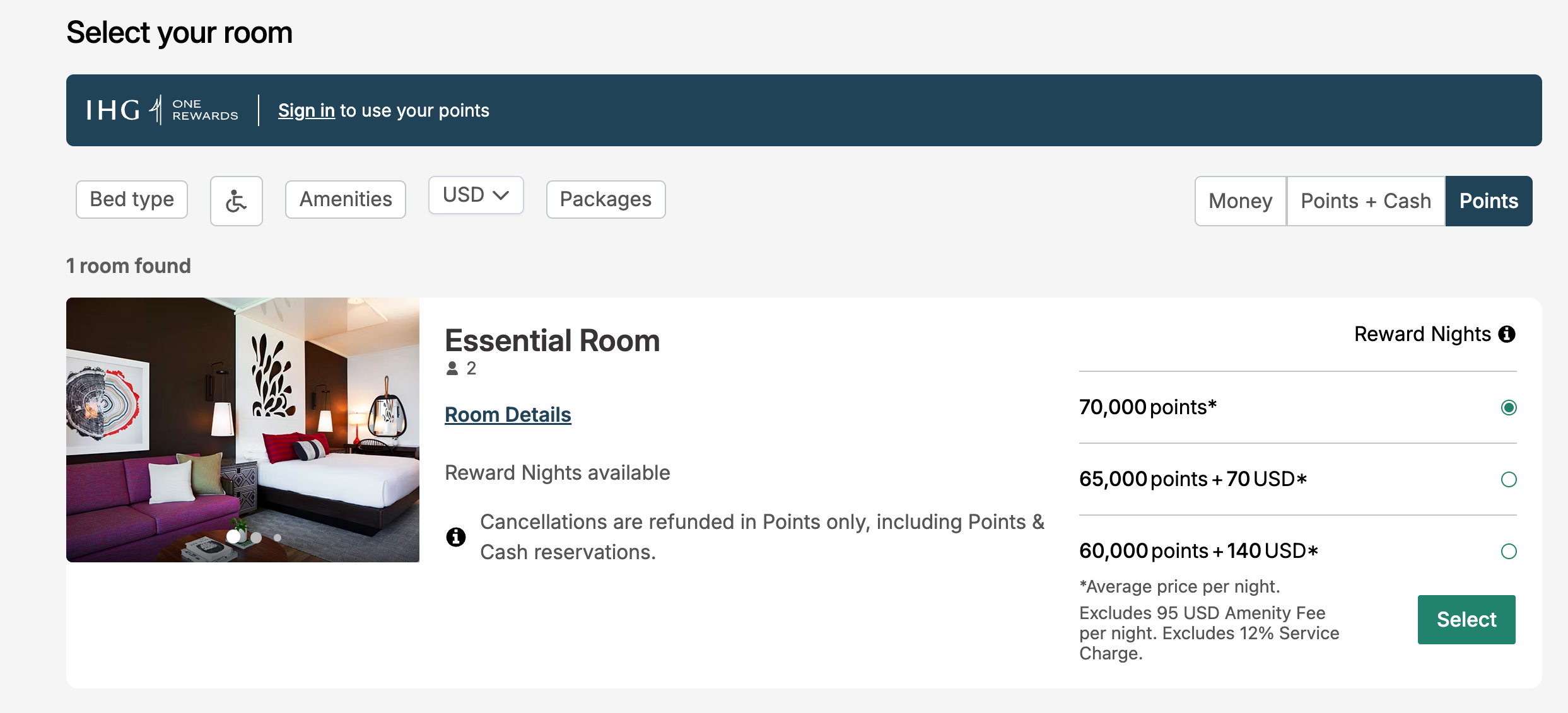
IHG also allows you to book using a combination of points and cash, though this is essentially the same as purchasing additional points at a fixed rate. That can make sense in some situations, but it's not always the best deal, especially since IHG frequently sells points during promotions.

Overall, there's solid value to be found in the program, but it often requires more effort and flexibility compared to hotel programs with fixed award charts.

Related: How to redeem IHG One Rewards points for hotel stays

Where the IHG Premier Business card falls short

The biggest drawback of the IHG Premier Business card is its lack of flexibility.

Because your rewards are tied exclusively to the IHG One Rewards program, the card delivers the most value only if you consistently stay within the brand. If you prefer boutique hotels, split your stays across multiple chains or prioritize transferable rewards, you'll likely find this card limiting.

In my view, this is the biggest trade-off: You're getting strong value, but only if you're willing to stay within the IHG ecosystem.

exterior of Kimpton Surfcomber Hotel
KIMPTON SURFCOMBER HOTEL/FACEBOOK

It's also not a strong choice for everyday spending. While the bonus categories are decent, the return on nonbonus purchases falls short compared to many general business cards, making it harder to justify using this as your primary card.

On top of that, IHG's dynamic pricing model adds another layer of unpredictability. Award rates can fluctuate significantly, which means it takes more effort to consistently extract strong value from your points compared to programs with fixed award charts.

Taken together, this is a card that works best in a very specific scenario (frequent IHG stays) and becomes much less compelling outside of it.

Is the IHG Premier Business card worth it?

Yes — as long as you can make the most of the card's perks. The IHG Premier Business card has an annual fee of $99 and offers an annual free night award that can easily be redeemed for more value than that. Cardholders also earn points at solid rates when making purchases in bonus categories, though the earning rate on everyday purchases isn't fantastic.

When to apply for the IHG Premier Business card

New applicants for the IHG Premier Business card can earn up to 200,000 bonus points, structured in two tiers:

  • Earn 140,000 points after spending $4,000 on purchases in the first three months from account opening.
  • Earn an additional 60,000 bonus points after spending a total of $9,000 on purchases in the first six months.

This offer ends April 29.

According to TPG's valuations, the first tier of the bonus is worth $840, while the full offer is worth $1,200 in total. While unlocking the full bonus requires a higher level of spending, the first tier is significantly easier to earn.

CHRISTINE GALLIPEAU/THE POINTS GUY

It's worth noting that this current offer matches the highest offer we've ever seen on the card (last seen in October 2025), so now is the best time to apply if you are interested.

This card is ideal for Chase customers under the 5/24 limit. While most business credit cards won't add to your count, you do need to be below that threshold to apply.

Related: How to track your progress toward a credit card welcome bonus

Other cards to consider if you don't want the IHG Premier Business card

As the IHG Premier Business card is a hotel credit card aimed at small-business owners, it's worth looking at how it stacks up against other hotel-branded business credit cards.

For additional options, check out our picks for the best hotel cards.

Related: The best hotel credit cards with annual fees under $100

Bottom line

The IHG Premier Business card delivers strong, consistent value for a relatively low annual fee, especially for those who stay with IHG frequently.

Perks like the annual free night award, fourth-night-free benefit on award stays and automatic Platinum Elite status make it easy to come out ahead year after year.

Together, these benefits can easily offset the annual fee, making the card a compelling long-term keeper for business owners who can take advantage of its core perks.


Apply here: IHG One Rewards Premier Business Card


For rates and fees of the Hilton Business Amex, click here.

Editorial disclaimer: Opinions expressed here are the author’s alone, not those of any bank, credit card issuer, airline or hotel chain, and have not been reviewed, approved or otherwise endorsed by any of these entities.


from The Points Guy Articles https://ift.tt/FuHBUOm

The best ways to travel to Hawaii with points and miles

The Aloha State offers something for everyone, from the bustling city of Honolulu on Oahu to the quiet black-sand beaches of the Big Island, Kauai's lush rainforests and Maui's volcanic Haleakala National Park. Of course, a destination this dreamy doesn't come cheap, and Hawaii has garnered a reputation for being almost as pricey as it is beautiful.

Thankfully, a few savvy rewards strategies can help you plan your dream Hawaiian vacation without breaking the bank — whether that means booking flights with airline miles, redeeming points toward hotel rooms, maximizing rewards on your purchases or all the above.

If Hawaii is on your travel wish list for 2026, read on to learn the best ways to save money on your trip with points and miles.

Related: Hawaii storm update: What to do if you have a trip planned to the islands

Best ways to book flights to Hawaii using points and miles

sunset hawaii beach
M SWIET PRODUCTIONS/GETTY IMAGES

With so many islands — Hawaii has four major islands and over 100 smaller ones — which airport should you fly into?

Daniel K. Inouye International Airport (HNL) in the state's capital offers the most options. This is a good approach if you want to visit multiple islands, because you can spend some time on Oahu before hopping on a short-haul flight to another island.

On the other hand, if you'd like to base yourself on Maui, Kauai or Hawaii (aka the Big Island), several major U.S. carriers offer direct flights from the West Coast to Maui's Kahului Airport (OGG), Kauai's Lihue Airport (LIH) and Kona International Airport (KOA).

As you might expect, the cheapest flights to Hawaii depart from West Coast hubs. In some cases, you may not pay much more in miles to fly from an airport farther east; in others, you may want to look into a positioning flight.

Now, let's dive into the best ways to redeem miles for flights to Hawaii.

Book partner flights through Atmos Rewards

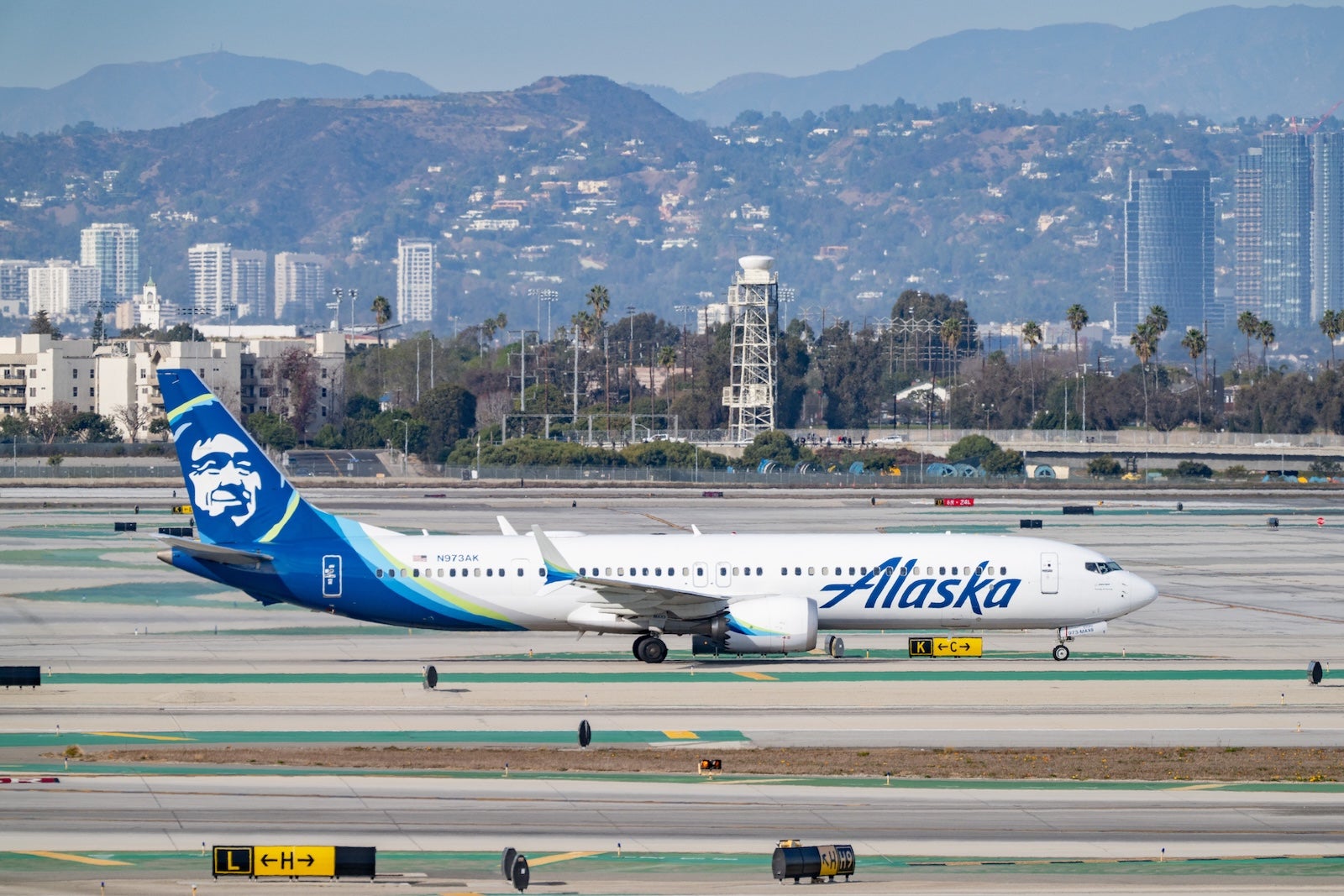
An Alaska Airlines plane taxis at Los Angeles International Airport (LAX). AARONP BAUER GRIFFIN/GC IMAGES VIA GETTY IMAGES
AARONP BAUER GRIFFIN/GC IMAGES/GETTY IMAGES

The first carrier that comes to mind for a trip to the Aloha State is Hawaiian Airlines, part of Alaska Airlines' Atmos Rewards program.

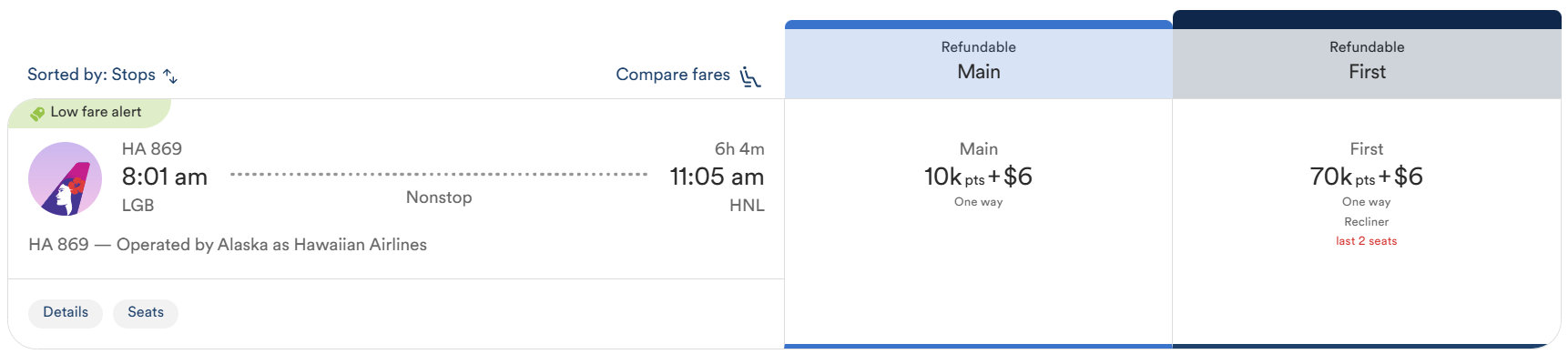
Based on Alaska's award chart, Hawaiian Airlines flights from the West Coast to Hawaii start at 10,000 or 12,500 points each way in economy, depending on the airports and the distance between them, plus minimal taxes and fees.

Atmos LGB-HNL 10k econ 4-21
ALASKA AIRLINES

But Hawaiian Airlines isn't the only partner on which Alaska offers great award rates. You can also find some sweet deals on American Airlines flights, like this nonstop one from Los Angeles to Kauai for 35,000 Atmos Rewards points and $19 in first class.

Atmos LAX-LIH 35k biz 8-29
ALASKA AIRLINES

Booking this exact same flight through American Airlines would cost you much more: 22,000 AAdvantage miles in economy or 55,000 in first class.

AA LAX-LIH 22k econ 55k biz
AMERICAN AIRLINES

To earn more Atmos Rewards points, consider one of these cards:

Or you may want to add a Bilt credit card to your wallet, since Bilt Points transfer to Atmos Rewards at a 1:1 ratio.

Related: How to save hundreds on flights with the Alaska and Hawaiian Companion Fare

Redeem Southwest Airlines Rapid Rewards points

southwest plane
ZACH GRIFF/THE POINTS GUY

Southwest offers direct flights to HNL, OGG, LIH and KOA from various California airports and Phoenix Sky Harbor International Airport (PHX). The carrier also plans to launch a new route from Las Vegas to Hilo International Airport (ITO) on the Big Island in August.

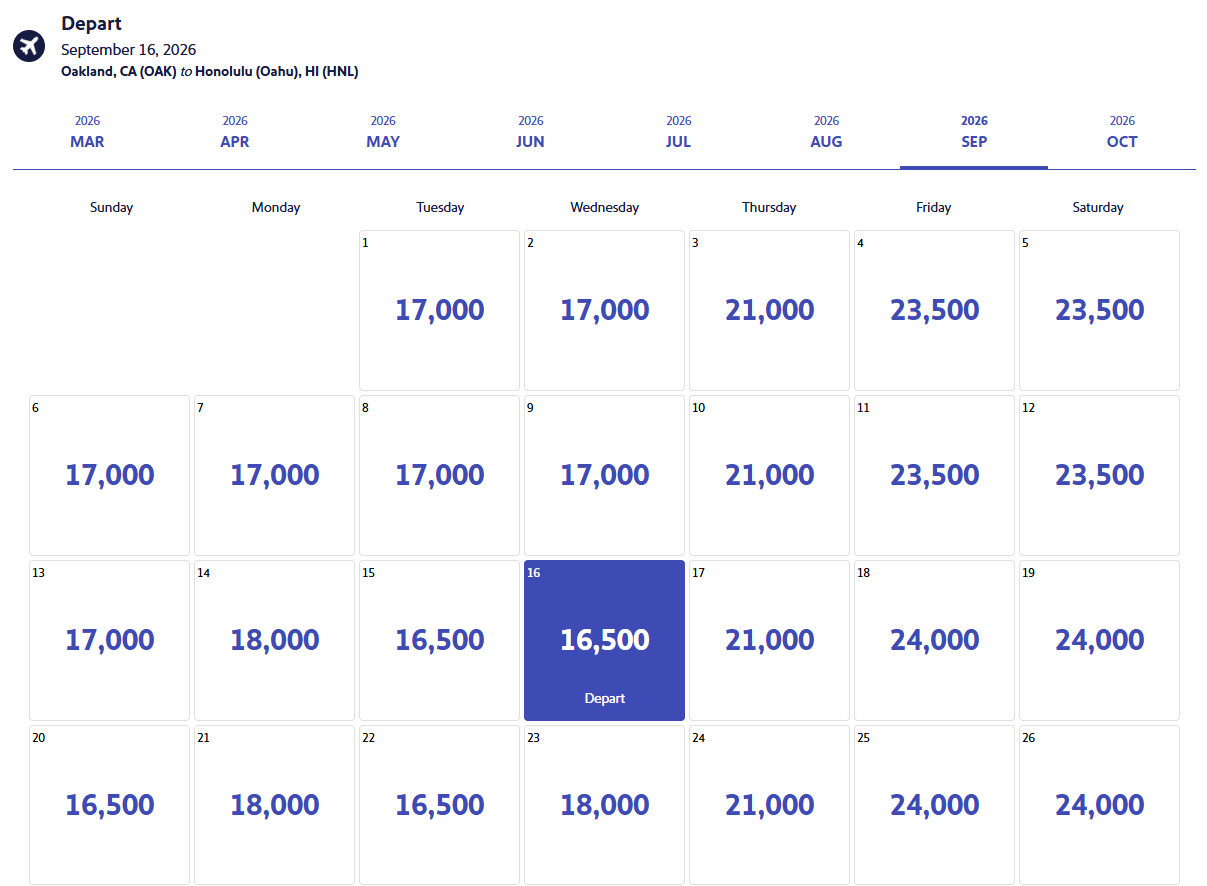
Since Southwest Rapid Rewards implemented variable award pricing, it's harder to predict how many points you'll need for an award flight. Southwest's Low Fare Calendar is usually the best way to check out your options and pinpoint the best rates.

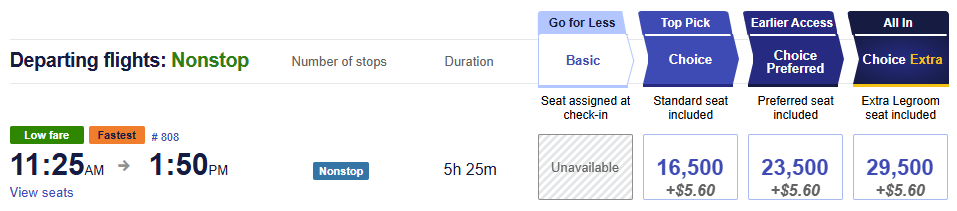
For example, you can fly nonstop from Oakland San Francisco Bay Airport (OAK) to Honolulu in the Choice fare class (a step above basic economy) for as few as 16,500 Rapid Rewards points and $5.60 one-way.

Southwest points calendar OAK-HNL Sept 2026
SOUTHWEST
Southwest OAK-HNL 16.5k 9-16
SOUTHWEST

The following cobranded cards can help you earn Rapid Rewards points faster while providing travel perks like free checked bags, seat selection and even extra-legroom upgrades:

Alternatively, you may prefer a card that earns Bilt points or Chase Ultimate Rewards points, which transfer to Southwest on a 1:1 basis.

Related: How to earn and use the Southwest Companion Pass

Book United Airlines flights with Avianca Lifemiles

ZACH GRIFF/THE POINTS GUY

United MileagePlus has some reasonable redemptions to Hawaii for under 25,000 miles one-way in economy, and you can save more if you have a United credit card. But you can usually find better deals on United flights if you book through Avianca Lifemiles.

Avianca SFO-OGG 15k econ
LIFEMILES

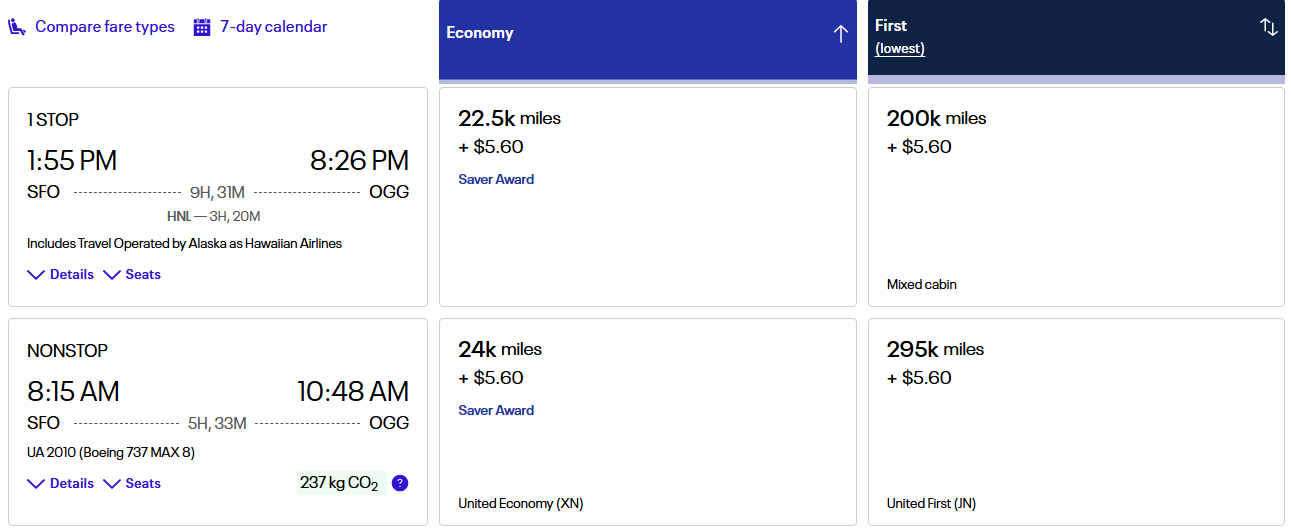
Take this flight from San Francisco to Maui, for example. Avianca's price is just 15,000 miles and $17 one-way. Meanwhile, United charges 24,000 miles and $5.60 for the same nonstop flight, or 22,500 miles for a connecting flight on a partner airline.

UA SFO-OGG United vs partner flight
UNITED

You can save thousands of miles by booking through Avianca, without paying much more in taxes and fees.

Even better, Avianca miles are incredibly easy to earn because Lifemiles is a 1:1 transfer partner of several major credit card programs: American Express Membership Rewards, Bilt, Capital One miles, Citi ThankYou Rewards and Wells Fargo Rewards. Here are some of our favorite cards for earning these valuable transferable rewards:

Thanks to Avianca's partnership with Cardless, U.S.-based travelers can also earn Lifemiles on one of two cobranded credit cards.

Related: Award chart sweet spots that can save you money on domestic flights

Redeem Delta Air Lines SkyMiles

Delta plane
ZACH GRIFF/THE POINTS GUY

Delta may not have as many West Coast hubs as other carriers on this list, but there are still good deals to be found — especially if you hold a credit card with the TakeOff 15 perk, which provides 15% savings on Delta-operated award flights.

Since Delta doesn't publish an award chart, rates can vary widely. I recommend using Seats.aero or the calendar search function on Delta's site to find the lowest prices.

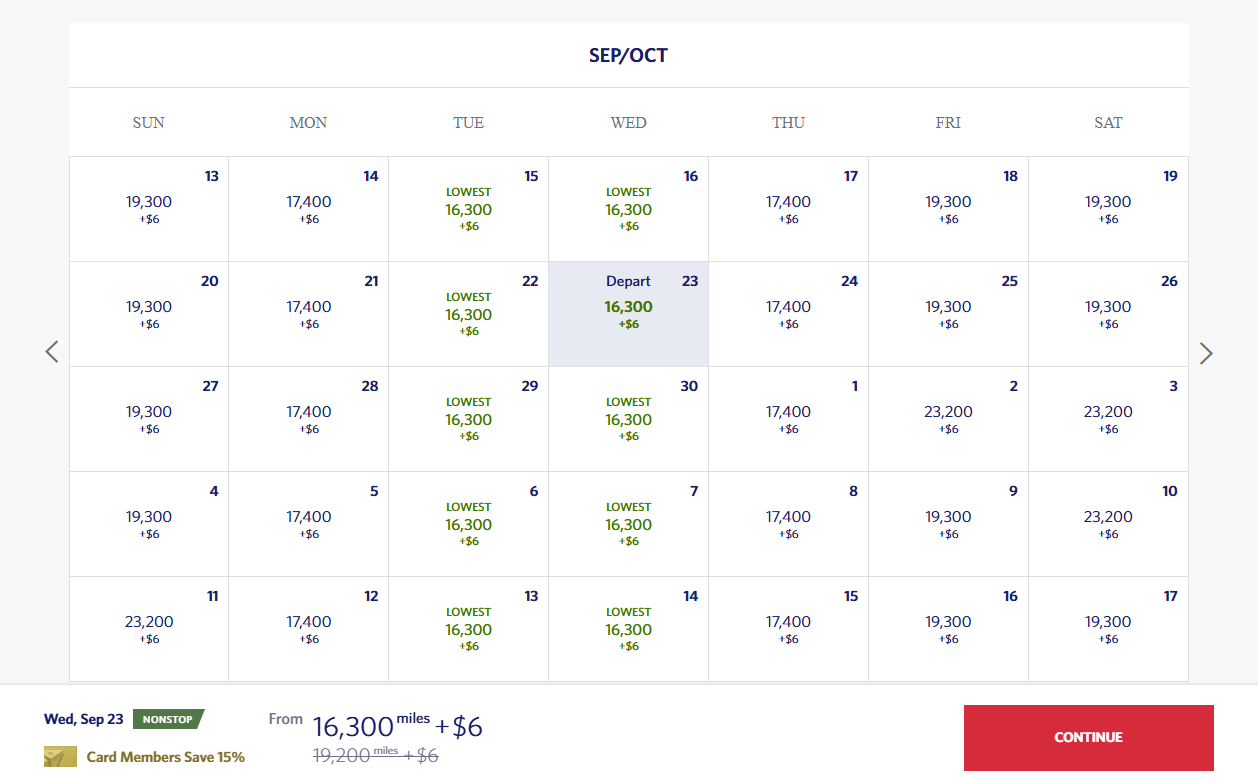
For instance, Delta has good availability on this direct flight from Seattle to Honolulu for just 16,300 SkyMiles one-way (19,200 miles without the cardholder discount).

Delta SEA-HNL miles calendar Sept
DELTA

The following credit cards not only give you 15% off award flights, but can also help you earn SkyMiles quickly:

Related: Which Delta credit card is right for you?

Best points hotels in Hawaii

CLINT HENDERSON/THE POINTS GUY

Beyond the powder-soft sand and endless sunshine, another thing Hawaii has going for it is a plethora of points hotels. No matter what kind of rewards you have at your disposal, there is almost certainly something you can redeem them for.

I like to start my search with Rooms.aero, where I can see (most of) my options on each island and search by my preferred hotel loyalty program. Here are a few properties I found where you can get maximum value from your points.

Points hotels on Oahu

Points hotels on Maui

GRAND WAILEA MAUI, A WALDORF ASTORIA RESORT/FACEBOOK

Points hotels on Kauai

Points hotels on Hawaii

  • Mauna Kea Beach Hotel, Autograph Collection: All rooms have a private lanai — and a price tag to match — at this luxurious Big Island resort. With rates starting at around $1,200 or 94,000 points per night, you can get great value for your Marriott points here.
  • Grand Naniloa Hotel Hilo: This DoubleTree by Hilton offers the brand's famous welcome cookies, plus views of Mauna Kea volcano, snorkeling equipment for rent and more. You can book it for as low as $240 or 50,000 points per night.

For more inspiration, check out our roundups of the best hotels on Oahu and the most family-friendly resorts in Hawaii.

Related: Why you need a credit card with your favorite hotel loyalty program

Credit cards to bring to Hawaii

Hyatt Regency Maui
CLINT HENDERSON/THE POINTS GUY

Even if you book your flights and lodging with points and miles, you're bound to have additional expenses during your Hawaii trip. For anything you pay for with cash, be sure to use the right credit card to maximize your rewards. I would suggest:

With the right card, you can enjoy that after-dinner shave ice or beachfront massage knowing you're getting that much closer to your next free vacation.

Bottom line

It's no secret that Hawaii is a pricey destination. But points and miles can help put a Hawaii getaway within reach for budget-conscious travelers, whether you're planning your first redemption or eyeing first-class flights and top-tier beachfront resorts (or both).

There are plenty of ways to book flights and hotels with points and miles, especially if you have a credit card that earns transferable rewards at your disposal. Before transferring your points, be sure to confirm award availability on the airline or hotel's website — and check out our list of credit card transfer bonuses to see if you can get an even better deal.

Editorial disclaimer: Opinions expressed here are the author’s alone, not those of any bank, credit card issuer, airline or hotel chain, and have not been reviewed, approved or otherwise endorsed by any of these entities.


from The Points Guy Articles https://ift.tt/TzPUCf8